Animal Fun Zoo - Land
- By
96 land animals to enhance your Bedrock experience. Works in single and multiplayer, survival, creative, whatever your heart desires.
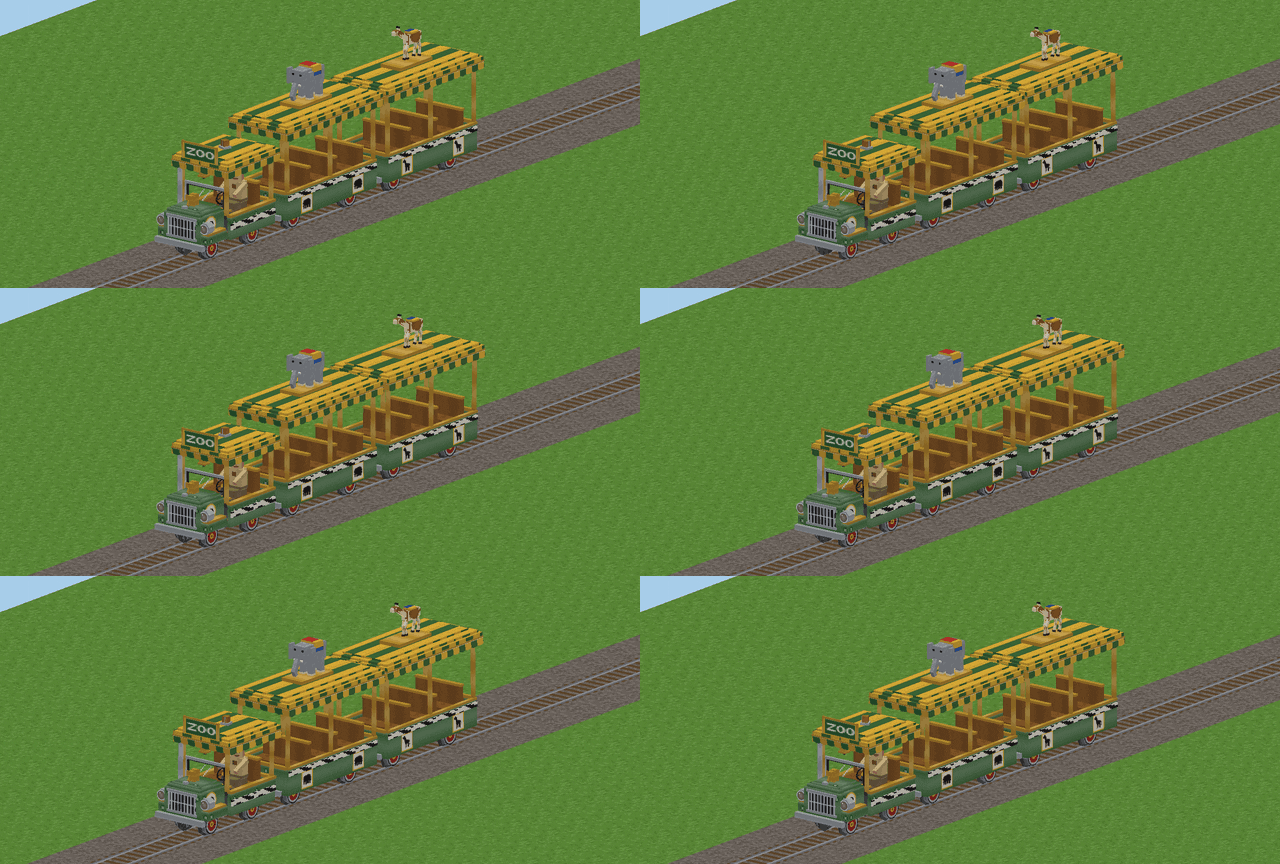
af-att-zoo-tram.gif
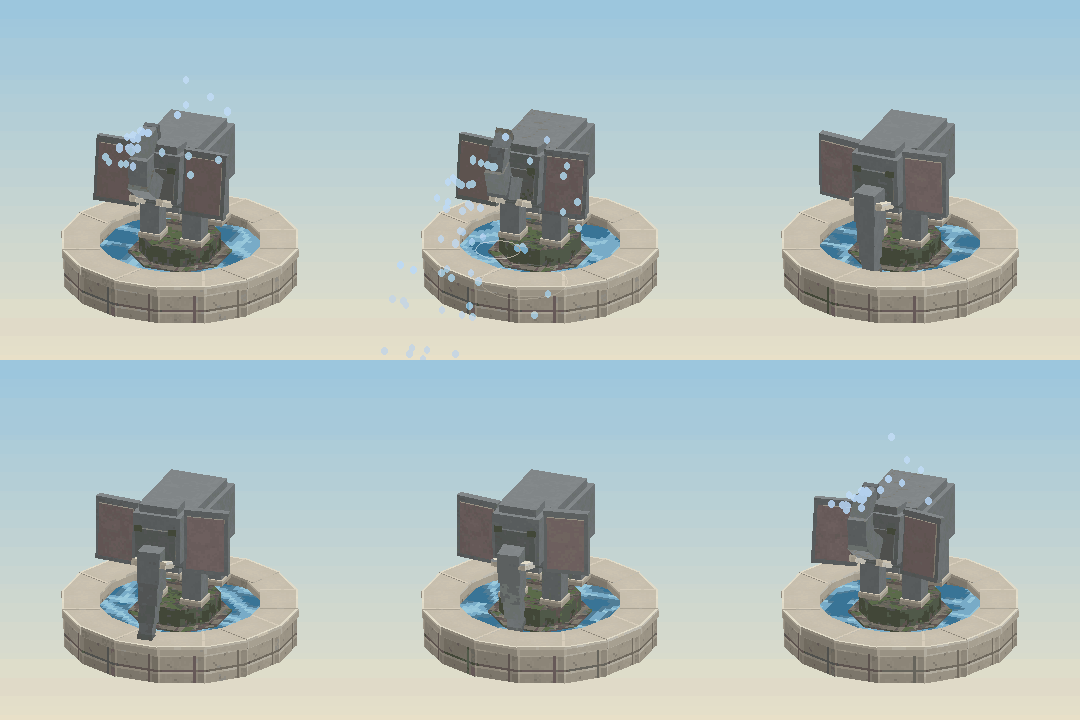
af-att-elephant-fountain.gif
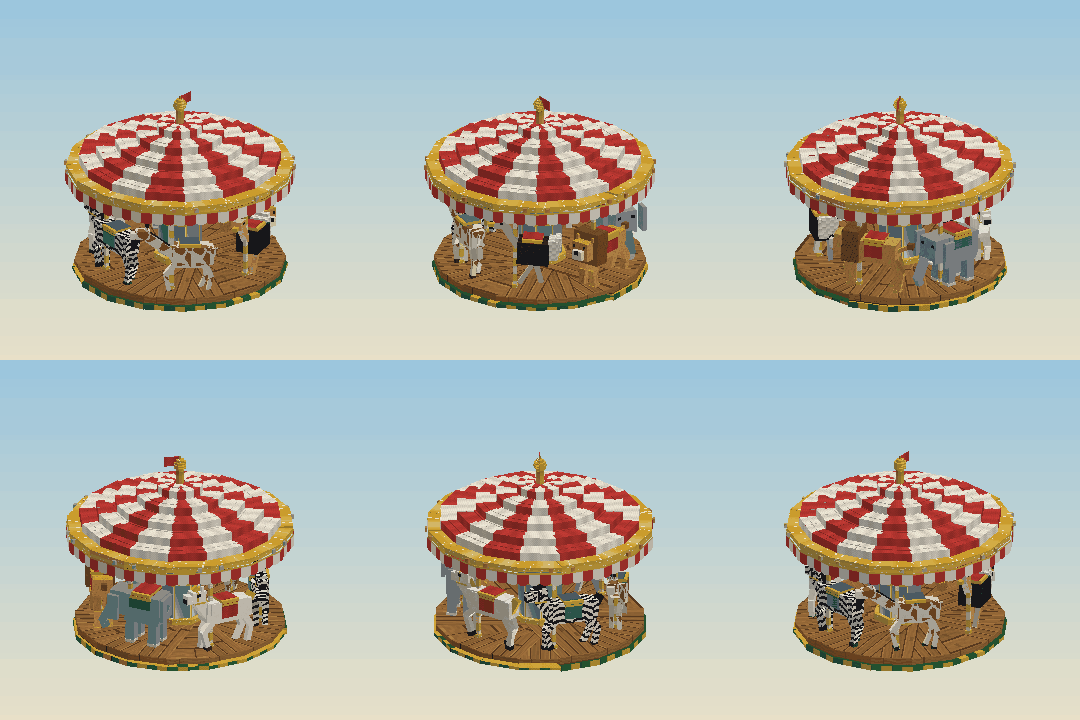
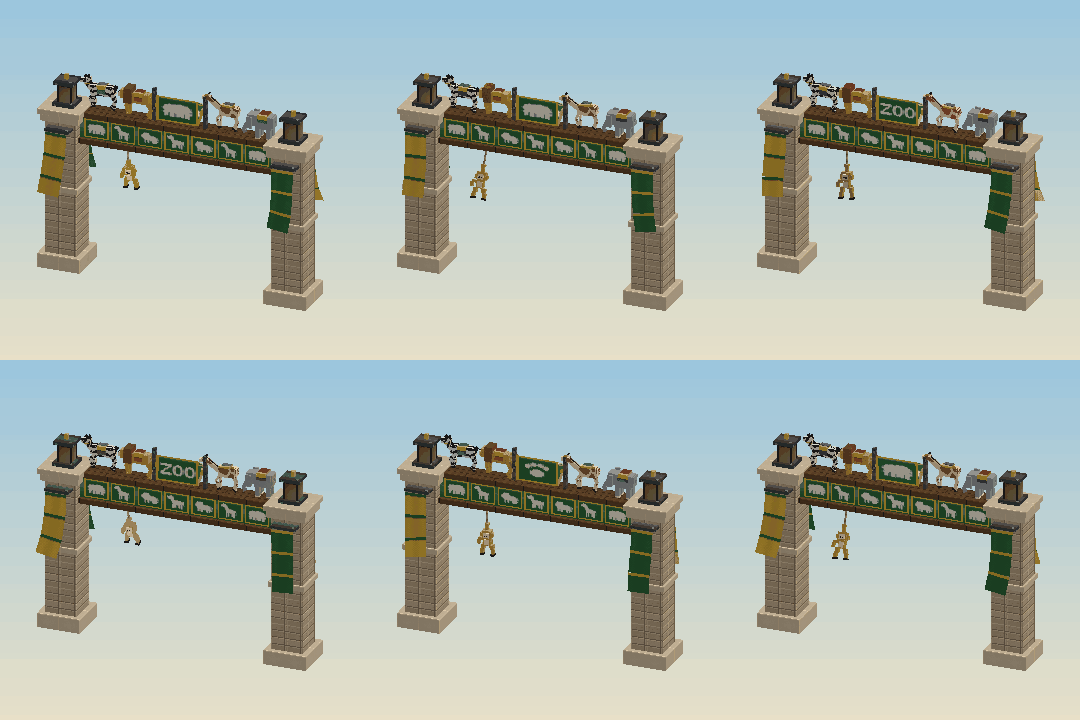
af-att-entrance-arch.gif
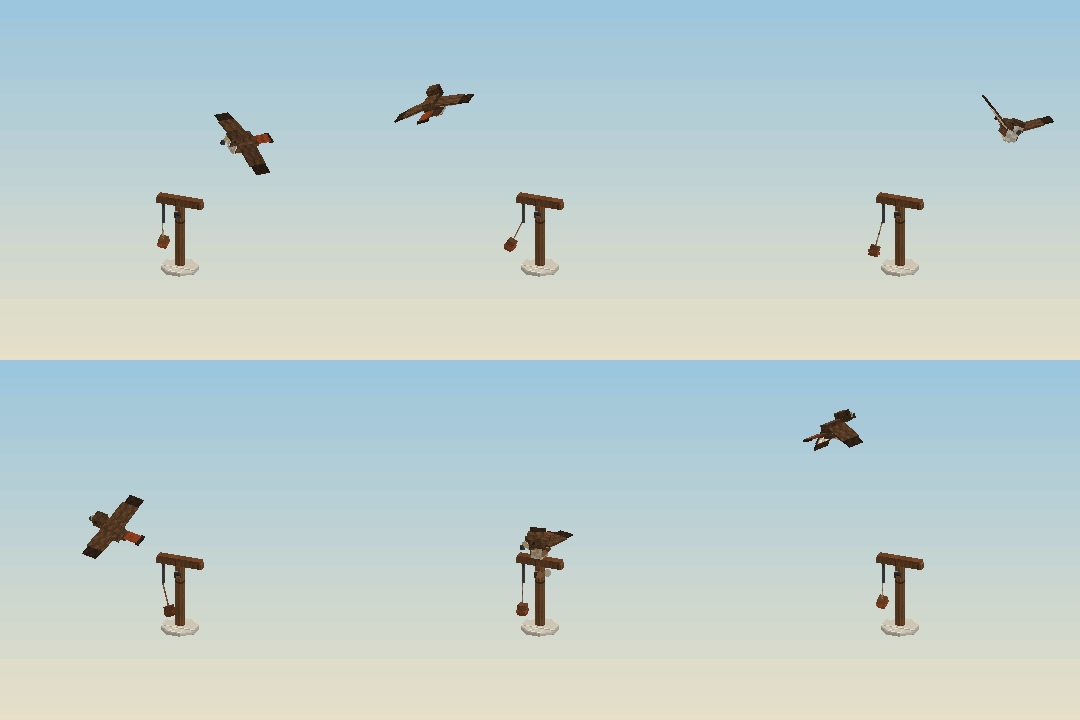
af-att-flight-perch.gif
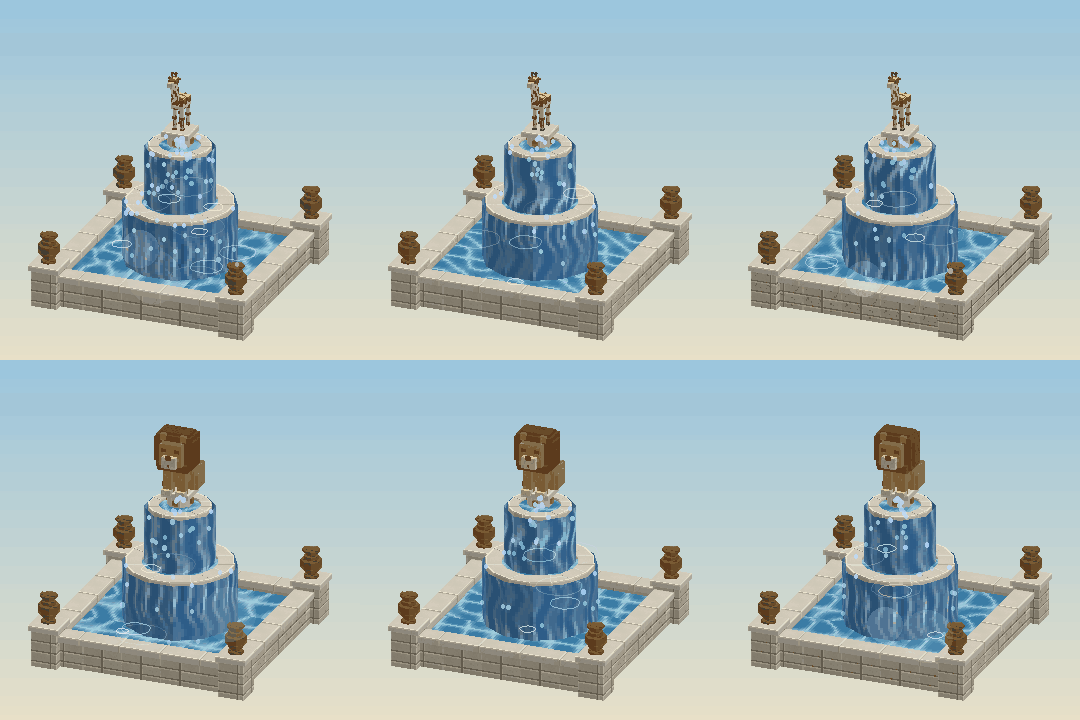
af-att-fountain.gif
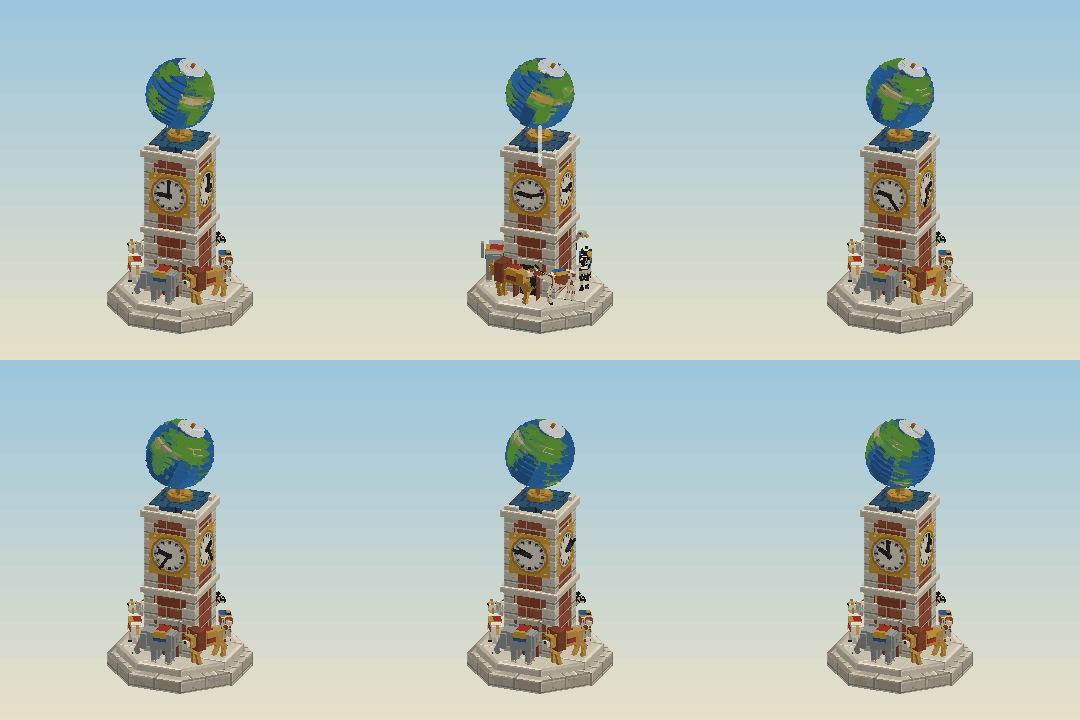
af-att-globe-clock.gif
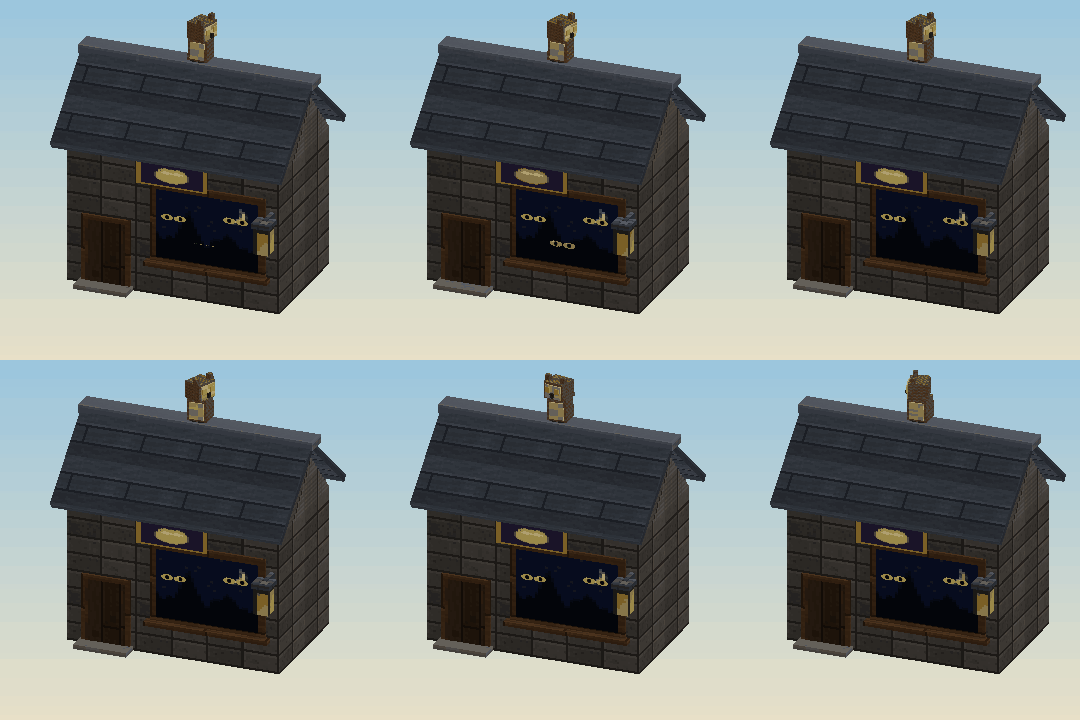
af-att-nocturnal-house.gif
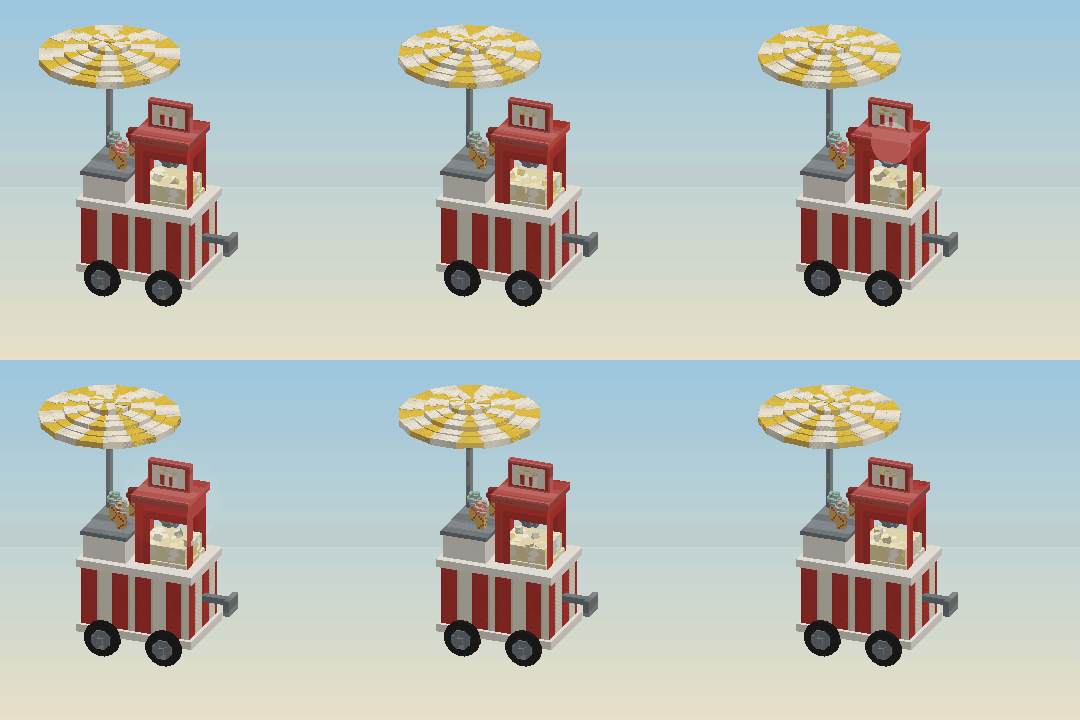
af-att-snack-cart.gif
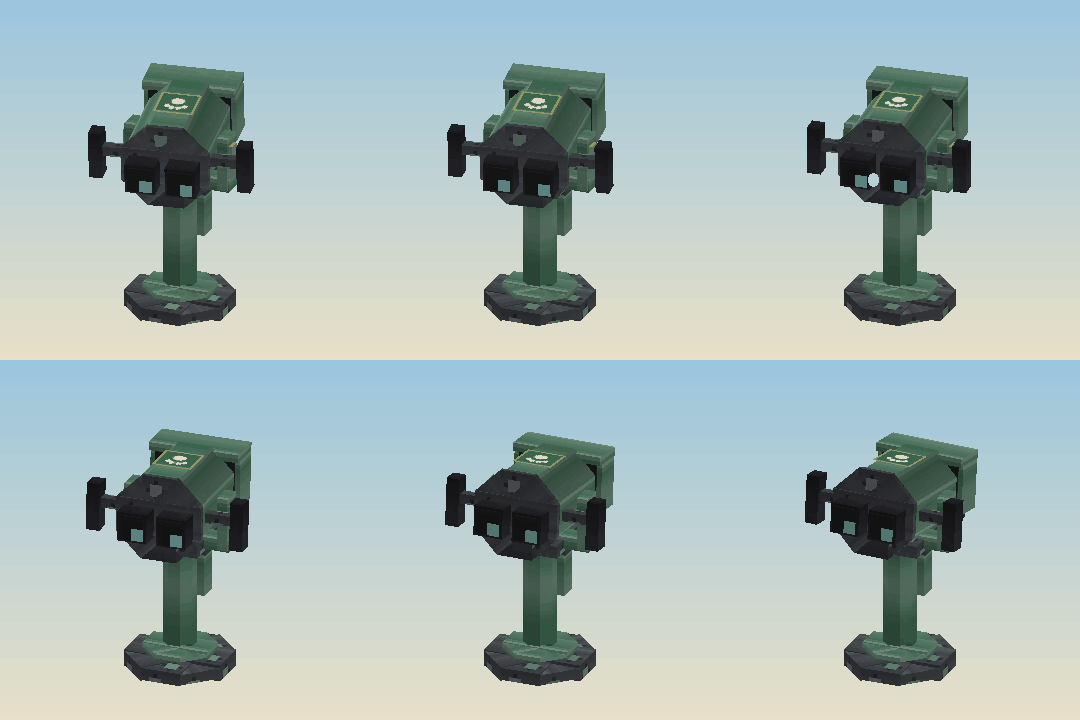
af-att-telescope.gif
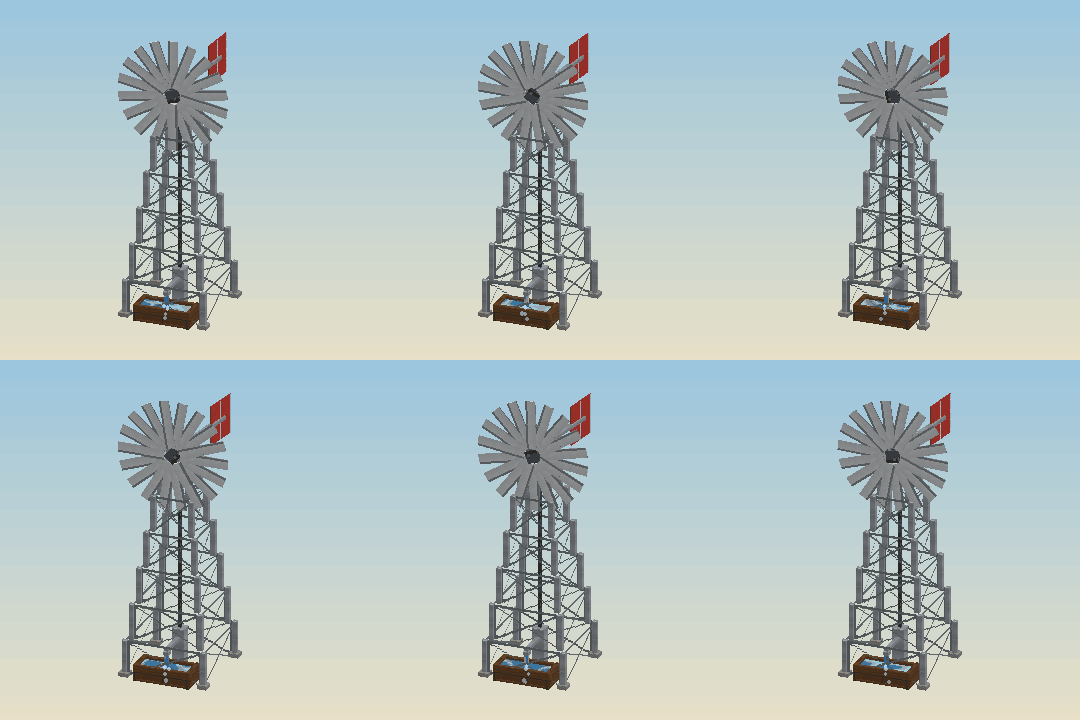
af-att-windmill.gif
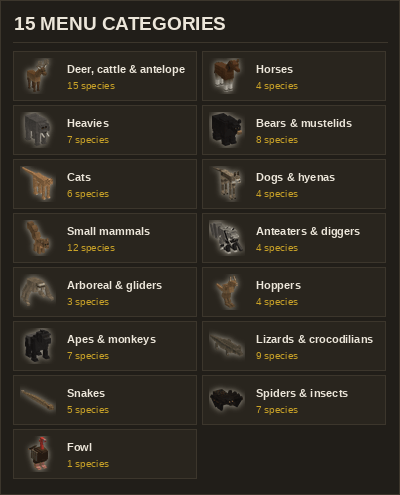
af-categories.png
af-containment-wall.png
af-drops.png
af-field-guide.png
af-species-roster.png
Description


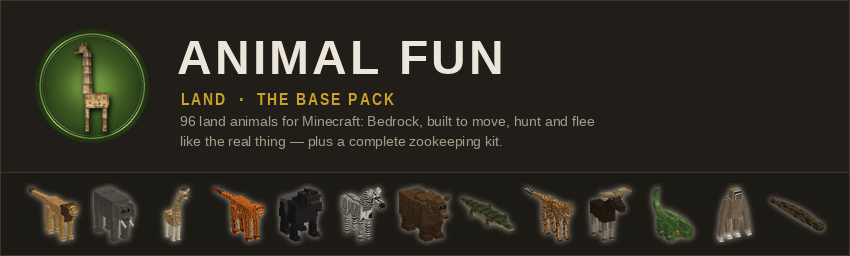
96 land animals for Minecraft: Bedrock Edition, built so that how an animal moves, what it hunts, what it runs from and where it lies down are all modeled on the real thing — plus a full zoo kit, nineteen animated zoo attractions and a zoo tram that runs on minecart rails, to build a park around them.
Animal Fun is also the base pack — the menu, the brain and every shared system that the four Animal Fun expansions plug into. On its own it is a complete add-on.
It overrides no vanilla entity and no vanilla recipe. The only vanilla UI control it touches is the actionbar, for the boxed entity tag, and that has an off switch — see Troubleshooting.
Requirements
| Requirement | Detail |
|---|---|
| Minecraft: Bedrock Edition | 1.26.0 or later (both packs) · works with Vibrant Visuals |
| Experimental toggles | none — the pack runs on the stable script API, so the world stays non-experimental |
| Script APIs | @minecraft/server 2.1.0 · @minecraft/server-ui 2.0.0 |
| Languages | all 29 that Bedrock supports — names, spawn eggs, items, blocks and recipe-book groups (the menu and guide pages are English) |
| Dedicated servers | supported and tested there; see Performance below |
Import Animal Fun v1.61.1.mcaddon — it carries both the behavior and the resource pack — then activate Animal Fun (Behavior) and Animal Fun (Resources) in the world's settings.
Vibrant Visuals is supported since v1.61.1. Minecraft keeps it grayed out while any active resource pack lacks support, so update the Animal Fun expansions you use at the same time (Birds v1.15.12, Fish v1.10.9, Marine v1.10.4, Prehistoric v1.10.3 or newer) and check your other add-ons.
Always exit and re-enter the world after updating. Entities and pack content hold stale state until a reload, and the symptom looks exactly like "the update didn't apply".
What's new
v1.61.1 — Vibrant Visuals, and the animals as the game draws them. Vibrant Visuals can now be switched on in an Animal Fun world: the tram's lamps, the lit attractions and the heat lamp glow, and the crocodile and the hippo have a wet sheen while fur stays matte. Nothing changes in the Classic look. The art list is finished — the wild turkey is rounded and fans a real eleven-feather tail when it displays, the sun bear wears a cream crescent, the wallaby, jerboa, kangaroo rat and baboon have eyes you can see, and deer and elk ears stand up and out. Parts that sat wrong in a world are put right: the chipmunk, squirrel, lemur and meerkat carry their tails up, the great apes stand on their knuckles, the sloth's claws hook down, the kangaroo and wallaby stand on the ground instead of in it, the water buffalo keeps its horns out of the mud when it rolls, and the chameleon's tail and the scorpion's sting curl up over the back in one piece. Every Field Guide picture and placard face is redrawn to match.
v1.61.0 — the Zoo Tram. A bonneted tractor with a keeper at the wheel pulls up to five open coaches around your zoo on ordinary minecart rails, stops at every species placard beside the line and tells its riders what they are looking at. See The Zoo Tram below.
v1.60.0 — the art pass. Forty-seven animals redrawn. Thirty-nine coats are repainted — pale bellies, capes, manes, socks and markings that carry around the body without a seam — and fifteen are reshaped: a bison with a real shoulder hump, great apes that walk on their knuckles, a sprawling sloth, a rebuilt prairie dog and giant ant, a jerboa and a kangaroo rat that are no longer twins, and deer, elk, caribou and moose antlers at their real size.
v1.59 — the attractions made over. Every attraction is rebuilt with new models and sharper shaded textures, the water moves, and every piece has its own settings menu. The big cats and the hyena have faces of their own, horses come in four coats, troughs visibly fill and empty, and the corners of panel walls close properly.
The 96 species
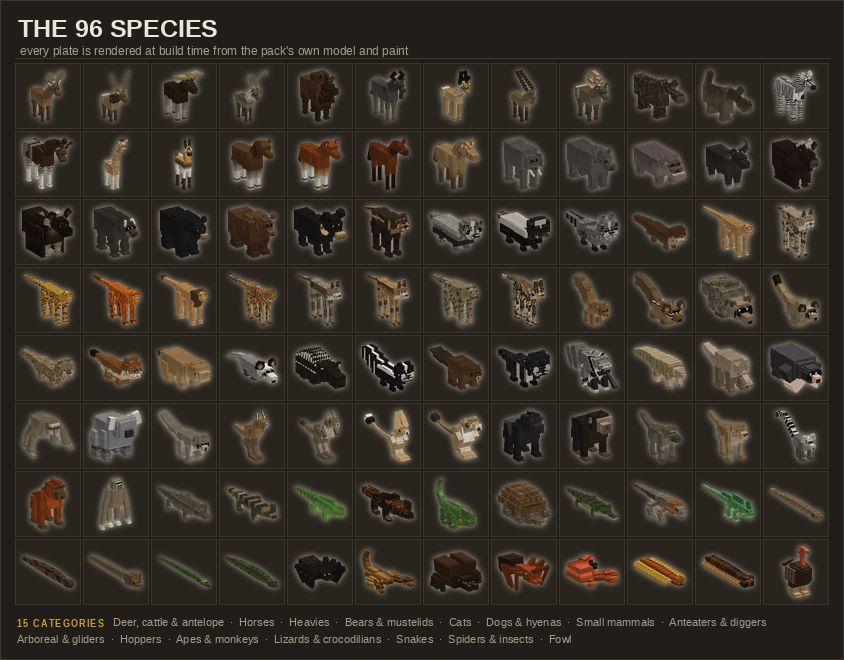
Every animal is a full custom model with a coat painted over its own shape — countershaded bellies, manes, capes, points and markings that carry around the body — and every plate above is rendered at build time from the pack's own model and paint — so a re-modeled animal is re-drawn rather than drifting away.
- Deer, cattle & antelope (15) — Deer, Elk, Moose, Caribou, Bison, Wildebeest, Pronghorn, Ibex, Bighorn Sheep, Wild Boar, Warthog, Zebra, Okapi, Giraffe, Springbok
- Horses (4) — Draft, Stock, Light, Pony
- Heavies (7) — Elephant, Rhinoceros, Hippopotamus, Water Buffalo, Yak, Muskox, Lowland Tapir
- Bears & mustelids (8) — Black Bear, Grizzly Bear, Sun Bear, Wolverine, Badger, Honey Badger, Raccoon, Otter
- Cats (6) — Cougar, Lynx, Leopard, Tiger, Lion, Cheetah
- Dogs & hyenas (4) — Coyote, Jackal, Hyena, African Wild Dog
- Small mammals (12) — Squirrel, Chipmunk, Hedgehog, Meerkat, Mongoose, Stoat, Prairie Dog, Opossum, Porcupine, Skunk, Beaver, Tasmanian Devil
- Anteaters & diggers (4) — Giant Anteater, Pangolin, Aardvark, European Mole
- Arboreal & gliders (3) — Three-toed Sloth, Koala, Flying Squirrel
- Hoppers (4) — Kangaroo, Wallaby, Jerboa, Kangaroo Rat
- Apes & monkeys (7) — Gorilla, Chimpanzee, Baboon, Macaque, Ring-tailed Lemur, Orangutan, Lar Gibbon
- Lizards & crocodilians (9) — Komodo Dragon, Monitor Lizard, Green Iguana, Gila Monster, Chameleon, Tortoise, Crocodile, Frilled Lizard, Plumed Basilisk
- Snakes (5) — Rattlesnake, Python, Cobra, Grass Snake, Anaconda
- Spiders & insects (7) — Tarantula, Scorpion, Rhinoceros Beetle, Giant Ant, Crab, Centipede, Millipede
- Fowl (1) — Wild Turkey
Fox, camel, rabbit, panda and bat are left out on purpose — Minecraft already ships them.
How the animals behave
Walk, trot, run, stalk, hop, slither and stand all switch at thresholds, so a cheetah and a tortoise reach the same cycle at the speed that is fast for them.
Attacks wind up. Every species uses a delayed attack, which — unlike the usual melee goal — tells the model that a strike is coming, so pounces, strikes, rears, gapes, chest beats and tongue flicks fire on the wind-up. Where a species has no attack pose, the charge itself reads as one: rhinoceros, water buffalo, grizzly, hippopotamus and bison cross their own run threshold when they commit, and amble again when they are calm.
Defense is a response, not a proximity trigger. Being hit raises a flag for a few seconds, and the defensive displays hang off it — a hedgehog balls up when something attacks it, not whenever a player walks past. Tortoise, hedgehog, pangolin and porcupine have no flee goal at all: they stand their ground, because that is what they do. Every animal fights back when cornered, even on the passive setting; only hunting is gated by temperament.
Twenty-six species climb, in two tiers. Twenty-one climb anything — koala, sloth, gibbon, orangutan, flying squirrel, squirrel, chipmunk, chameleon, frilled lizard, leopard, lemur, macaque, baboon, chimpanzee, raccoon, opossum, porcupine, sun bear, black bear, monitor lizard and iguana go straight up a wall, a trunk or a cliff. Five climb ladders and vines only — gorilla, pangolin, python, anaconda and basilisk. Every one of the twenty-six has a climb cycle: a trunk hug for the quadrupeds, a sprawl for the lizards, arm-over-arm for the gibbon, an inverted branch walk for the sloth, a spiral for the two snakes. The twenty-one climbers take no fall damage, because a climber that steps off the top of a canopy has no way to climb back down.
Climbers climb to something. Put a Zoo Climbing Branch on top of a climbing-log column or into a tree's canopy, or string a Zoo Rope Bridge between two, and the climbers come looking for it — which means climbing whatever is underneath.
A resting animal puts its belly on the ground. Every settle pose is solved geometrically over the species' own skeleton — the body drops until the lowest weight-bearing part touches the floor and each leg pair folds so its feet reach the ground beside it — rather than posed by eye. Resting is biased by the clock: a diurnal animal lies down for about two thirds of its idle time after dark, a nocturnal one during the day.
Predator and prey are a real web. Eight large animals — warthog, wild boar, water buffalo, bison, moose, baboon, macaque, giraffe — are hunted by lion, tiger, leopard, hyena, wild dog, cougar, grizzly, crocodile and komodo dragon. Adult elephant, rhinoceros, hippopotamus and gorilla sit outside it, which is correct. Senses are matched to the animal: an ambush striker has to be close (snakes and chameleon 5 blocks, arthropods 5, crocodile 10), while open-country prey — antelope, deer and kangaroo families — spot a predator at 18. With the expansions installed the web crosses packs: 330 species and over sixteen thousand predator–prey links.
The animals that actually kill people default to hostile. Hippopotamus, rhinoceros and water buffalo attack players. The placid great apes do not: gorilla and orangutan defend themselves and hunt nothing, and so do gila monster and tarantula, which bite only when handled. All of it is an operator setting.
Water is three tiers. Seven amphibious species (crocodile, hippopotamus, anaconda, beaver, otter, tapir, plumed basilisk) genuinely work the bank, dive, and cannot drown. Twenty-two competent swimmers wade in, cross, and always head for shore. The other 67 prefer a dry route and cross when the path demands it. All 29 water-capable species have their own swim cycle.
Twenty species spawn only at night. Twelve of them keep to real dark — aardvark, badger, flying squirrel, hedgehog, jerboa, kangaroo rat, opossum, pangolin, porcupine, raccoon, skunk and Tasmanian devil. Beaver, giant anteater, gila monster, koala, scorpion, sloth, stoat and tarantula take dusk as well.
Sound
Every species has ambient, hurt and death calls plus footsteps, pitched to its own size and register, drawn from 33 recorded animal voices and 8 footstep sets. Thirty-three species have a recording of their own animal, and the rest borrow the nearest voice, so a lynx and a wolverine share a bear's growl at different pitches. Thirty-seven species also fire a threat call from the animation rig when they square up, rather than on an ambient timer.
The attractions sound like the real thing too — fountains, a waterfall, spray, a coin slot, popping popcorn, a tubular bell, an aquarium bubbler, a creaking windmill, crickets and a hawk's scream — and the carousel plays its own fairground-organ waltz. The zoo tram idles on a real tractor engine, toots a veteran car's horn and rings the clock's bell. Every sound has four volume levels, set per piece. Every recording is a real field or studio recording from an openly-licensed source, cut and level-matched; everything else is synthesized audio. Full attribution is at the bottom of this page.
Zookeeping
Thirty-three blocks and tools for building an exhibit that actually holds its animals, plus nineteen animated attractions and the zoo tram for the visitor side.
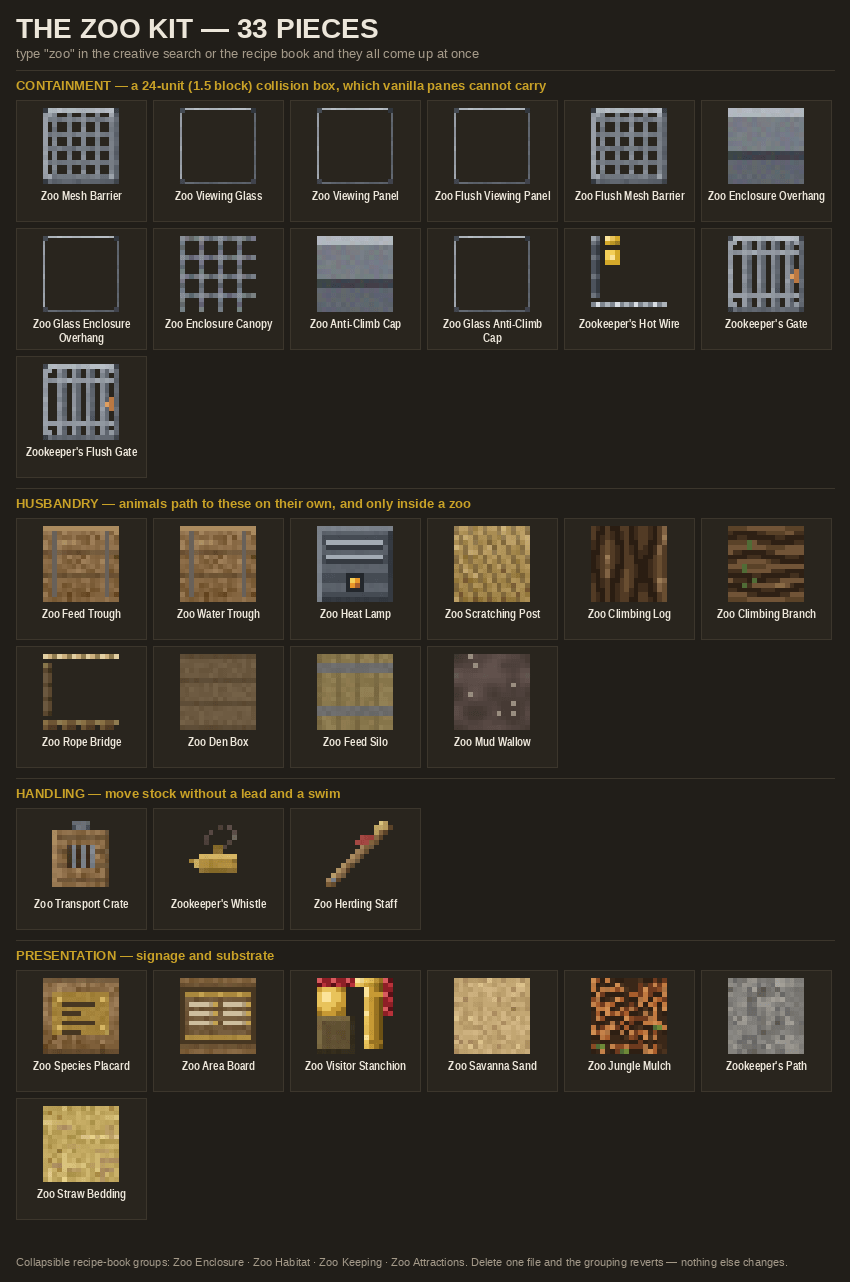
Everything has "Zoo" in its display name, so typing zoo in the creative search or the recipe book turns up all 53 kit pieces, attractions and the tram at once — and the aquarium and aviary pieces from the Fish and Birds expansions end in (zoo) for the same reason. They are also gathered into four collapsible recipe-book groups — Zoo Enclosure, Zoo Habitat, Zoo Keeping and Zoo Attractions — by a single additive file that can be deleted with no other effect.
Containment
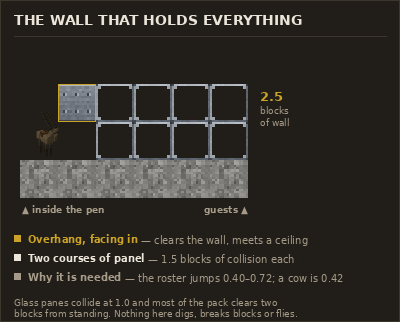
Glass panes are the obvious enclosure wall and they do not work: a pane collides at 1.0 blocks, and this pack's animals jump 0.40 to 0.72 against a vanilla cow's 0.42. Most of the roster clears two blocks from a standing start.
So every barrier here carries a 24-unit (1.5 block) collision box — taller than a vanilla pane can be. One course behaves like a fence; two courses give 2.5 blocks of collision. The viewing glass is frame only — the middle of every face is clear, so you watch through it with no tint.
Flush mounting. A centered panel leaves seven units of open cell on each side of the glass, and where something solid sits under that strip it becomes a foothold. The three flush blocks put the whole plane hard on the cell boundary, so one face of the wall is flat from the floor up — put the strip on the guests' side. Sneak-interact a flush block with an empty hand to turn it to the next edge, and that edge is then held: sneak-place uses it from any angle until you turn another block, which is how you build a north–south run without fighting the aim.
Holding a climber takes a different shape, and it is not the cap. A tall collision box does nothing to an animal going straight up the wall face, and nothing placed on the wall can stop it either: a climber goes up in the column beside the wall, and a block's collision cannot reach past its own column. What works is a block in the column being climbed:
- Zoo Enclosure Overhang (and its glass twin) — set one block into the pen, level with the top of the wall. Its full cell is solid, so the climb has nowhere to finish.
- Zoo Enclosure Canopy — a see-through mesh ceiling. Roof the exhibit and nothing leaves by the top.
The Anti-Climb Cap (steel or glass) finishes the top of the wall as an inverted L whose lip hangs out over the pen. It seals the wall line and meets the overhang edge to edge, so the pair reads as one soffit — but on its own it does not hold a climber. Caps fit themselves around corners, and sneak-interact with an empty hand steps through all eight shapes. The wall that holds everything: two courses of panel or mesh, a cap on top, and a course of overhang one block inside it.
Keeper's Hot Wire shoves any Animal Fun animal that touches it and is harmless to players. Keeper's Gate holds at 1.5 blocks when shut and only a player can work the latch — mobs have no way to toggle it, which is the difference between it and a fence gate.
Husbandry
The Feed Trough takes any of the pack's meats plus the vanilla staples, so a keeper filling twelve troughs never has to sort by diet; an animal that reaches it eats one level and heals two hearts. The Water Trough never empties and heals one. Scratching Post, Climbing Log and Mud Wallow are enrichment — half a heart and a few happy particles per visit. The Den Box is the shelter nocturnal animals and burrowers settle at, worth one heart. The Feed Silo holds eight meals and tops up every feed trough within four blocks by itself. The Climbing Branch and Rope Bridge give the climbers somewhere to go, and the Heat Lamp lights a sleeping area.
Breeding at a trough is a per-trough toggle, off until a keeper switches it on. Sneak-interact a Feed Trough with an empty hand: two adults of one species that eat within 30 seconds and 8 blocks of each other go into love mode, on the same cooldown a hand-fed pair carries. Everything the menu decides still applies on top of it.
Animals find these blocks on their own — 8 blocks for most species, 10 blocks and 8 high for the climbers, since a perch is above you and a trough is not. Outside a zoo there is no target block and the goal fails. Nothing changes in the wild.
Handling
The Transport Crate picks an animal up and puts it down again, carrying species, health and age, so stocking an enclosure stops being a lead-and-swim job. The Keeper's Whistle calls animals within 14 blocks toward you; the Herding Staff pushes them along your look direction. Both nudge rather than teleport, so a called animal still walks, still collides, and still will not cross a barrier — which is what makes them usable for driving stock through a gate.
Presentation
The Species Placard counts what is inside the enclosure, whatever shape and size it is, and prints the species, its head and young count, its diet, and what it preys on and what preys on it — read live, so they change the moment an operator changes anybody's temperament. When it resolves to a single species the block wears that animal's face, on a charcoal mount inside its own brass frame — expansion animals included. Sneak-interact to pin it to a species, or to re-scan.
The Zoo Area Board lists every species in scope with head and young counts, most numerous first — post it at an entrance or over a shared paddock. It has a radius mode (8–48 blocks) and an enclosure mode.
Visitor Stanchions link their ropes to the next stanchion rather than to whichever way you were facing; the collision box follows, so a lone post collides as a post and a straight run as a wall. Right-click any post to re-link a whole run of up to 256.
Plus four substrate floors: Savanna Sand, Jungle Mulch, Keeper's Path and Straw Bedding.
The enclosure scan
Behind the placard and the board is a flood fill outward through open space, stopped by anything an animal cannot walk through — so the plaque gets the actual volume of the pen instead of a sphere that is short of the far end of a big pen and straight through the wall of a small one.
Zoo attractions
Nineteen big animated centerpieces, and a tram to tour them in. Each attraction is one block to place and one item back when you break it, but the piece is far bigger than a block and you cannot walk through it. They face the way you were looking, refuse to go where there is no room. Find them, and the tram, under Zoo Attractions in the crafting table.
Every piece has a settings menu. Sneak-interact with an empty hand on any part of it: sound on or off, a volume level from 1 to 4, and whatever the piece can show — the fountain's statue, the arch's sign, the clock's hourly parade, the bubble tube's light, the lantern colors, the carousel on or off, and a nocturnal house that stays in its night show all day.
The Zoo Tram
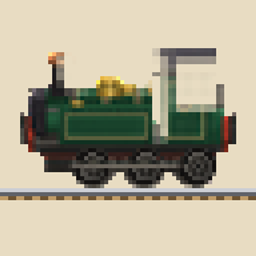
A little bonneted tractor with a keeper at the wheel, pulling up to five open coaches around the zoo on ordinary minecart rails — plain, powered, detector or activator, flat, curved or sloped. Each coach has an animal carved on its roof and painted on its sides.
- Put it on a rail and it waits five seconds for riders, rings its bell and sets off. There is a seat beside the keeper and six on each coach.
- It stops at every Zoo Species Placard beside the line, with its middle lined up with the plaque, and tells its riders what is on their left or right, how many are in the enclosure and what they eat. The keeper turns to look and waves.
- At the end of the line it comes back the other way, or waits if you would rather. It stops and sounds its horn for anyone or anything standing on the line.
- Sneak-interact with any car to start or stop it, pick it up or change its settings: 0–5 coaches, four speeds from Stroll to Express, how long a stop lasts and how far from the rail a placard counts, announcements, five liveries (Safari, Zebra, Giraffe, Jungle, Circus), lamps, the bell and the volume.
- The red-spoked wheels turn with its speed, the canopy fringe streams back, the beacon turns, the exhaust puffs harder under way, the lamps come on at night, and it tilts on a slope and slows for curves and hills.
Craft it from yellow and white wool, planks, a minecart, iron and redstone — the recipe unlocks with the minecart.
The attractions
Zoo Tiered Fountain · 5 × 5 Water pours off two around bowls into a tiled basin where three koi circle. Menu: a lion, elephant or giraffe on top. |
Zoo Elephant Fountain · 3 × 3 Every 16 seconds the elephant curls its trunk up over its head, trumpets and showers its own back. |
Zoo Animal Carousel · 7 × 7 Turns with six animals to ride — horse, zebra, giraffe, ostrich, lion and elephant — under chasing lights, to a band-organ waltz. |
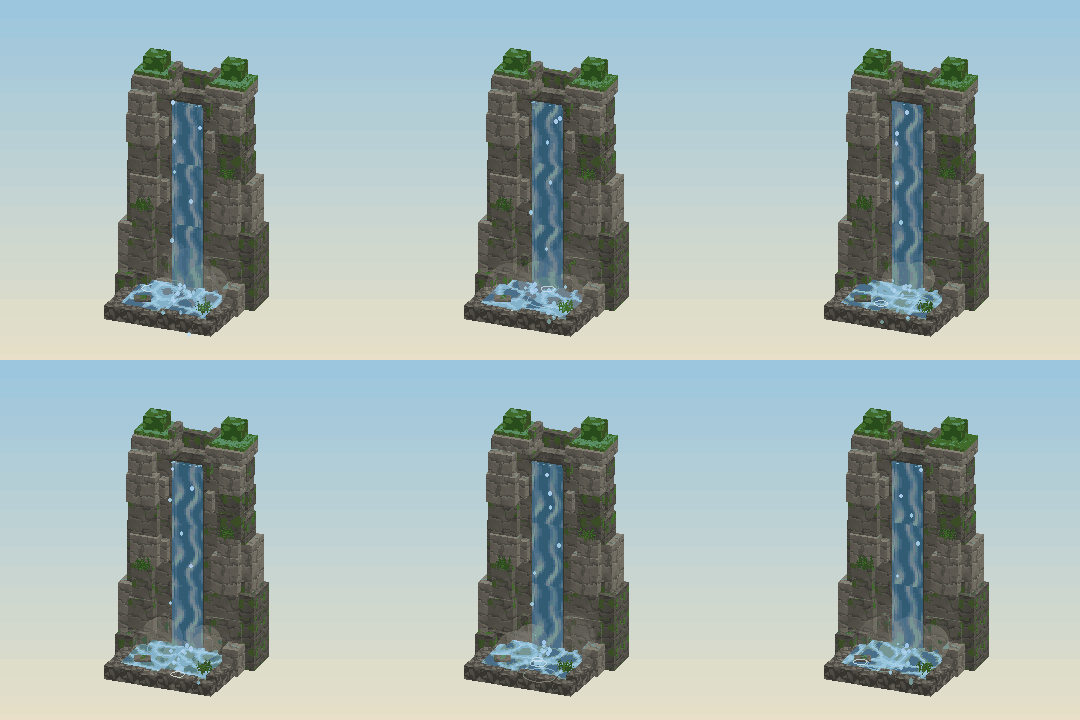 Zoo Rockwork Waterfall · 3 × 3, 6.5 tall Water slides down a solid mossy cliff into a misty pool. |
Zoo Entrance Arch · 9 wide A turning sign, waving banners, lanterns that light at dusk, the carousel's animals on the beam and a monkey swinging under the lintel. Menu: the sign. |
Zoo Globe Clock · 3 × 3 A clock face on every side keeping the world's time, under a turning globe; on the hour the bells chime and six carved animals parade. |
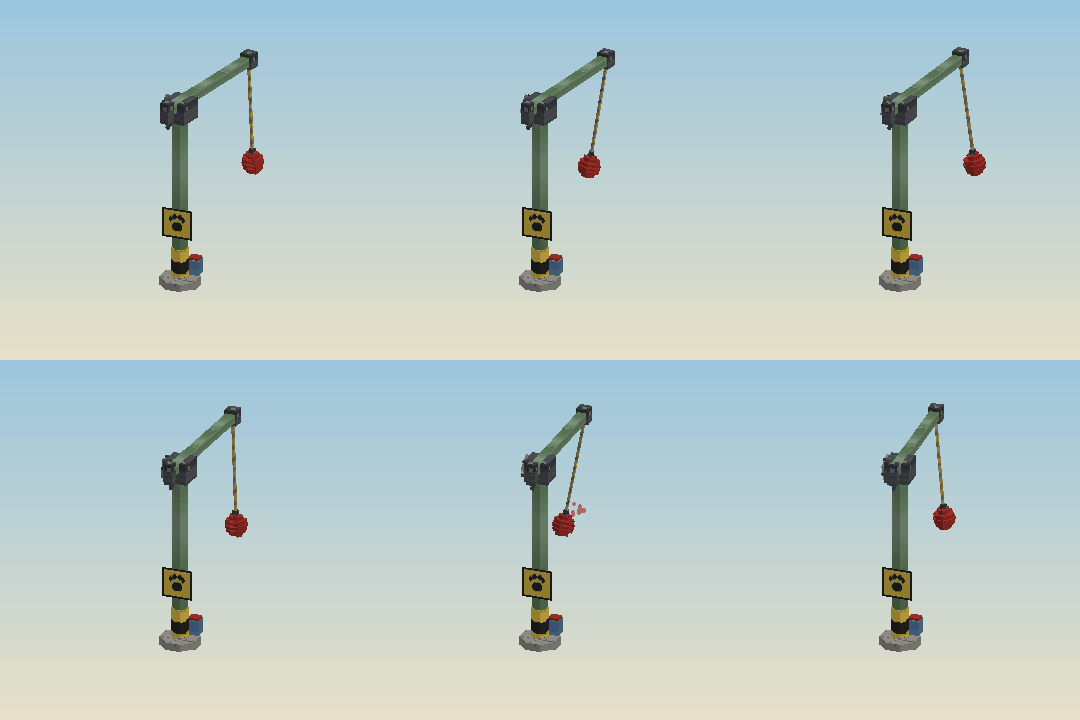 Zookeeper's Feeding Pole A meat ball swinging out over the pen; 26 predators and primates come to tug at it and heal a heart. Click it to jerk the bait. |
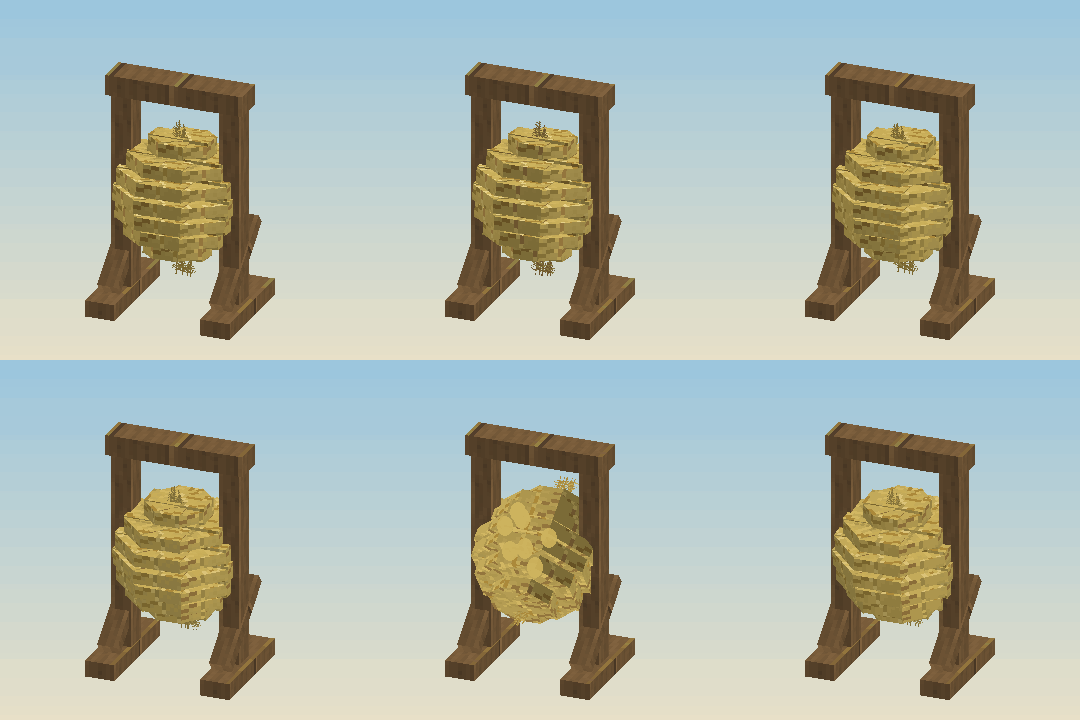 Zoo Hay Spinner Grazers pull at the hay ball and send it spinning — 29 herbivores come to it. Click it to spin it yourself. |
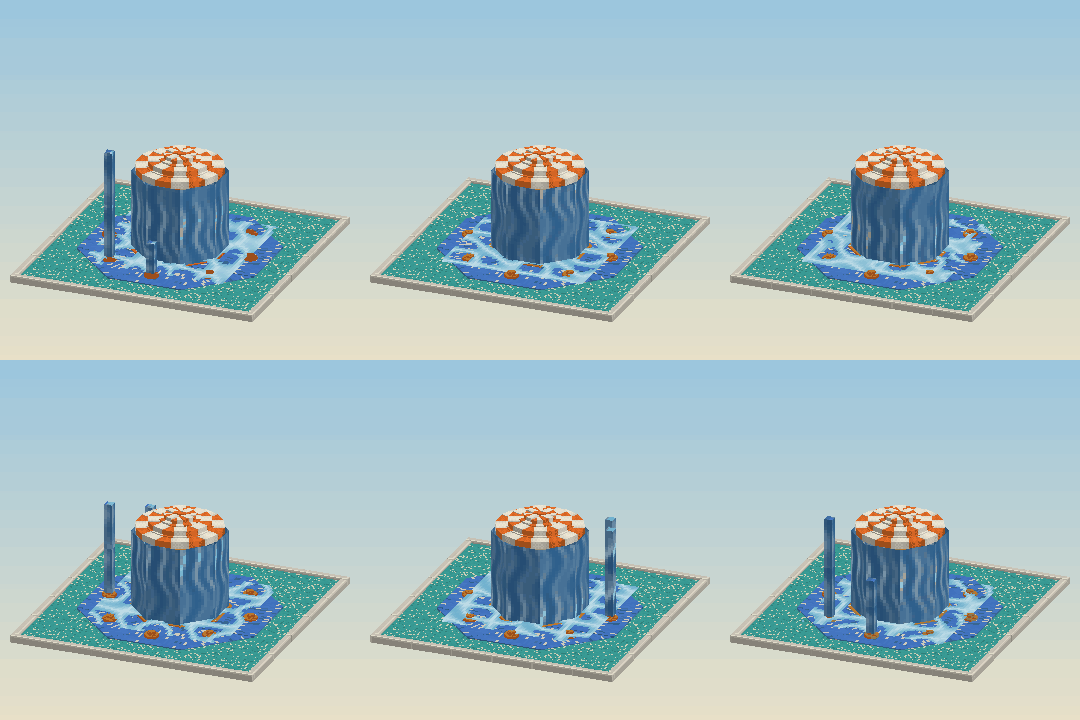 Zoo Splash Pad · 5 × 5 Eight brass nozzles shoot jets in turn around a mushroom shower. Walk straight onto it. |
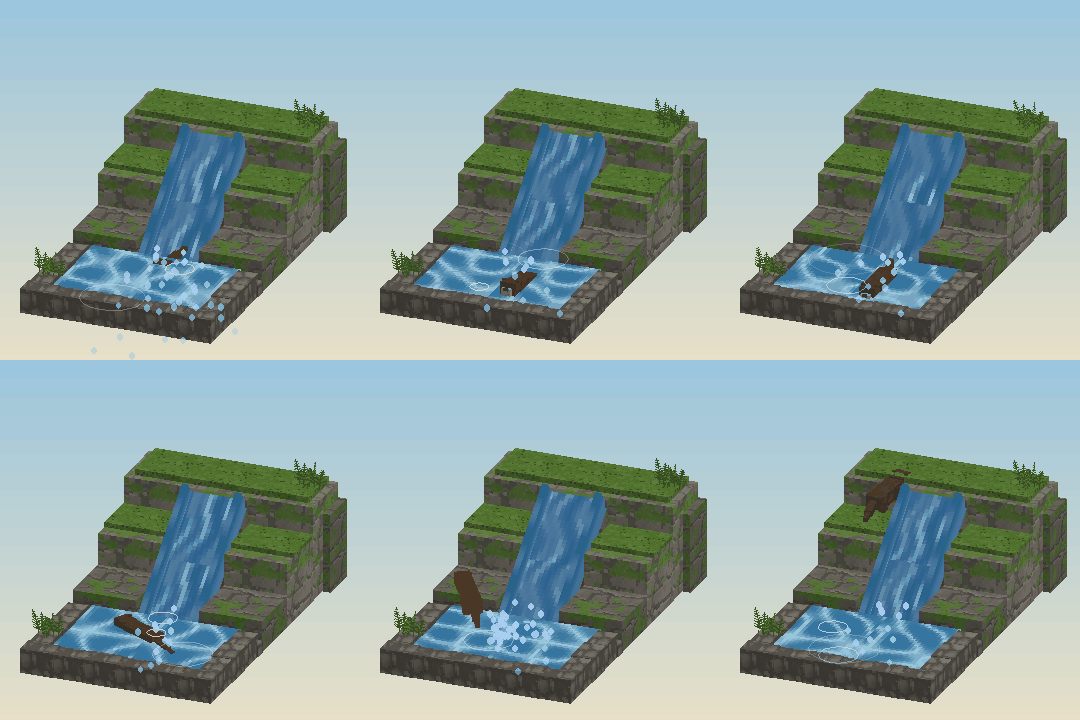 Zoo Otter Slide · 3 × 5 A model otter climbs up and slides down a running-water chute; real otters and beavers come to play in the pool. |
Zoo Viewing Telescope Look through it and it turns and tips with you; sneak to step the zoom. With nobody at it, it turns to face the nearest player. |
Zoo Snack Cart · 2 × 1 Popcorn pops behind glass under a turning umbrella; take a Zoo Popcorn or a Zoo Ice Cream. |
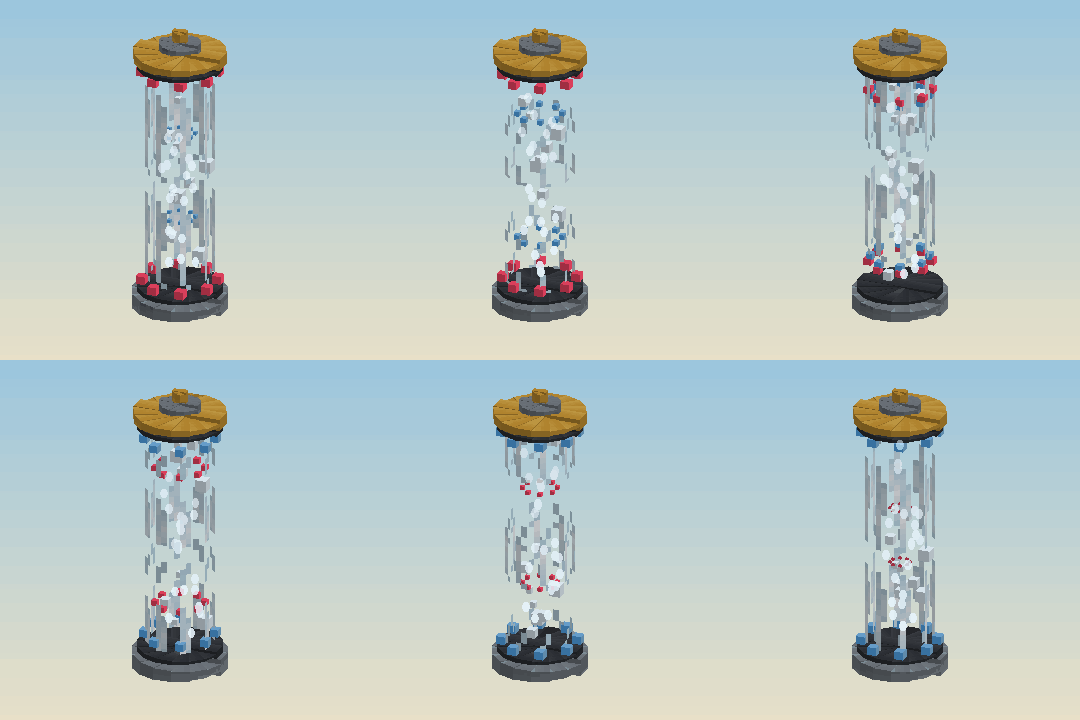 Zoo Bubble Tube A glass column of rising bubbles lit from below, in air or underwater. Menu: rainbow, red, green, blue, purple or white. |
Zoo Flight Show Perch A hawk flies wide circles, glides in to land, looks about and takes off again. |
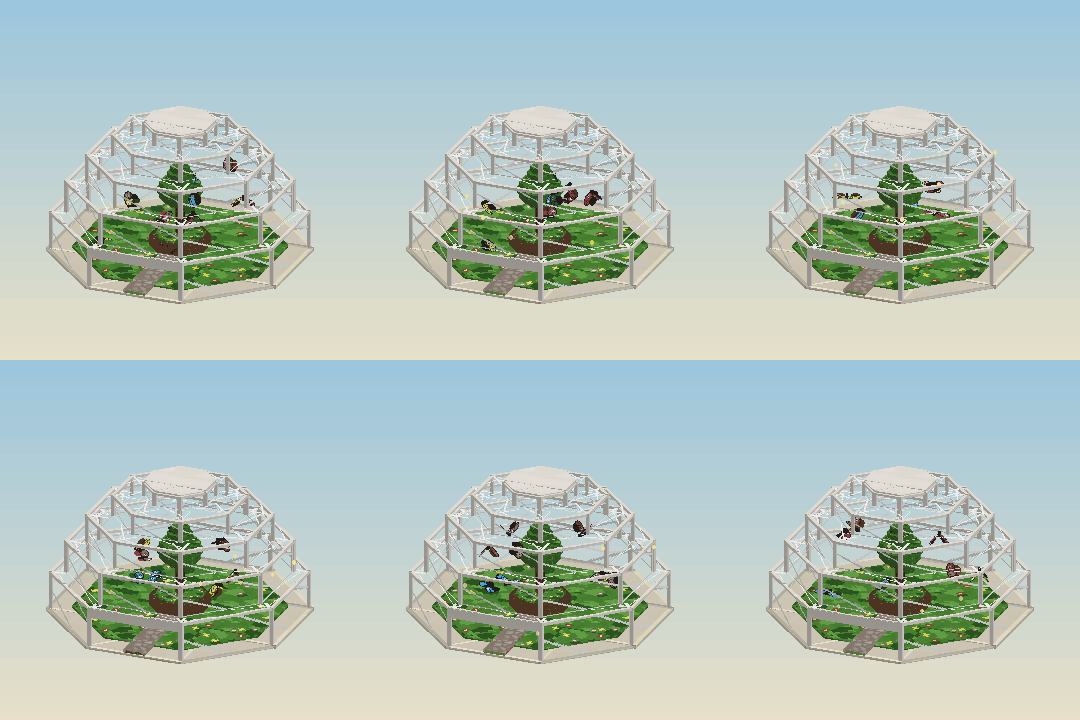 Zoo Butterfly House · 7 × 7 A glass dome you walk into, with eight butterflies flitting around a little tree; they land, fold their wings and settle at night. |
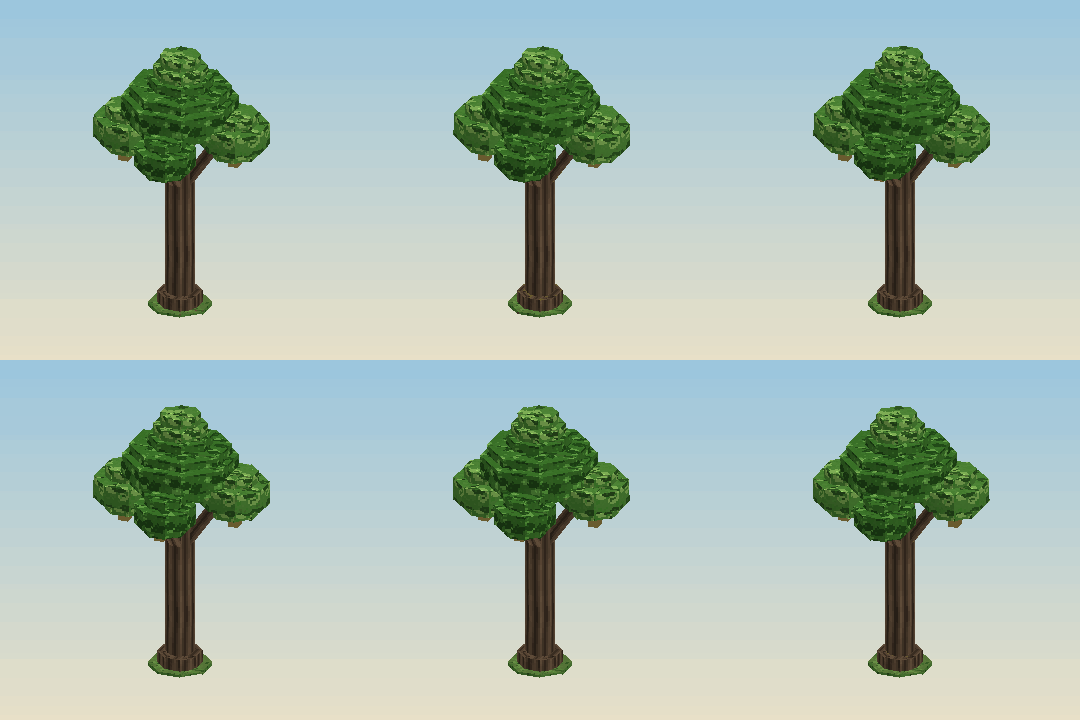 Zoo Mist Tree Branch nozzles breathe rolling fog over the exhibit, by day. |
Zoo Windmill Pump · 9 tall The wheel spins in a gusting wind and pumps water into a trough. |
Zoo Nocturnal House · 3 × 2 A little stone house with an owl on the ridge. After sunset eyes blink in the window, the owl wakes and moths circle the lamp. |
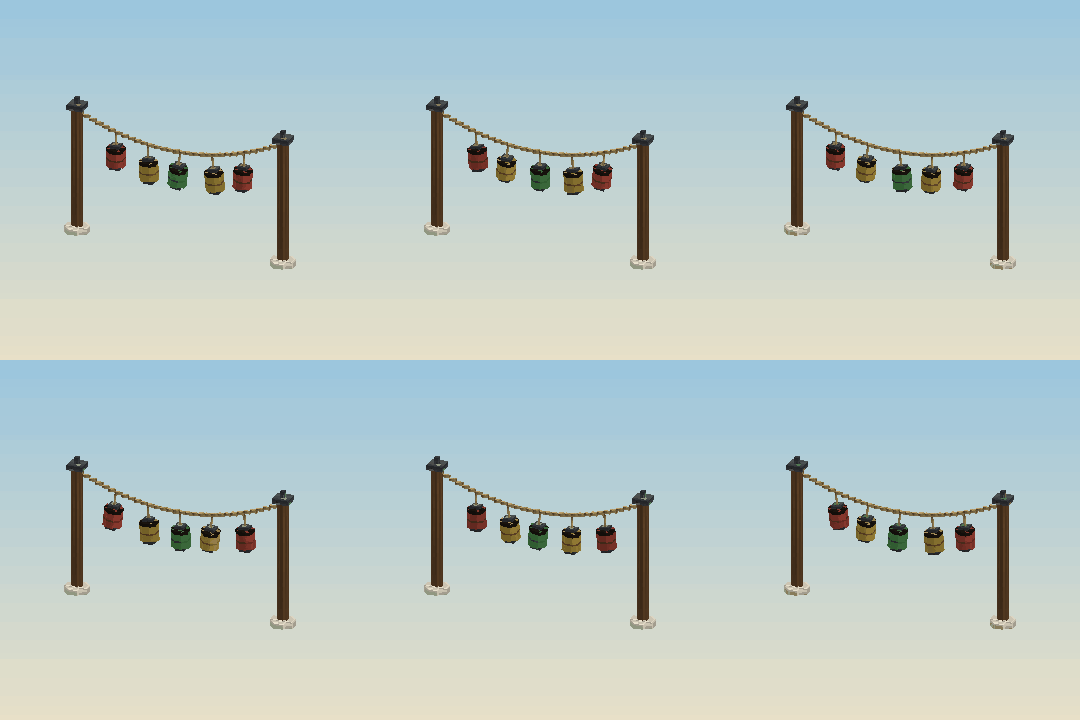 Zoo Lantern String · 5 wide Paper lanterns sway between two lit posts and glow at night. Menu: mixed, red, yellow, green or blue. |
The animations on this page are generated from the pack's own model and animation files; in a world they run smoother, at your frame rate.
Aquariums and aviaries
With Animal Fun: Fish installed the zoo kit gains an Aquarium page of sixteen tank pieces, and with Animal Fun: Birds an Aviary page of seventeen — feeders, perches, baths, nests and animated showpieces like a diver, a treasure chest, a castle drawbridge and a nest box chick. The pieces live in those packs; this pack runs them: it heals the animal that arrives, empties and refills the feeders, counts their walls in the placard scan and keeps their animated models in place. See those pages for the pieces themselves.
The field guide
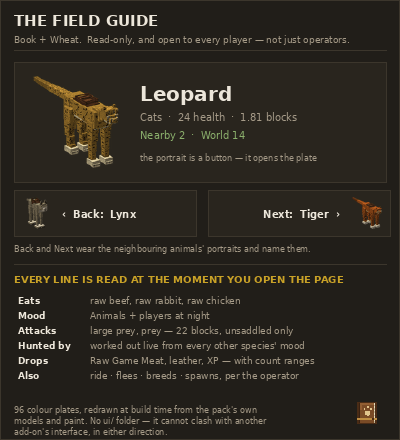
Book + Wheat, shapeless. It is read-only and open to every player, not just operators, and every line on a page is read at the moment you open it — so a page reflects whatever the server has that species set to do, not what it did when the pack was built.
Ninety-six color plates, redrawn at build time from the pack's own models. Expansion species populate it automatically, with their own plates. The contents page also carries a zoo kit section documenting every block, tool and attraction in game — Containment, Husbandry, Handling, Attractions, Rides and Presentation, plus Aquarium and Aviary pages when those packs are installed.
The guide is an ordinary Bedrock dialog — it redefines no vanilla control, so it cannot break another add-on's interface and another add-on cannot break it.
The menu
/af:menu — operator-gated, with a per-player access list an operator can extend.
| Section | Who sees it | What it does |
|---|---|---|
| One button per installed pack | config access | Drill Pack → Category → Species. Group-level bulk controls, one-tap enable/disable spawning, and an "adjust all" modal |
| Presets | config access | Saved configurations |
| Spawn an animal | spawn access | Browse and spawn any species from any installed pack — including one of every animal, on a spiral centered where you are looking |
| Diagnostics | everyone | Read-only. Global mob caps, the crowding limit, per-species loaded counts, non-Animal-Fun mob counts |
| Entity tag | everyone | Per-player settings for the on-screen entity tag: tamed and saddled state, whether the species is spawning, loaded count nearby. Operators also choose how it draws for everyone — boxed panel, plain text or off |
| Global mob caps | remove access | All mobs, Animal Fun mobs, and the crowding limit — how many aggressive animals may share one patch of world, so a river cannot fill up with predators. All 0 = off |
| Hunting & drops | config access | Global hunting-rate slider with per-species override, and a toggle for whether animals killed by other animals drop loot |
| Animal chatter | config access | The chance that looking at a fresh animal makes it turn, stare back and speak. 2% by default; 0 switches it off |
| Player access | operators only | Grant menu and spawn rights to named or online players |
| Reset everything | reset access | Full reset to defaults |
The hunting rate is a sated-after-a-kill duty cycle, not a per-encounter roll: 100% means predators never rest between kills, 0% means they never hunt, and everything between is a rest period after each one. It throttles how often animals hunt, never what hunts what — the real relationships are always preserved.
The entity tag draws in a bordered panel below the crosshair. With Better on Bedrock installed it hands its lines to their tooltip, so exactly one box shows either way.
Commands
| Command | Who | Notes |
|---|---|---|
/af:menu |
any player | Script-side gating decides what you see |
/af:hud |
any player | Show or hide the Animal Fun entity tag |
/af:spawn [animal] [count] |
spawn access | Base-pack species, tab-completed; count 1–10 |
/af:spawnid <id> [count] |
spawn access | Any species by id, expansions included |
/af:spawnall [pack|all|clear] |
operators | One of every animal on a spiral; clear removes exactly what it spawned |
/af:freeze · /af:unfreeze |
operators | Hold every loaded animal still for a screenshot, then let them go |
Expansions register their own tab-completing commands: /af:spawnbird, /af:spawnfish, /af:spawnmarine, /af:spawnpre.
Script events cover the same ground for command blocks, plus diagnostics: /scriptevent af:dump <id> prints a species' live stored config — the first thing to reach for when spawning misbehaves — /scriptevent af:perf is the built-in profiler, and /scriptevent af:ornbench lays out every aquarium and aviary piece to measure them with it.
Drops
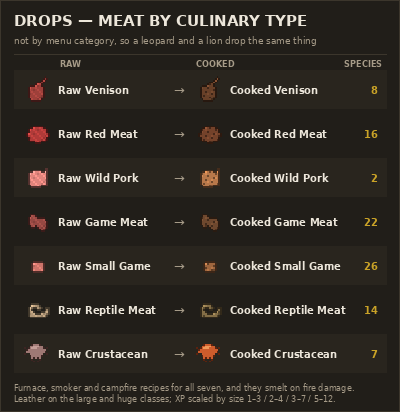
Every one of the 96 species has an experience reward and a loot table, and meat is grouped by culinary type rather than by menu category — so a leopard and a lion drop the same thing. Each raw item has a cooked counterpart with furnace, smoker and campfire recipes, and smelts on fire damage. Leather is preserved everywhere it already dropped and added for the large and huge classes.
Wild turkey is the one deliberate exception with no meat item: it keeps vanilla chicken and feather.
The Beast Harness (leather, iron and a saddle) is the pack's own tack item.
Taming, breeding, riding and spawning
Taming and breeding foods are per species, not per taxonomic group. The tortoise and green iguana are herbivores and are not tamed with raw cod; the myrmecophages take spider eye and honeycomb; the leaf-eaters — koala, sloth, giraffe, okapi, gorilla — take azalea leaves; grizzly bear takes salmon.
28 species are rideable by default, and every other species has the tack machinery wired but switched off until it is enabled in the menu. Locomotion is derived from each entity's own components rather than assumed, and the tack handler has no silent failure paths — it always says why.
What the toggles do:
- The per-species enabled toggle controls every spawn method — spawn eggs,
/summon, the spawn menu and natural spawning. A disabled species cannot be egg-spawned. - Spawn frequency, the mob caps and the crowding limit apply to natural spawning only. A spawn with a player within 20 blocks is treated as deliberate and skips them. All three default to off.
- Disabling a species stops new spawns but keeps the ones already in the world. Clearing them is a separate, explicit action.
Anything a player caused never despawns — spawn menu, commands, eggs, bred babies, and anything tamed or saddled. That is vanilla livestock parity. Naturally spawned wildlife keeps distance-despawn, so the population cycles and the frequency and cap settings stay meaningful.
Performance
The pack is built for a dedicated server, where what a feature costs per unit of time matters more than what any one operation costs.
- The enclosure scan. It is the single most expensive thing the pack can do and it only ever runs when a player asks for it, with a five-minute cache per block.
- Attractions and animated aquarium and aviary pieces animate on the client. The server keeps each model in place only while a player is near, and the carousel turns under script only while it is switched on and someone is within 48 blocks.
- The zoo tram runs one per-tick loop only while a tram is loaded, holds still when no player is within 128 blocks, and reads the rails one block at a time as it reaches them.
- A built-in profiler:
/scriptevent af:perf on, play for a minute, then read per-timer run rates, engine calls per second, wall clock and each timer's worst single tick. Off by default.
The pack family
| Pack | Version | Species | Role |
|---|---|---|---|
| Animal Fun (base / Land) | v1.61.1 | 96 | The brain — menu, taming, breeding, riding, spawning, drops, zoo kit and attractions |
| Animal Fun: Birds | v1.15.12 | 67 | Expansion — plus the aviary pieces |
| Animal Fun: Fish | v1.10.9 | 66 | Expansion — plus the aquarium pieces |
| Animal Fun: Marine Mammals & Oddities | v1.10.4 | 28 | Expansion |
| Animal Fun: Prehistoric | v1.10.3 | 73 | Expansion |
330 species across five packs, all in 29 languages. Expansions ship entities, models and textures and announce themselves to the base pack over a script handshake; everything they do — settings, breeding, taming, riding, drops, spawn control — is driven from here. Order between packs does not matter, but an expansion without the base pack does nothing useful.
Known limitations
Stated plainly, because you will notice them:
- Only the nocturnal species sleep as a behavior. The 22 nocturnal species nap through the day; everyone else has a lying-down pose and rests in its own off-hours, but only when it happens to be idle.
- Tram riders sit level on a slope. Bedrock's seats do not tilt, so the car leans and the riders do not.
- A wild tree gives a climber nothing to climb to. Climbers seek out a climbing branch or rope bridge you place; in a forest they climb only when the terrain gives them a reason.
- A perched animal stands, it does not cling, and a climber comes down by clinging to a face or by stepping off — it takes no fall damage either way.
- Nothing in this pack flies. The flying squirrel glides when it falls and cannot launch.
- Grazing is cosmetic — the animation is a timer, not a meal.
- The invertebrates are 5–20× life size, deliberately: a life-size ant is invisible and unhittable.
- An anti-climb cap alone will not hold a climber. Add the overhang course, or a canopy.
- The plaques count loaded entities only, and their enclosure reading is a snapshot until the next scan.
- Every species shares one rider seat position, which sinks the rider into anything much taller than about two blocks.
- Vanilla mobs cannot use a trough. The mechanism only reaches this pack's own entities, which is exactly what keeps it conflict-free.
- The menu and field-guide pages are English, though every name, egg, item and block is translated.
Troubleshooting
An animal renders as the wrong model. Check the world's world_resource_packs.json (it pins the pack UUID and version) and the client-side resource-pack cache, then check for an identifier collision with another add-on. Animal Fun namespaces its identifiers to stay clear of them.
Natural spawns never appear, but manual ones work. That asymmetry is by design — see the toggles above — then run /scriptevent af:dump <id>.
Saddling does nothing and says nothing. The tack script prints a message on every rejection path, so silence means it never ran. Reload the world first.
Two name labels show at the top of the screen. Another add-on is drawing its own look-at label next to this pack's entity tag — Massive Trees does by default. Set its label to Only this pack's trees in its menu, or set Animal Fun's entity tag to Plain text or Off in /af:hud.
The entity tag disappears, or another add-on's tooltip stops working. The boxed tag overrides the vanilla actionbar control. If a third add-on overrides the same control, switch the tag to Plain text in /af:hud — it then uses the vanilla actionbar and touches nothing.
A pack update seems not to have applied. Exit and re-enter the world. This is the first thing to rule out on any report.
Sound Credits
Every animal sound in Animal Fun — Land is a real field or studio recording, cut and level-matched from openly-licensed sources. All other audio is original procedurally-generated sound.
Attribution
Red deer stag bellowing — naturenotesuk — CC BY 4.0
Horse grazing and snorting — naturenotesuk — CC BY 4.0
Horse neigh — dobroide — CC BY 4.0
Tiger growl — videog — CC BY 4.0
Tasmanian devil — Daniel Simion — CC BY 3.0
Spotted hyena giggles — Mathevon et al. — CC BY 2.0 Mathevon N, Koralek A, Weldele M, Glickman SE, Theunissen FE. "What the hyena's laugh tells: Sex, age, dominance and individual signature in the giggling call of Crocuta crocuta." BMC Ecology 2010, 10:9. doi:10.1186/1472-6785-10-9
Hippopotamus, Luangwa National Park, Zambia, 1976 — YleArkisto — CC BY 4.0
Lar gibbon calls, Dusit — RTB45 — CC BY 4.0
Otters squeaking — Motion_S — CC BY 4.0
Meerkat calls — jimipoo32 — CC BY 3.0
Blue wildebeest bellow — roubignolle — CC BY 4.0
Cheetah calls — Smirnova et al. — CC BY 4.0 Smirnova D, Volodin I, Demina T, Volodina E. "Acoustic structure and contextual use of calls by captive male and female cheetahs (Acinonyx jubatus)." PLOS ONE 2016, 11(6): e0158546. doi:10.1371/journal.pone.0158546
Koala bellow — Charlton et al. — CC BY 4.0 Charlton BD, Ellis WAH, McKinnon AJ, Brumm J, Nilsson K, Fitch WT. "Perception of male caller identity in koalas (Phascolarctos cinereus)." PLOS ONE 2011, 6(5): e20329. doi:10.1371/journal.pone.0020329
Giraffe hums, grunt and snort — Baotic, Sicks & Stoeger — CC BY 4.0 Baotic A, Sicks F, Stoeger AS. "Nocturnal 'humming' vocalizations: adding a piece to the puzzle of giraffe vocal communication." BMC Research Notes 2015, 8:425. doi:10.1186/s13104-015-1394-3
Banded mongoose close calls — Jansen, Cant & Manser — CC BY 2.0 Jansen DAWAM, Cant MA, Manser MB. "Segmental concatenation of individual signatures and context cues in banded mongoose (Mungos mungo) close calls." BMC Biology 2012, 10:97. doi:10.1186/1741-7007-10-97
Elk, red squirrel and coyote recordings courtesy of the U.S. National Park Service.
The elephant death cry comes from a public-domain research dataset — no credit is required, but it is cited with thanks: Turner J, Wittemyer G, Lédeczi Á, Hedgecock W, Barnard G, Kalmár G. Animal-borne acoustic recordings of African elephant vocalizations from Samburu National Reserve, Kenya. Dryad, 2026. doi:10.5061/dryad.xd2547dz3 — CC0 1.0
Zoo attractions — waterfall and splash by InspectorJ (splash), coin slot by YleArkisto, popcorn by michaelkoehler, aquarium filter by DudeAwesome, the zoo tram's engine by viertelnachvier and its horn by juskiddink — all CC BY 4.0
Additional sources
All CC0, public domain, or Creative Commons. Credited with thanks.
- Crocodile scream, Amazon — felix.blume
- Tiger growl and snarl — schots
- Grant's zebra bray — TheKingOfGeeks360
- Ring-tailed lemur sigh and whimpers — TheKingOfGeeks360 · group · short
- Lion roar — Bidone
- Elephant trumpet — ikbenraar, field recording, zoo in Brugelette, Belgium
- Bear growl — celldroid
- Raccoon chitter — flumpytripod
- Elk bugle — NPS / Neal Herbert
- Red squirrel chirp — U.S. National Park Service
- Sheep bleat — zachrau
- Coyote yip — robertjd
- Snake hiss — florianreichelt
- Pig grunt — felix.blume
- Chimpanzee hoot — Radio_fragola_gorizia
- Cockroach hiss — Spoxe
- Prairie dog bark — Bansemer
- Rattlesnake rattle — fws.gov
- Turkey gobble — bod
- Paw footsteps — Fantozzi
- Hoofbeats — MrFizzywig
- Heavy footsteps — AudioPapkin
- Claw scratches — SpliceSound
- Insect steps — LucasDuff
- Snake slither — TheSupremeMuffinPooter
- Hopping thuds — Nightflame
- Light footsteps — Yoyodaman234
- Fountain water — ivolipa
- Hose spray — kyles
- Chewing — aunrea
- Tubular bell — sgossner
- Windmill squeak — felix.blume
- Night crickets — sengjinn
- Hawk calls — TRP
Thank you to every recordist above for releasing their work openly. A full credits file is also included inside the add-on.
The Animal Fun Zoo - Land Team