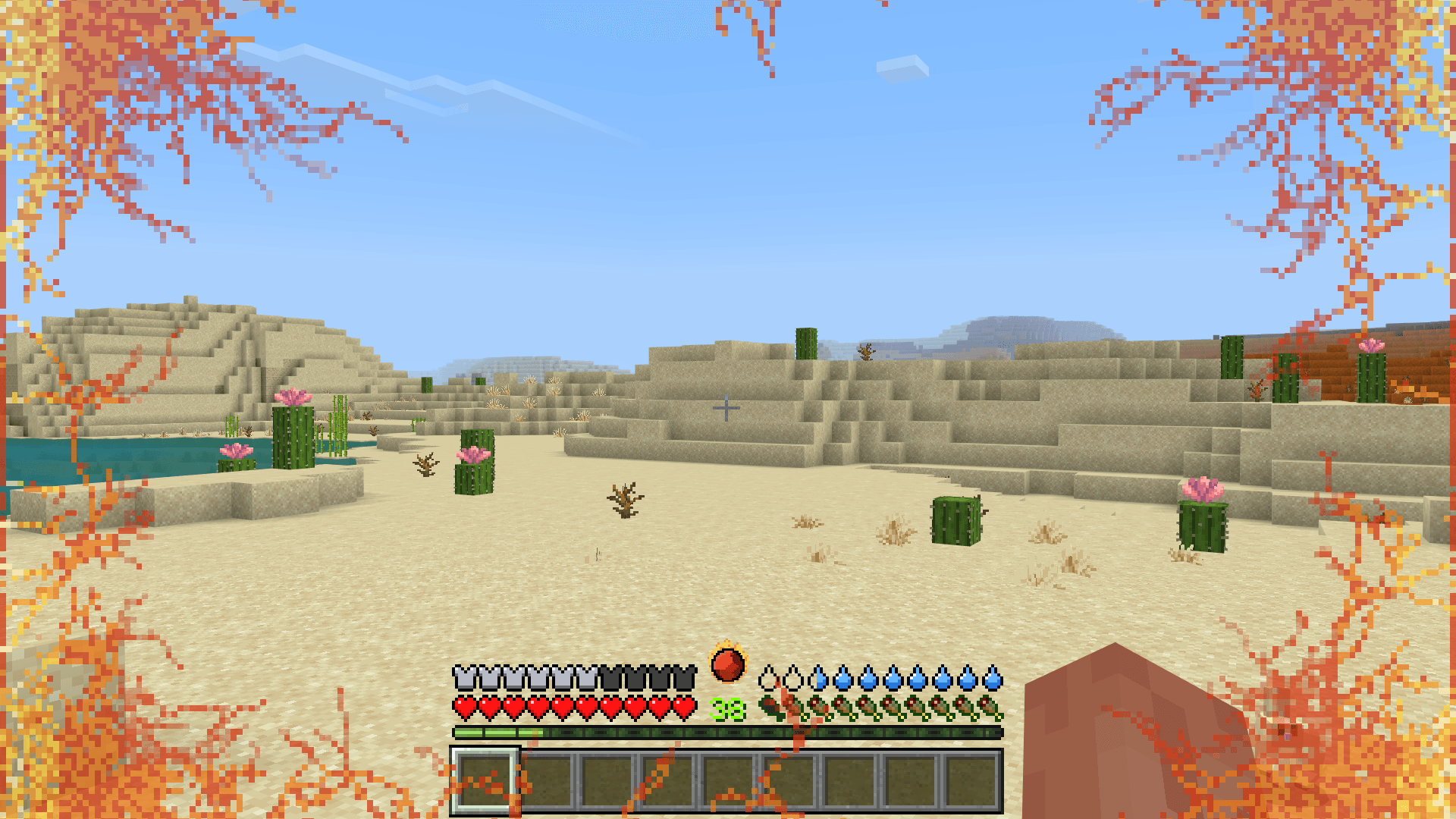
A complete survival overhaul that adds two interconnected systems to your world: thirst and temperature. Stay hydrated, dress for the weather, and watch your environment, every biome, every block, and every decision matters.
Features
📖 Guide Book
Every player gets a Water & Temperature Guide on their first join, with a chapter on each system: thirst and what drains it, finding and purifying water, the five temperature states, which armor actually keeps you warm, and how weather works.
Lost it? Craft it back from a book and paper at a crafting table.
The difficulty selector lives at the top of the guide.
⚙️ Difficulty
Thirst and temperature have their own difficulty, chosen in the guide book and shared by everyone on the world.
- Easy — Thirst drains slower, hot and cold extremes are pulled in, and freezing and heat damage are halved. Ordinary rain will chill you but won't freeze you.
- Normal — The pack as designed.
- Hard — Thirst drains faster, the extremes are pushed further out, and temperature damage is increased.
- Match World Difficulty — The default. Follows your world's difficulty setting, exactly as previous versions did.
🌡️ Temperature System
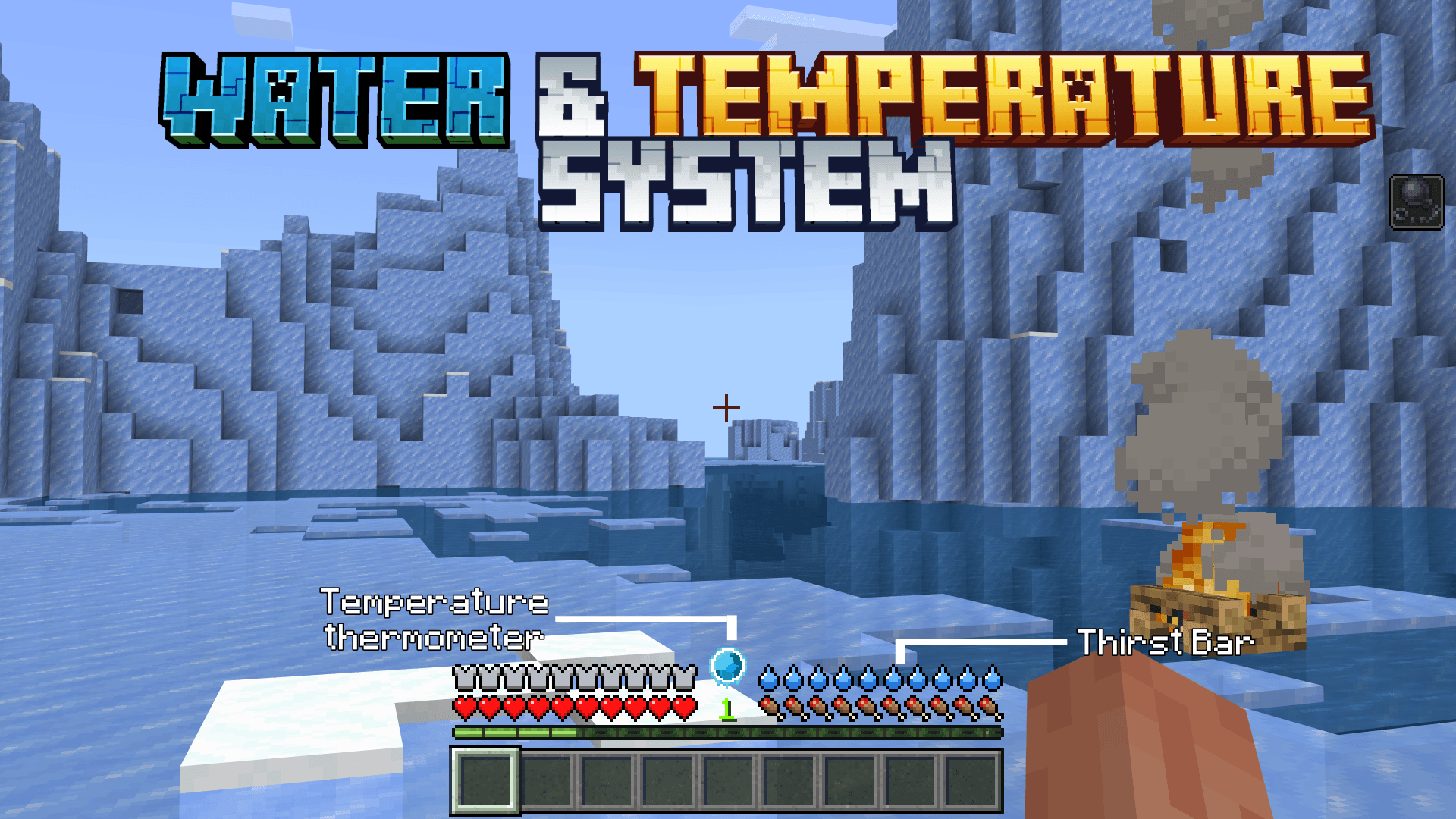
Your body temperature changes dynamically based on the world around you. A thermometer HUD displays beside your water bar, shifting through five states: Very Cold, Cold, Normal, Hot, and Very Hot.
What affects your temperature:
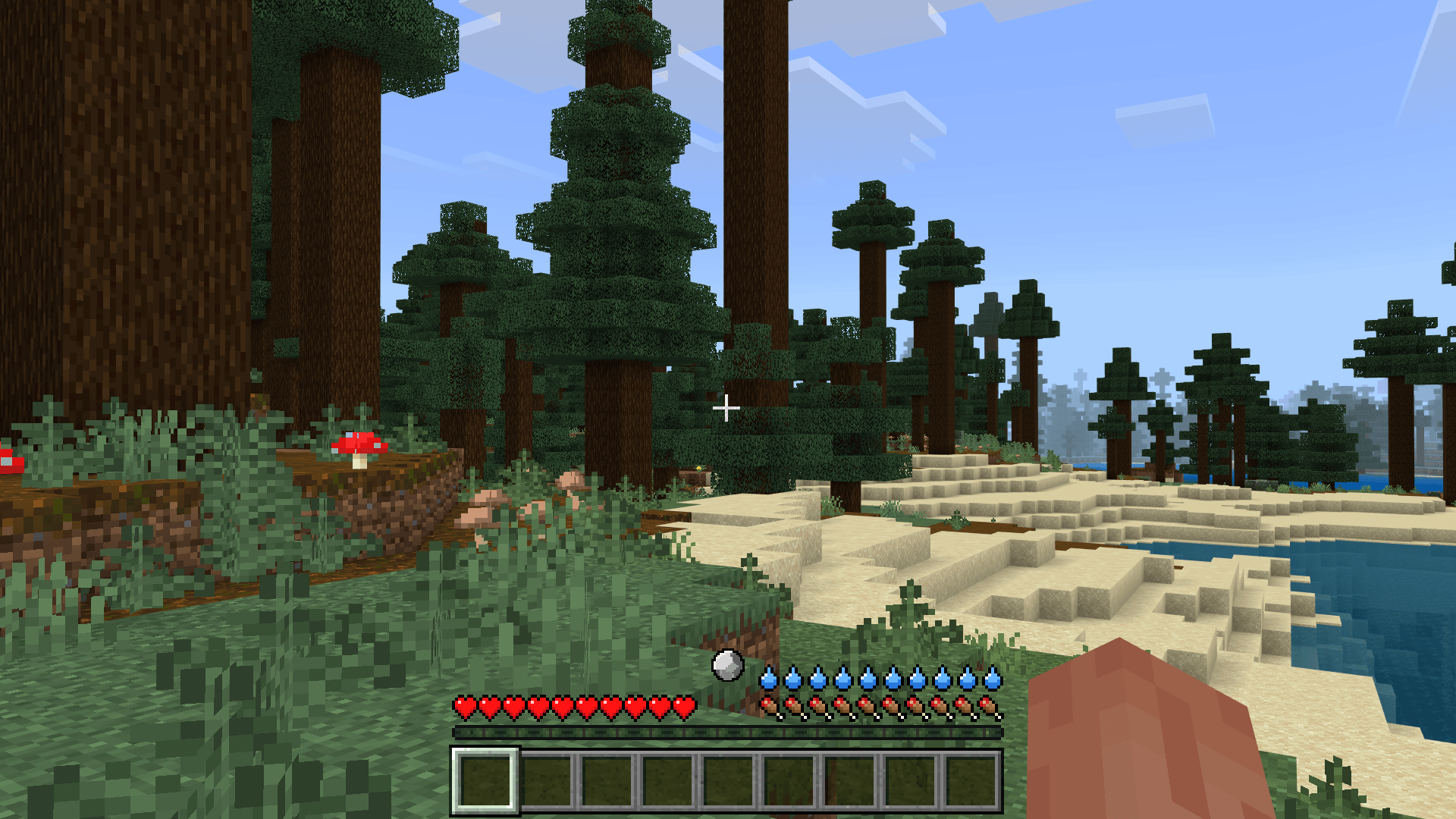
- Biome detection — The system scans 100+ block types around you to determine the biome temperature. Deserts and badlands scorch you, snowy tundras freeze you, and forests keep things mild.
- Day/night cycle — Midday is warmest, night is coldest. Plan your expeditions accordingly.
- Altitude — High mountains are freezing. Deep underground is warmer.
- Shelter — A roof over your head insulates you, pulling temperature back toward normal.
- Heat sources — Campfires, lava, torches, lanterns, furnaces, and fire all radiate warmth with realistic distance falloff.
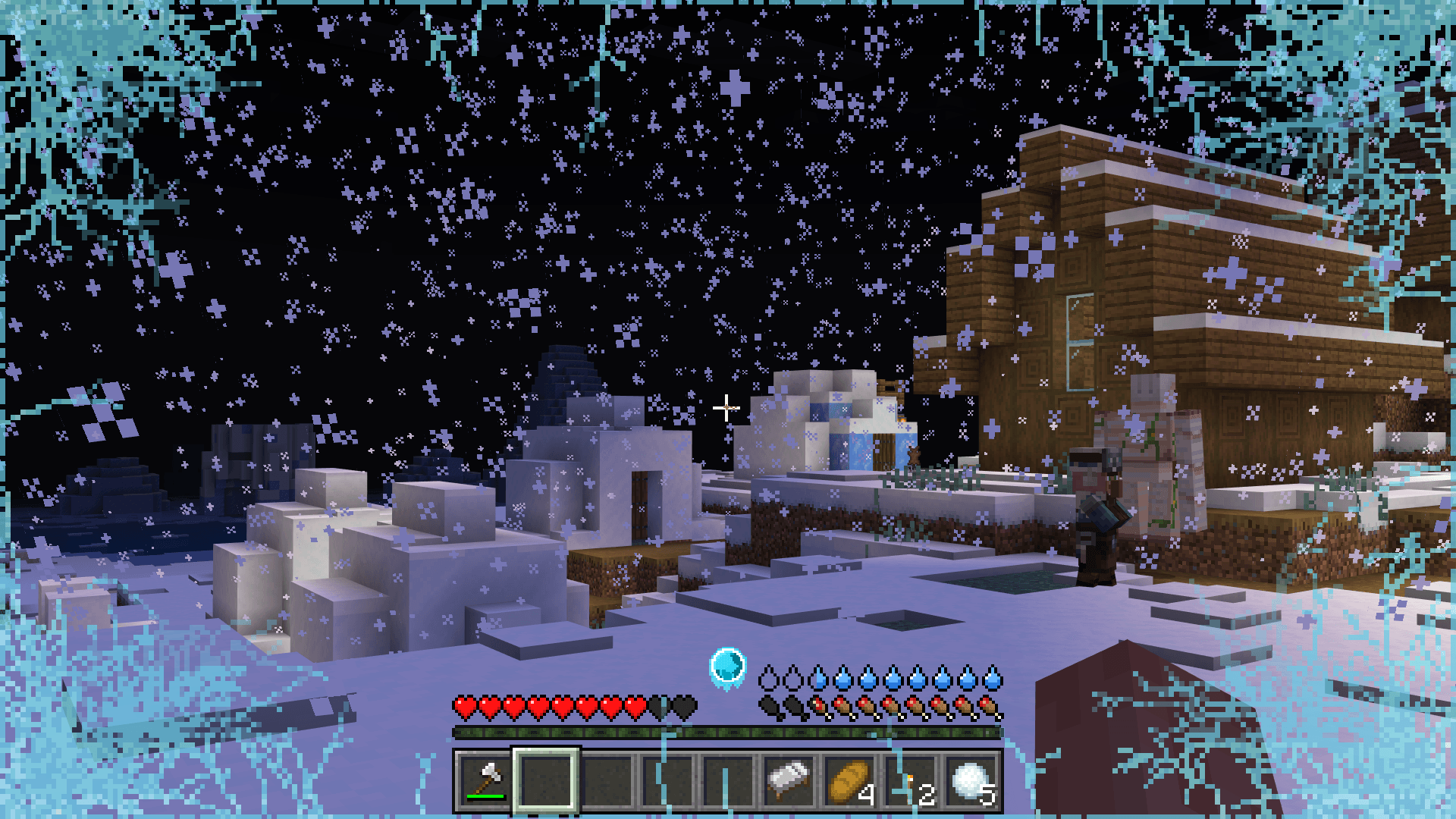
- Weather — Rain, storms and snowfall chill you under open sky, and the longer you stay out the worse it gets.
- Water exposure — Swimming makes you colder over time. Deeper water is worse. Stay in too long and hypothermia sets in progressively.
- Armor — Leather is the best cold-weather gear. But heavy metal armor in a desert? That traps heat and makes you even hotter. Netherite is the exception — it insulates poorly, but it won't cook you.
- Activity — Moving warms you a little. Sprinting warms you more.
- Dimension-aware — The Nether is always scorching. The End is always cold.
Temperature States:
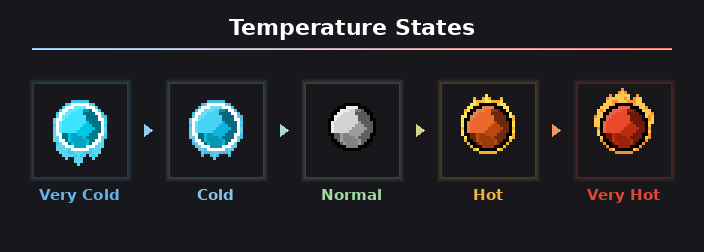
- Very Cold — Slowness II, mining fatigue, freezing damage over time. A frost overlay covers your screen.
- Cold — Slowness I. A warning to find warmth.
- Normal — No effects. You're comfortable.
- Hot — Hunger effect. You're sweating.
- Very Hot — Hunger II, weakness, fire damage over time. A heat overlay fills your screen edges.
Transitions between states are smooth and gradual, no jarring instant swaps.
Fire Resistance blocks heat damage and its debuffs outright — useful for Nether trips.
🌧️ Weather & Getting Wet
Weather is a real threat, not a backdrop.
- Rain builds — Standing under open sky in rain gets colder the longer you stay in it, rather than hitting a cap straight away. A full soak takes around a minute.
- Storms are worse — Thunderstorms chill harder than plain rain, night is colder than day, and rain falling as snow in a cold biome is colder than either.
- You stay wet — Getting under cover doesn't dry you instantly. The chill lingers at half strength while you dry off.
- Fire dries you faster — Standing near a campfire or furnace dries you several times quicker than waiting it out.
- Shelter works — Any solid roof keeps the rain off you entirely. Leaves and glass don't count.
💧 Thirst System
A thirst bar appears on your HUD alongside the default hunger bar. It depletes as you move, sprint, and jump, faster in hot biomes, slower in cold ones.
How thirst works:
- Movement drains thirst — Walking, sprinting, and jumping all cost water. Sprinting costs nearly double.
- Climate matters — Deserts drain 60% faster. The Nether drains 2x faster. Snowy biomes slow drain by 40%.
- Temperature matters — Being Very Hot drains thirst 80% faster; being Very Cold slows it by 40%.
- Healing costs water — When your health regenerates, it uses extra thirst.
- Food hydration — Fruits and soups restore thirst. Melons, berries, apples, stews — they all help. But dry foods like bread, cooked meat, and dried kelp actually make you thirstier.
- Difficulty scaling — Set in the guide book, or left to follow your world difficulty.
Dehydration penalties:
- Below 6 thirst: Slowness IV kicks in
- Below 2 thirst: Nausea
- At 0 thirst: You start taking damage
Running dry also makes temperature hit harder in both directions — dehydration and heat feed each other.
🫗 Water Canteen & Purification
Craft a Water Canteen from leather and string at a crafting table:
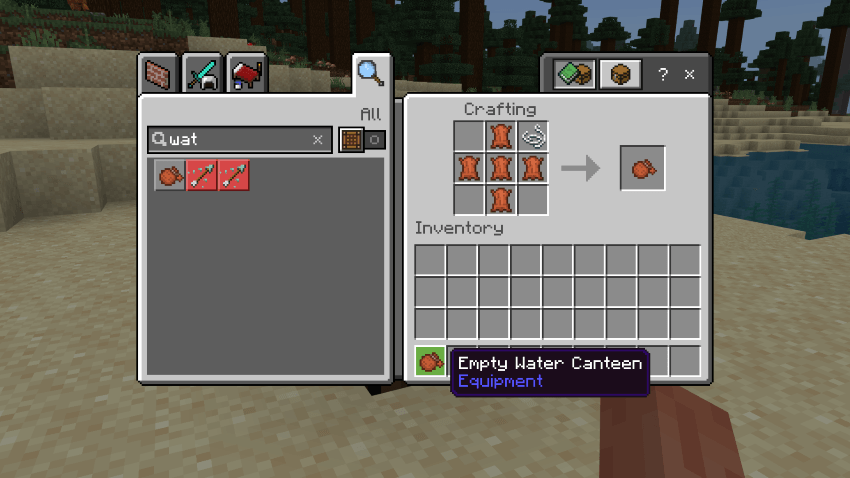
Water sources:
- Raw drinking — Sneak + interact (empty hand) near water when thirsty. Restores 7 thirst but risks poison (20% chance) and always gives a brief hunger effect.
- Dirty Canteen — Fill your empty canteen at any water source. Holds 3 drinks (5 thirst each), but dirty water risks poison and hunger effects. The remaining sips are written on the item.
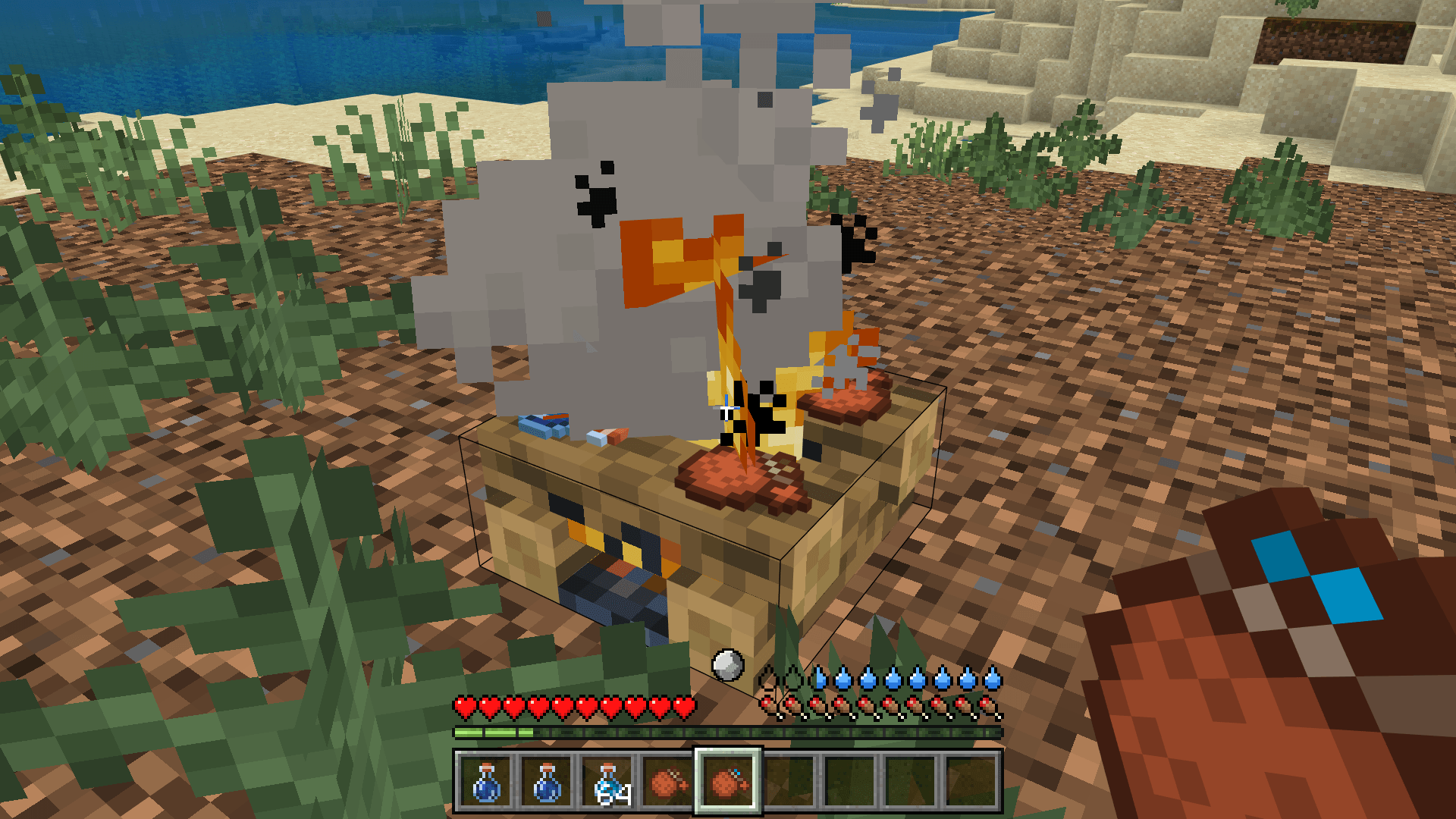
- Purified Canteen — Smelt a dirty canteen in a furnace, campfire, or soul campfire. Same 3 drinks, zero side effects.
- Purified Water Bottle — Smelt a regular potion (water bottle) for a single-use purified drink worth 10 thirst.
- Cauldrons — Sneak + interact with a water-filled cauldron for emergency drinking (uses one fill level).
Any drink also cools you down briefly, which matters more than it sounds in a desert.
Installation
- Download both Resource Pack (RP) and Behavior Pack (BP)
- Import both packs into Minecraft Bedrock
- Apply both packs to your world
- Play! The systems activate automatically
Requirements:
- Minecraft Bedrock Edition 1.21.0 or later
Multiplayer: Fully supported. Each player has independent thirst and temperature tracking. The difficulty setting is shared across the world.
In-Game Commands
!status — Your current thirst, temperature, armor insulation, shelter status and difficulty!help — A short reference for both systems
Tips for Survival
- Read the guide — It's in your inventory from your first join, and it explains every mechanic in the pack.
- Carry a canteen — It's the difference between life and death in a desert.
- Purify your water — A campfire in the wild can save you from poison.
- Wear leather in the cold — It's the best insulation in the game. Full leather gives more cold protection than full diamond.
- Don't wear iron in the desert — Metal armor traps body heat. Go light or wear leather.
- Get out of the rain — A storm at night in the open will freeze you, and standing there won't get better on its own.
- Build shelter — Any solid roof (not leaves or glass) insulates you and keeps the rain off.
- Use campfires — They warm nearby players, dry you off fast, and can purify your canteen.
- Eat smart — Melon slices and berries hydrate you. Bread and cooked meat make you thirstier.
- Watch the clock — Travel during mild hours. Night in a snowy biome can kill.