51f3d0e4e66bbd8f523ae1035ca4be588cdb4a4f.webp
b541c99ab47aecaa6ea99f2f188eeba3a5becbe9.png
8aacbc7eeeab2396d192d00d51eca360e78a52f9.png
3d42af6f176fdf73cff4bc994fcd628a36aba952.png
69dbdd541dbd102047d90c951ea04de9f0bc5483.png
Description
PathMax
A voxel path traced shaderpack for Iris.
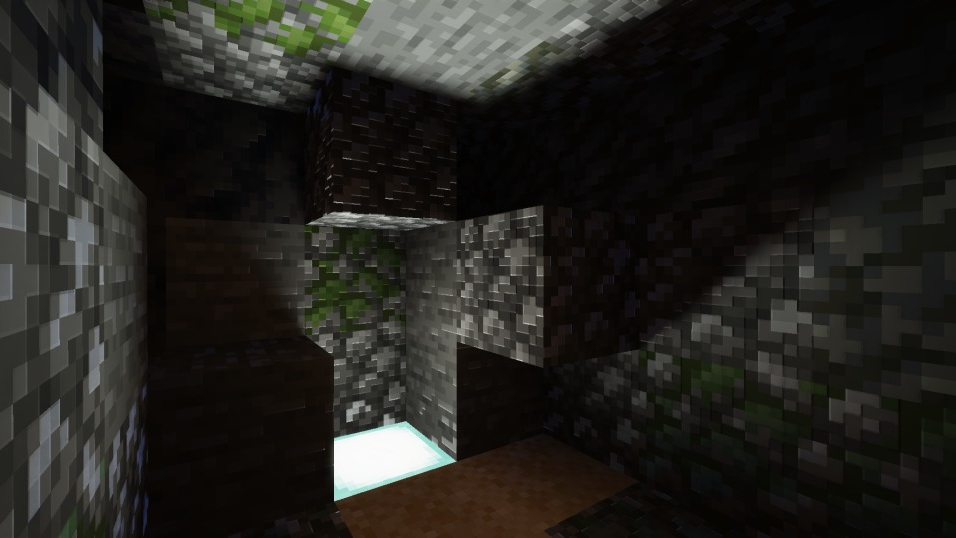
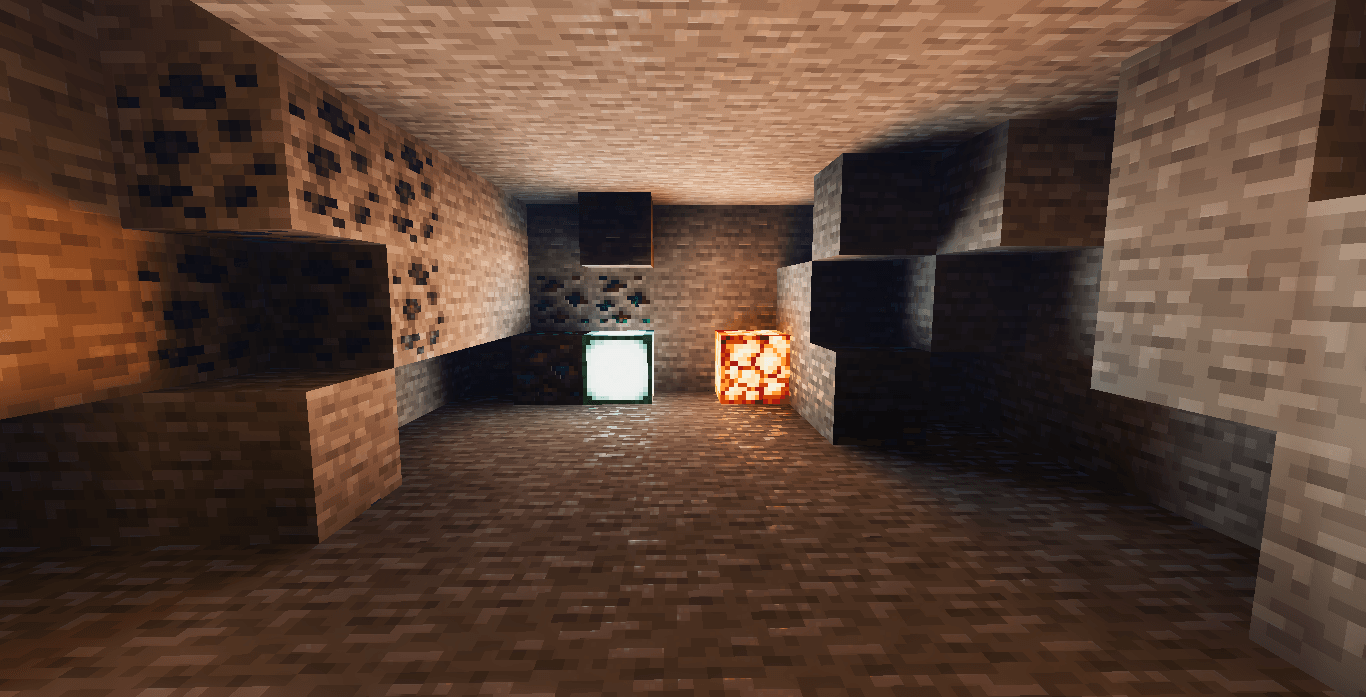
Most packs approximate indirect light. This one traces it. Every frame the world gets copied into a voxel grid, and rays bounce around inside that grid to work out what is lighting what.
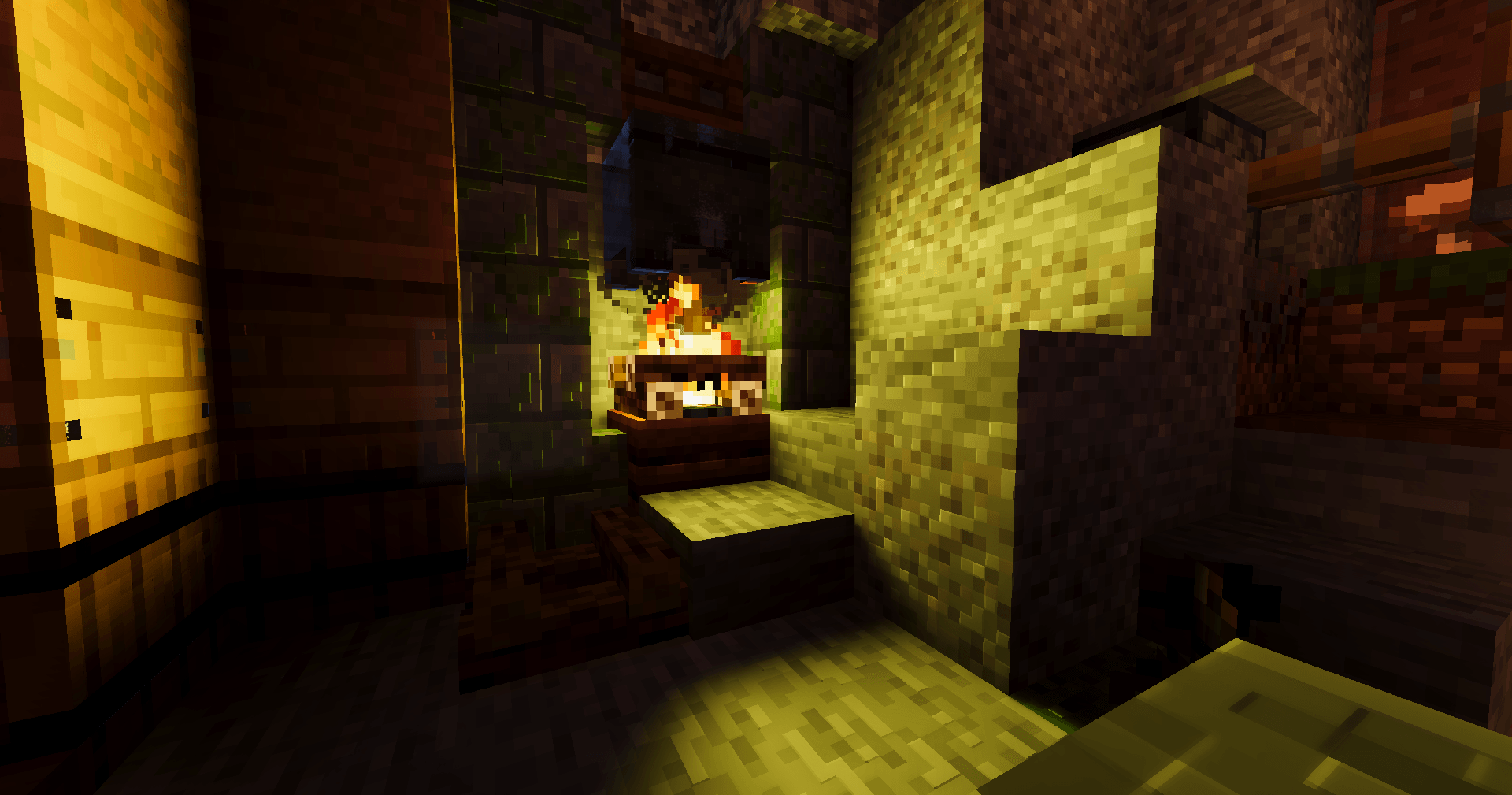
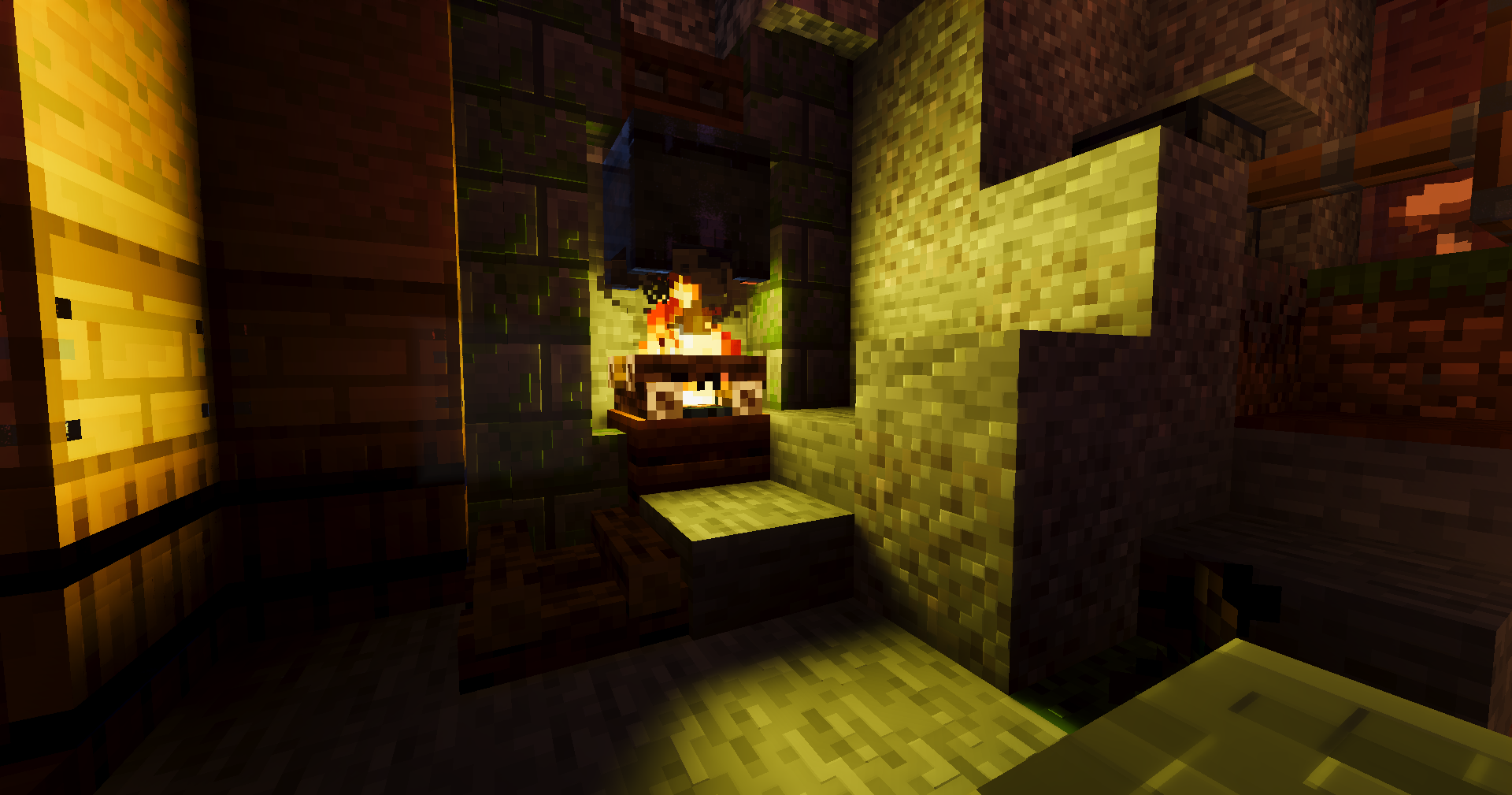
What you actually notice is a lot of small things adding up. A torch lights the room from where it really sits instead of from everywhere at once, and it casts a shadow. Light picks up the colour of whatever it bounced off on the way to you. Two lamps in one room stay two lamps instead of averaging into one glow. And nothing in the Nether is lit by a sun, because there isn't one down there, its all lava and glowstone.
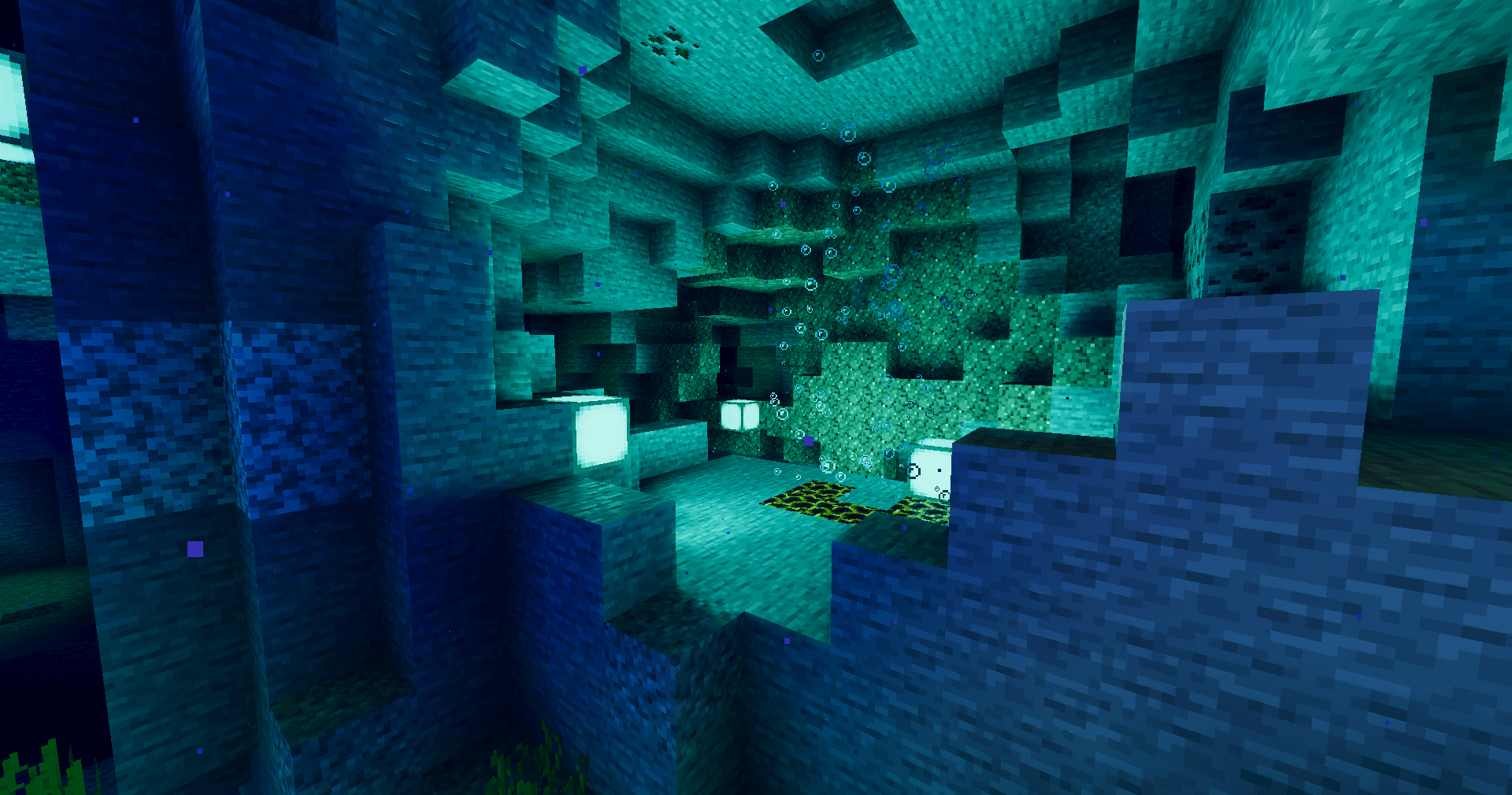
Reflections are screen space, which is a trade. You lose whatever is off the edge of the screen, and at grazing angles across a lake that's quite a lot of it. What you get back is the actual finished frame in the water, GI and emission and fog included, rather than a simplified copy of the world re-lit by a guess. There is a voxel trace fallback in the settings if you'd rather have it the other way round.
What's in it
Lighting
- Path traced global illumination, denoised in screen space
- Block lights read straight out of the voxel grid, each one gets its own shadow ray
- Sun visibility comes from the shadow map at every bounce, which is both finer than the grid and a lot cheaper than marching the thing twice
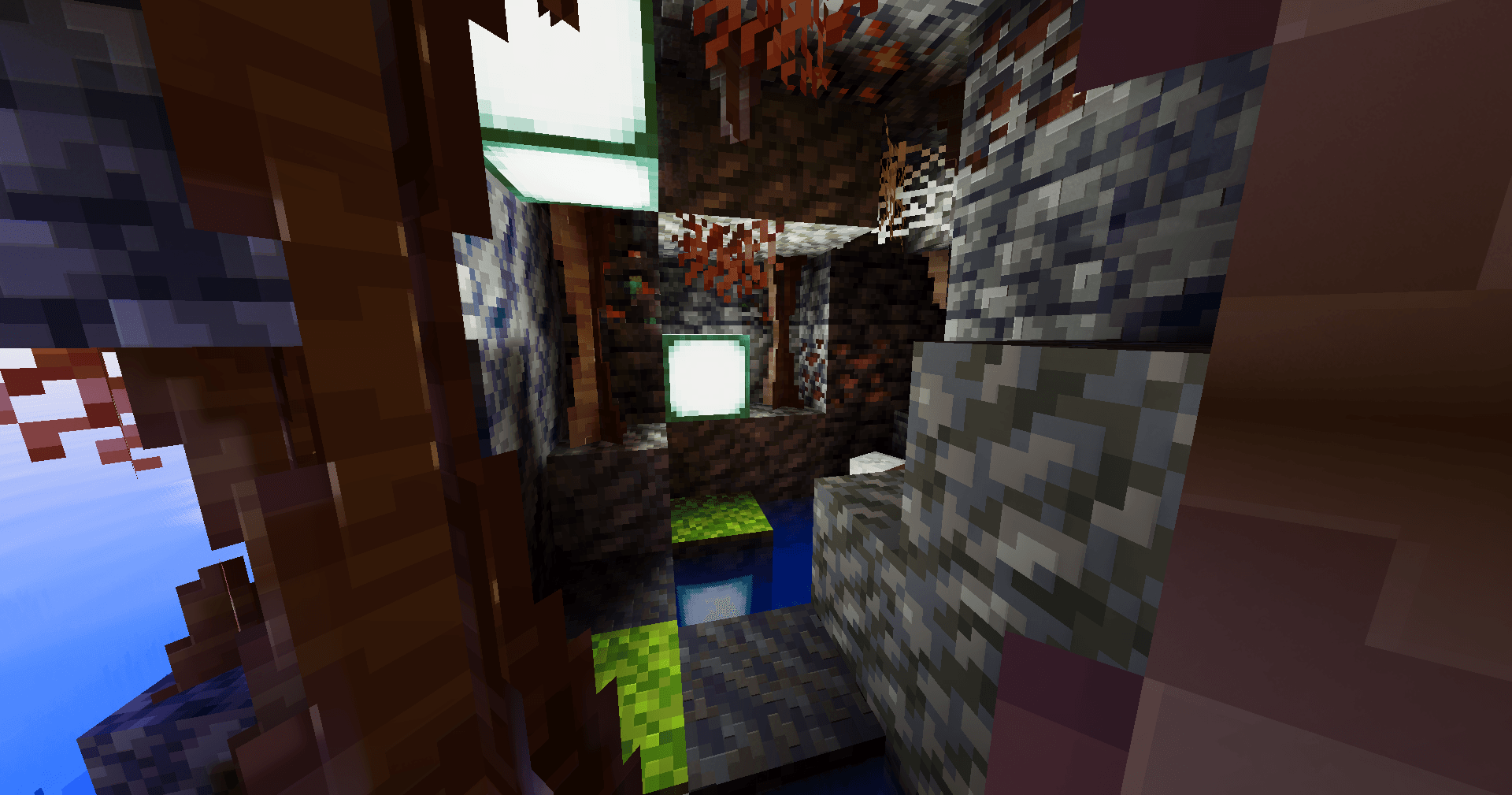
- Stained glass actually colours the light. On the floor, in the beam, and carried by the bounce, so a rose window paints the whole room instead of one rectangle
- Emissive surfaces follow the texture rather than a flat value per block
Atmosphere
- Volumetric light, plus an optional second pass lit by lamps instead of the sun
- Volumetric clouds, and they turn up in reflections too
- Light pollution. A town somewhere over the hill, its glow sitting on the horizon and quietly taking the faint stars out
- Height based aerial perspective, with the density picked to match real visibility figures instead of by eye
- Procedural stars that stay the same size wherever you look
Water
- Reflections with roughness, plus refraction, foam and caustics
- Optional volumetrics above and below the surface, absorbing over the real path length instead of a capped one
- Optional waves and surface detail
Materials
- labPBR, with a fallback for packs that ship no specular map
- Subsurface scattering on foliage, using the shadow map for thickness
- Parallax occlusion mapping (off by default)
- Entities are voxelised, so mobs cast traced shadows and show up in reflections
Dimensions
- The Nether and the End are rewritten rather than tinted. No phantom sun, no blue sky gradient painted on the underside of the roof, and ambient light arriving from the floor where the lava is
- End portals and obsidian get their own handling
Post
- AgX by default, with ACES and four others if you want them
- Auto exposure, bloom, optional TAA
Requirements
| Loader | Iris only. The lighting is built on Iris custom images, OptiFine has no equivalent for those |
| Minecraft | 1.20.1 to 26.2 |
| GPU | OpenGL 4.6, compatibility profile |
| macOS | Not supported, it caps out at OpenGL 4.1 |
Block shapes and materials are catalogued up to 1.21.4. Anything added after that still renders fine, it just gets treated as a plain block.
Settings
Seventeen screens. Every option has a proper tooltip on it, what it does, what it costs and why the default sits where it does, instead of a four word label.
Five profiles from Potato to Ultra. They're rungs on one ladder rather than five seperate presets. The base already sits at the floor of ray rate, bounces and step count, so the cheap end saves by giving up volumetrics, clouds and reach, and the expensive end spends on rays first.
The pack ships with a hand tuned config rather than one of the profiles, a fairly night heavy look with a lot of light pollution and strong volumetrics. If thats not your thing, pick Balanced and you get the reference settings back.

PathMax Team
Owner