Maw-Gut
- By
Maw-Gut is a grotesque dark-fantasy adventure mod where you explore living worlds, survive digestion, battle ogres and dragons, wield biological magic, and wage war across heaven.
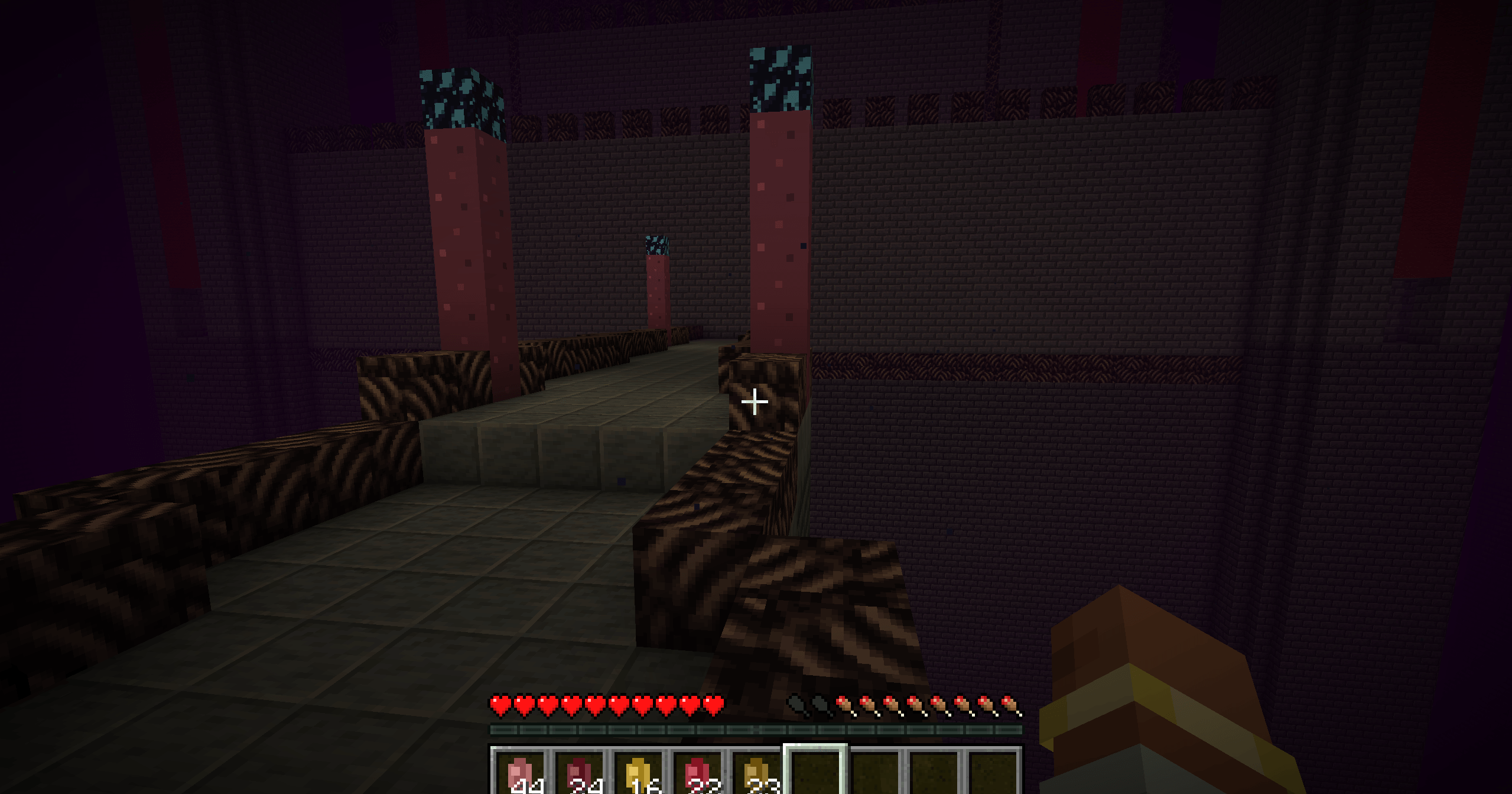
Screenshot 2026-09-05 161706.png
Screenshot 2026-09-05 180913.png
Screenshot 2026-09-06 094309.png
Screenshot 2026-09-06 134308.png
Screenshot 2026-09-06 145129.png
Description
Maw-Gut: Continuity of Flesh — War in Heaven
A wounded colossus has fallen across the Overworld. Its wings scar the horizon. Its ribs rise like ruined towers. Its crowned skull lies ahead, jaws spread around a dark and living passage.
You can walk away.
Or you can climb onto its tongue.
Maw-Gut is a massive biological dark-fantasy adventure and world-expansion mod for Minecraft. Search strange surface cultures, enter a fully authored fallen dragon, descend through its impossible digestive ecosystem, harvest supernatural Anima, cultivate Bloom magic, and eventually carry the war into a hostile sky filled with dragons, floating settlements, slave barges, and burning warships.
This is not a small dungeon hidden behind a portal. It is a persistent journey through societies and ecosystems built around living anatomy, with survival progression, creatures, agriculture, processing machinery, settlements, raids, trade, traversal tools, spells, armor, weapons, and several ways to approach the main adventure.
Begin with a First Catch
New worlds open with a trail to a nearby fairy town and an authored prologue about the sister you came to rescue. Follow the note, meet the town, and witness the event that introduces Maw-Gut's mixture of fairy-tale beauty, grotesque comedy, captivity, and biological horror.
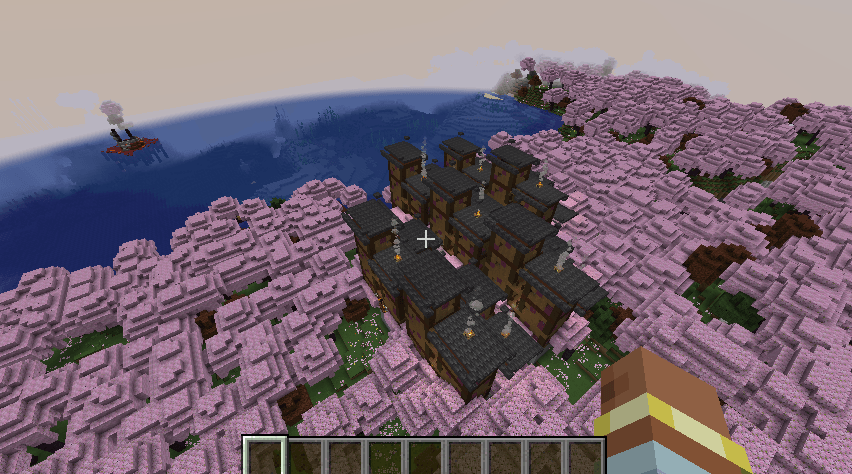
Fairy settlements are complete Japanese-inspired compounds with layered timber homes, gardens, ponds, roads, domestic interiors, and resident fairies. Their population remains peaceful during the prologue, but the wider fairy country is not harmless. Offer flowers to fairies to discover early abilities, hunt the predators stalking their towns, or stay after dark and watch the living world become considerably less safe.
Vanilla villages can also appear in Maw-Gut's Overworld. At night, invading fairies may descend on their residents, hunt independently, and carry their successful feeding cycle through to a physical outhouse in the world.
Discover the fallen dragon
Your main landmark is a roughly 370-block-long dragon built directly into the Overworld. It is not a decorative statue or an oversized entity. The dragon is a walkable anatomical ruin with a crowned skull, open mouth, tongue ramp, alternating fangs, glowing eyes, exposed ribs and muscle, four planted limbs, scarred wings, parasites, wounds, ambient movement, and a complete readable silhouette.
Walk between its teeth and cross the mouth membrane to be swallowed.
Every dragon owns a deterministic 4,096-block interior territory. Its exterior location, interior cell, structures, settlements, organs, routes, trials, machinery, progression, and player position persist across reloads. Completed regions are not randomly rebuilt, and separate dragons do not share or corrupt one another's interiors.
Survive a world inside something alive
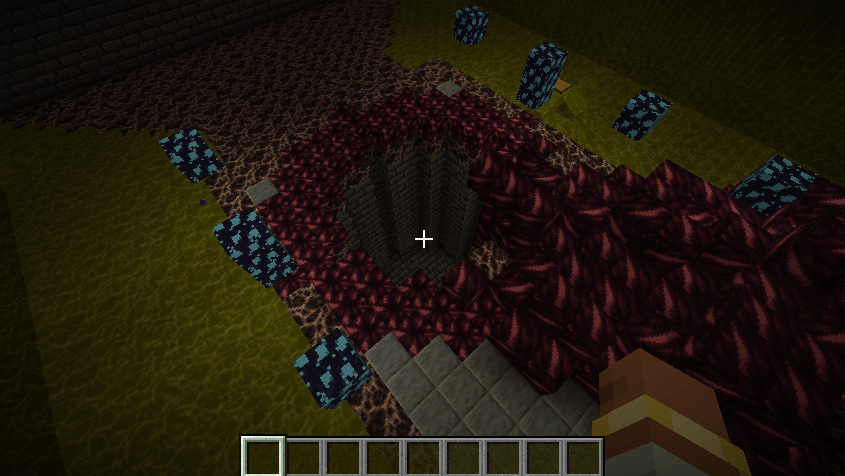
The upper digestive world opens into a colossal organic basin of bile lakes, membrane islands, hanging sacs, skeletal shelves, tendril forests, settlements, farms, workshops, Soul Mills, hidden caches, and a functioning stomach castle town. Win the stomach trial to open the protected route into deeper anatomy.
Beyond it lies a connected graph of enormous intestinal micro-worlds. Each sphere has its own shell, terrain, cliffs, basins, vessels, nerves, cartilage, bone, villages, roads, farms, workshops, ore, ecology, hazards, secrets, and guaranteed route onward. Relevant destinations materialize as the player approaches, preserving density without generating the entire internal world during login.
The Soul Slough expands into a three-by-four field of twelve vast stomach-rack chambers containing 972 readable rack cells, bridges, vacuoles, drain cones, captive specimens, Soul Mills, and a dangerous True Soul Vat. Its liquid weakens and damages unprotected players; a Membrane Guard offers limited protection while every main liquid route ultimately reaches a valid exit.
The Small Intestine is an inhabited frontier of Dragonkin villages, invader bastions, temples, Boneways, marrow mines, kitchens, farms, shrines, service tunnels, puzzle rooms, reward chambers, and ten immense organs:
- Heart Furnace
- Venom Gall
- Dream Ganglion
- Soul Spleen
- Flesh Cistern
- Lure Bladder
- Pancreatic Crucible
- Wing Scar
- Will Knot
- Womb of Echoes
The Large Intestine changes the rules. Its porous lower tract is a hostile descent through compacted remains, gas bladders, mucus, ossuary growth, collapsing settlements, spider-egg vacuoles, secret chambers, rare hanging gardens, and a stalking predator. Survive the disposal system and terminal canal to emerge from the same physical creature that swallowed you.
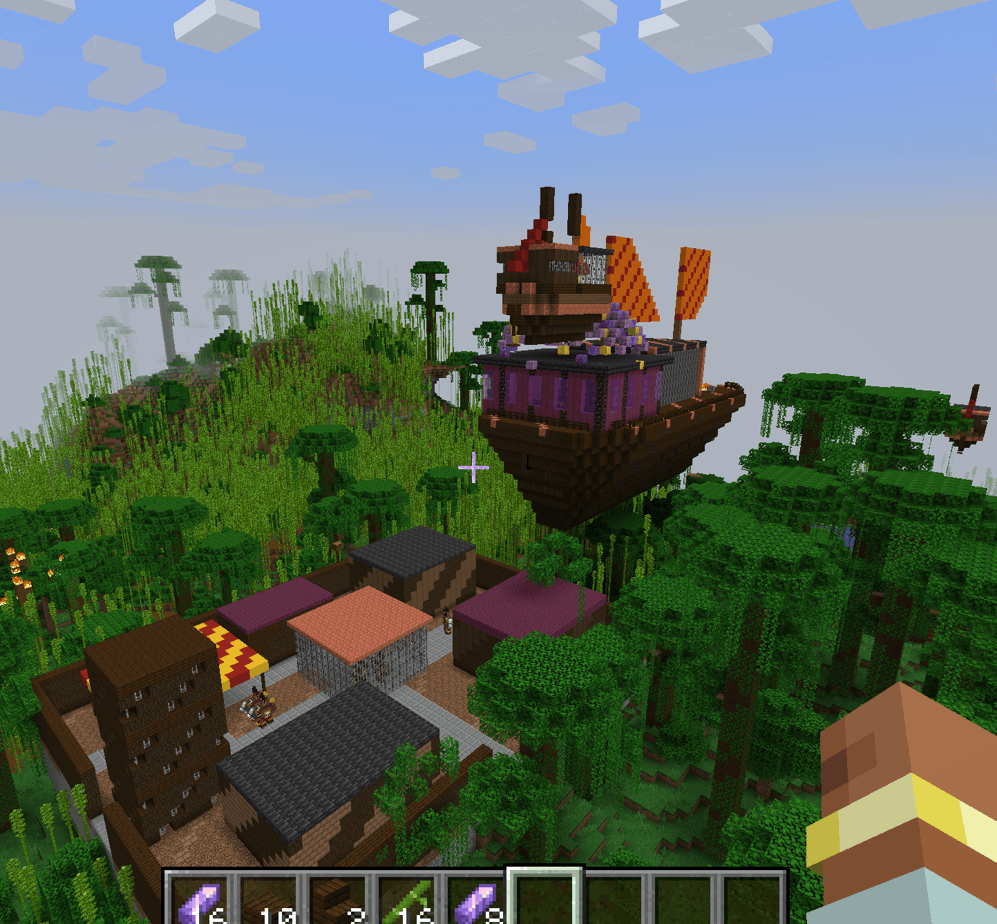
The full gut expedition is dangerous but optional. A flying Dragonkin quest barge in the Overworld provides a second route to Seraphine's transformation and Devour through a Tendon Net and working Soul Mill. Completing the Heart path reveals both the dragon's mouth and the sky altar, letting you make an informed choice about what comes next.
Capture, process, transform
The Tendon Net captures passive creatures and weakened hostiles while preserving a safe record of their identity, name, health, age, and dominant Anima. Captives can be released or delivered to a Soul Mill for processing.
Maw-Gut contains six physical Anima aspects: Flesh, Blood, Soul, Mind, Will, and Venom. Different creatures produce different aspects, while unknown creatures safely fall back to Will Anima for compatibility with modded wildlife. Anima powers crafting, transformation, and spellcasting; abilities consume their real cost and fizzle cleanly when the complete payment is unavailable.
The craftable Anima Satchel stores up to 256 of every finished aspect and automatically funds Maw-Gut spell and Heart costs. Soul Mills, raids, trade, hunting, exploration, and the dragon's internal machinery all feed the same economy.
The Soul Vat expedition uses a true risk-and-reward escrow. Escape successfully and keep both your original equipment and everything carried out of the Maw. Fail terminally and the Maw cargo is lost, the player emerges as an empty-handed slime, and the original inventory returns after the loaded recovery period.
Cultivate Bloom magic
Bloom is a biological cultivation system rather than ordinary spellcasting. The Bloom Focus cycles between Pollen, Thorn Lash, Petal Drift, Shed Bloom, Thought Pop, and Plague Awakening. Targets accumulate cultivation stacks that increase poison pressure, enable spread, empower specialized weapons, and remain readable through walls.
The Wing Scythe supports the same loop by applying Bloom and gaining strength against cultivated prey. The Anima Grimoire is craftable, tradable, and obtainable from guaranteed spell caches, ensuring that its magic belongs to survival progression rather than creative-only equipment.
Meet living surface cultures
Maw-Gut expands the Overworld with the Jade Pillar Rainforest, Fairy-Eater Jungle, Golden Ogre Steppe, and Red Maple Highlands. These regions contain their own settlements, agriculture, ecology, structures, resources, and dangers.
Monkey Ogres inhabit dense multi-level towns of timber, mud brick, stone, bridges, workshops, markets, canals, banners, and guarded lanes. Ogre Quartermasters buy useful material stock and sell price-gated ammunition, armor, weapons, Tendon Nets, and Anima Satchels. Every generated town includes guaranteed rations, arrows, and field gear instead of empty decorative storage.
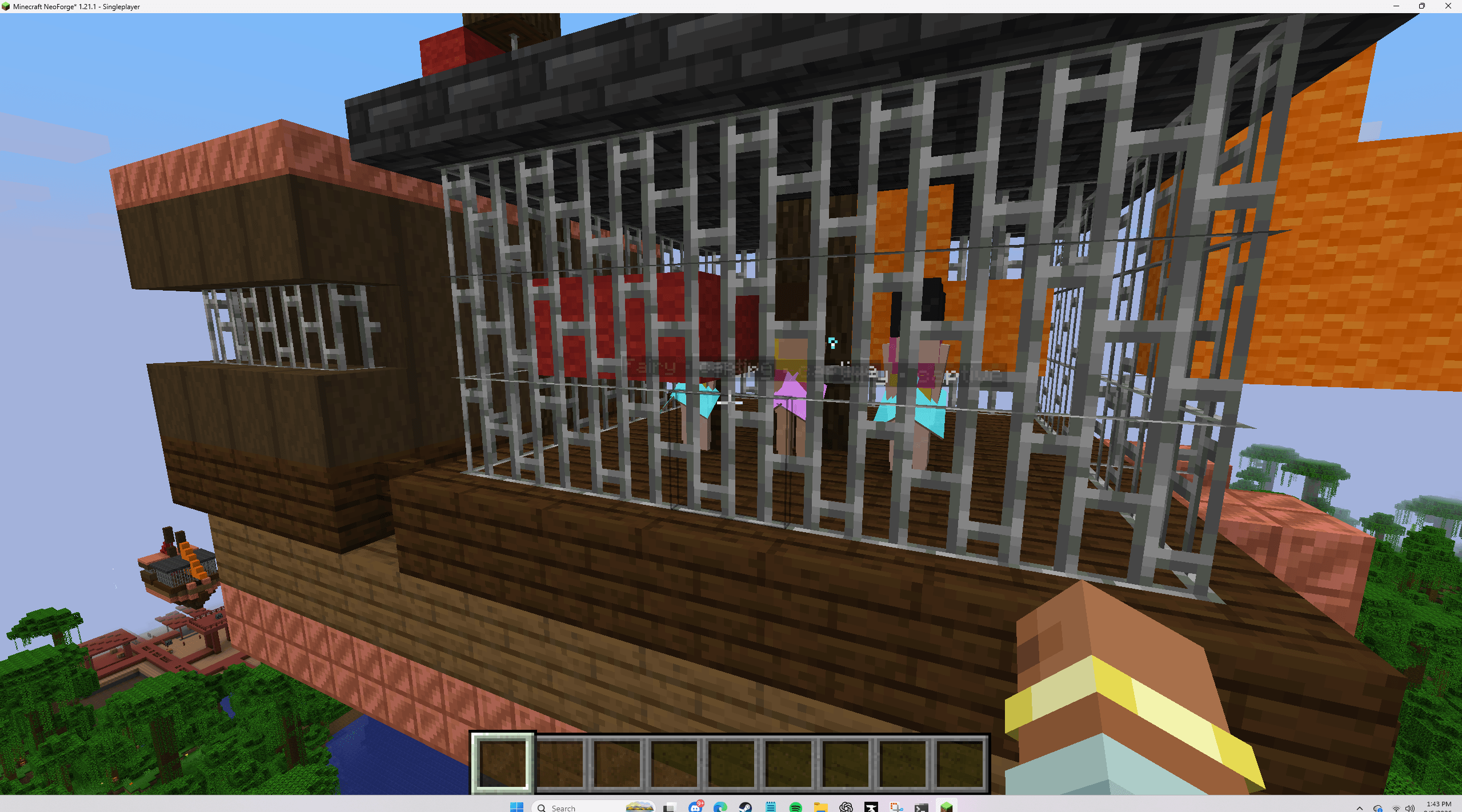
Ogre combat is also a deliberate enchanting and Anima catch-up loop. Surface ogres, raiders, champions, and sky crews grant escalating experience and material rewards. Night raids send full barges against fairy and Dragonkin settlements; crews bombard exposed positions, pursue residents, capture survivors, and operate visible Soul Mills. Destroying the final active mill stops reinforcements, releases remaining captives, and creates guaranteed salvage. If a settlement is completely lost, the raid can leave behind a persistent cage barge, spawner site, and Ogre slave complex to explore.
The Anthill Maw is the first major optional surface challenge: an enormous toothed landmark containing a pale market, Wool Bug pen, finite Pale Iron mine, queen chamber, smithy, weaving hall, brood room, Gloomstalk farm, and storage gallery. Ant traders buy broad monster and MawGut salvage, then sell Pale Iron, Deep Red Wool, weapons, armor, lapis, and experience bottles. Pale Needles, Ridge Spears, and the complete Pale Iron Redweave set are craftable. The throat at the center of the colony leads directly into the deeper Maw.
Choose the Maw or risk Heaven early
After the Heart path, Maw-Gut presents a real route choice:
- Enter the fallen dragon first and emerge prepared with Anima, spells, armor, weapons, machinery, and trade valuables.
- Enter War in Heaven early to acquire long-range Harpoon traversal immediately, but face endgame ships, Ogre boarders, slave engines, and a dying dragon without the Maw's preparation.
The advancement screen is a dense horizontal journey map. It surfaces the prologue, flower offering, Ogre rewards, Tendon Net lesson, Anima economy, Heart unlocks, route choice, sky risk, Maw route, trade, machinery, spells, and post-game objectives without requiring an external wiki to understand the intended order.
Fight the War in Heaven
War in Heaven is a persistent sky dimension built around an airborne Lucine-derived dragon and a fleet of fifteen authored enemy ships: Butcher Barges, skirmishers, slave vessels, and a Supermassive floating city. Four Slave Engines and one Grand Maw Engine drive the siege.
Enemy batteries fire fast, physical, explosive projectiles. Shots can be reflected, carve real damage into Lucine, and switch away from exposed players when they board hostile decks. Capped boarding waves deliver Ogre attackers directly onto Dragonstone settlements and Archdragon Peak, while the lead assault ship carries a barred hold, loot, and its own slave engine.
Destroy the engines while the dragon gradually takes visible damage. Wrecked ships darken, ignite, and remain as burning ruins. Failure and falling feed back into the siege's capture loop; victory leaves a persistent wreck field that can be revisited.
The Harpoon Gun provides server-authoritative chains, grounded pulling, airborne traversal, creature retrieval, and sky grappling at ranges up to 768 blocks. Generated landmarks form reliable chains across distant ships and islands, so the frontier can be crossed without Elytra.
Beyond the central battle, the sky continues to generate Dragonstone settlements, furnished wandering vessels, shrines, and Archdragon Peak: a vertical gothic complex of cathedral spaces, towers, buttresses, rose windows, stairs, retaining foundations, libraries, and soul-lit interiors. Supported architectural glazing replaces the old random floating glass.
Trade at the edge of the world
Sky commerce is late-game preparation and reward. Settlements collectively guarantee access to sustain, Anima, traversal and war supplies, and valuables or Dragonbone equipment. Individual Dragonkin expose only one to three deterministic offers, so finding new settlements matters.
Useful stock includes bulk arrows, rockets, pearls, enchanted golden apples, Totems of Undying, Elytra, shulker boxes, Netherite, Harpoon Guns, Terminal Eyes, Living Alloy, Prime Anima, Membrane Guards, Wing Scythes, processing materials, and other run-saving resources. Access is gated by price, not arbitrary reputation walls.
Dragonbone is the sky-exclusive top-tier armor set, traded for diamonds plus the corresponding Anima-Diamond armor piece. It has dedicated item and worn textures rather than placeholder art. Betray a qualified friendly Dragonkin god in War in Heaven for an exact one-in-nine chance at a Frayed Godscale, then combine the remains of the gods with a Grand Engine Core to craft the post-game Frayed Blade.
The Frayed Blade is a deliberately extravagant victory weapon: rapid claw-like pursuit strikes return the wielder to position, a Heaven-Cleaving Crescent destroys a protected and capped path through blocks while launching its victims, and lightning grounds the target. Wearing the full Dragonbone set awakens Betrayer's Choice, adding a repelling aura and retaliatory claw rush.
Gear, agriculture, and creatures
Survival materials include Gut-Gold, Marrow-Iron, Anima Diamonds, Living Alloy, Living Tissue, Spirit Pearls, Foreign Tissue, Parasite Chitin, Soul Curd, Mind Resin, Venom Glass, and pressurized gas. Equipment ranges from full Gut-Gold, Marrow-Iron, Anima-Diamond, Slime, Pale Iron, and Dragonbone families to the Flesh Knife, Bone Cleaver, Hemal Pike, Wing Scythe, Decimator Blade, Membrane Guard, Ogre Glaive, Ogre Great Staff, Tendon Net, Bloom Focus, Grimoire, Devour, and Seraphine Heart.
Organic agriculture includes Bloodroot, Bile Wheat, Mucosa Tubers, Villus trees, organic farmland, Bile Bread, roasted tubers, cooked intestine meat, fermentation barrels, and Corpse Wine.
The creature cast includes Dragonkin societies, Gutwyrm Oracles, Drake Hounds, Gut-Pups, Villus Sentries, False Flesh, Gut Stalkers, Maw and Monkey Ogres, multiple fairies, Fairy-Eater predators, Ant People, Wool Bugs, Maw Flyers, Anima Puppets, grafted golems, Bloom creatures, Soul Wasps, Bile Skimmers, Marrow Moths, Bowel Lanterns, Soul Sucklers, and region-specific wildlife and captives. Custom models, textures, animation, sounds, local ecology rules, health displays, and compact death notifications keep encounters readable without turning the world into a constant global simulation.
Built to stay enormous
Maw-Gut's generation is deterministic, persistent, versioned, and resume-safe. Large structures are assembled through bounded per-tick jobs and loaded-chunk checks instead of materializing the entire world during login. Settlement state, raid state, prisoners, engines, organ routes, frontier cells, and landmark repairs survive reloads.
The optimization philosophy is simple: do less redundant work per tick, not less world.
The dragon remains enormous. The settlements remain dense. The anatomy remains strange, beautiful, and oppressive. Only the waiting is reduced.
Content warning
Maw-Gut contains stylized biological horror, digestion, captivity, transformation, body interiors, organic machinery, parasites, dark comedy, crude bodily sound design, and unsettling creature-processing themes. The presentation is intentionally visceral, but does not depend on realistic gore.
Requirements
- Minecraft 1.21.1
- NeoForge 21.1.249 or newer
- GeckoLib 4.9.2 or newer and below version 5
- Java 21
- Maw-Gut 0.8.0
Install Maw-Gut and GeckoLib together in the `mods` folder.
Maw-Gut does not require Iris, Sodium, shaderpacks, Serene Seasons, or other presentation mods to function. Those are optional client or modpack additions and are not bundled requirements of the main release.
Build a farm beneath a beating organ. Trade with people born inside a dragon. Capture monsters and refine their souls. Cross cities built on living terraces. Board a slave engine above the clouds. Descend through a world that digests, dreams, remembers, and fights to keep you.
Then decide whether to crawl back into daylight—or climb into the war above it.
The Maw-Gut Team