Sound Sense
- By
Sound becomes a mechanic: every action makes noise, mobs hunt by sound, and caves, water and walls change how far it carries.
ÐнÑмок екÑана 2026-10-13 131054.png

ÐнÑмок екÑана 2026-10-13 131240.png
Description
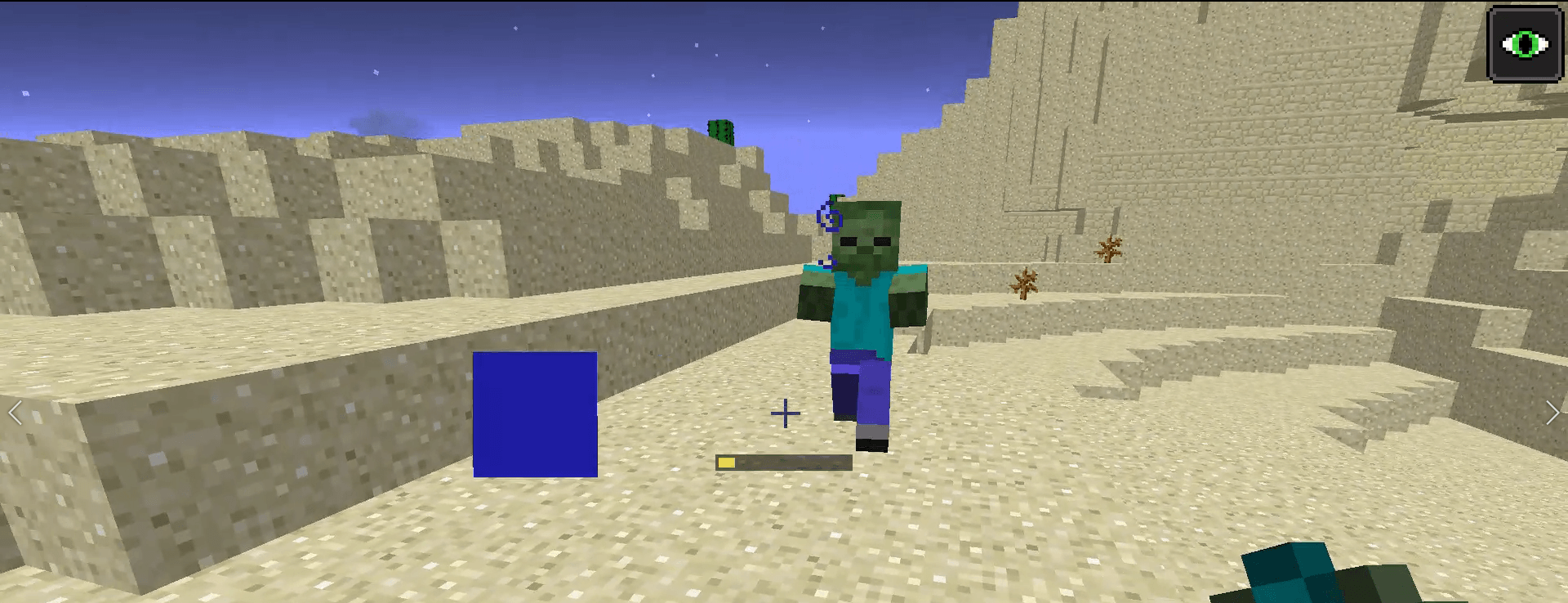
Sound Sense completely overhauls survival gameplay by turning noise into a primary mechanic that hostile mobs actively use to track and hunt you down. Every single action you take produces acoustic vibrations in the world. Walking, sprinting, swimming, breaking blocks, placing items, opening doors and chests, eating food, drawing a bow, swinging weapons, and working on an anvil all generate distinct levels of sound. Heavy armor adds extra weight and noise to every step you take, making full iron or diamond gear a serious stealth liability in dangerous territory.
Sound does not simply travel in a flat circle; it interacts realistically with the environment through dynamic raycasting and acoustic checks. Dense stone, dirt, and metal walls heavily absorb and block sound waves, while thin glass or foliage let noises pass through with little resistance. Enclosed subterranean caverns and tunnels amplify sound waves and generate delayed echoes that bounce off distant walls, which can either give away your position or trick mobs into investigating the wrong hallway. In open biomes like jungles and forests, dense canopy cover dampens sound travel, whereas rainfall under an open sky creates natural white noise that effectively masks your footsteps. In the Nether, the absence of weather combined with hard stone terrain causes acoustic signals to travel significantly further than in the Overworld.
Hostile mobs feature completely rewritten auditory response systems divided into distinct behavioral tiers. Tier 1 creatures like Zombies and Creepers hear general disturbances and move toward the estimated sound position, performing room searches and checking multiple spots if they cannot immediately find you. Tier 2 creatures such as Skeletons and Spiders possess far sharper directional hearing and execute coordinated flanking maneuvers, splitting up to approach the noise origin from lateral angles. Alerted mobs also wake nearby allies within an eight-block radius, and any mob that directly spots a player emits a detection cry that immediately alerts nearby packs. Bats act as Tier 3 listeners with ultrasonic sensitivity, picking up fainter sounds through thin barriers. If you manage to slip away and remain completely silent, mobs will eventually abandon combat pursuit and return to wandering, though they memorize high-noise locations as danger zones and periodically revisit them on patrol.
Passive farm animals are fully integrated into this ecosystem. Extremely loud sounds such as explosions or anvil hammer strikes trigger an immediate panic response, causing nearby cattle, sheep, and pigs to scatter in all directions. In addition, penned animals generate ambient noises during the night, meaning poorly protected livestock enclosures will naturally attract nocturnal predators straight to your farm.
The system is tightly tied to world difficulty and server mechanics. Playing on Easy reduces mob hearing ranges by thirty percent, Normal maintains the standard baseline, and Hard expands their hearing radius by thirty-five percent. Lowering your client render distance will not protect you from detection either, as the server forces active chunk simulation around noise origins to ensure mobs respond regardless of your visual settings. To help you survive, the mod includes craftable Felt Boots that dramatically muffle movement sounds, redstone-powered Noise Lures to distract patrolling mobs, an in-game sound meter HUD, and built-in commands like /soundsense debug for particle-based acoustic visualization and /soundsense stats for session tracking.
Sound Sense Team