Realistic Generators
- By
2026-06-27_15.37.38.png
2026-06-27_15.36.25.png
battery_bank_ui.png
2026-06-27_15.36.41.png
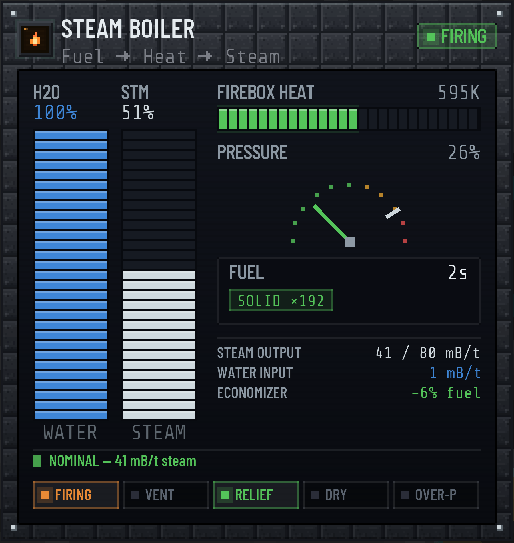
steam_boiler_ui.png
Description
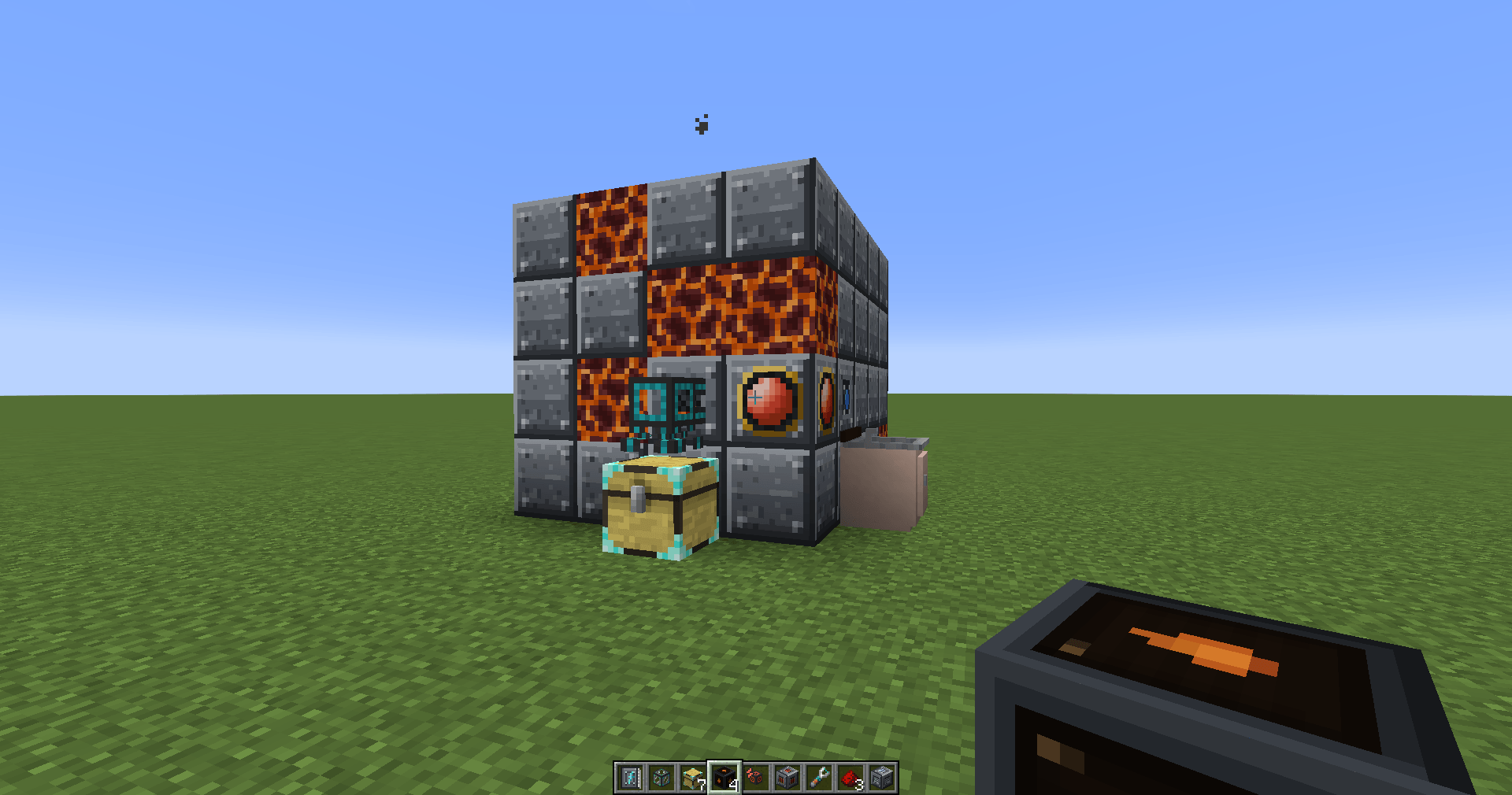
Most power mods hand you a block that makes energy. Realistic Generators hands you a process — fuel → heat → steam → rotation → electricity — and every stage is a real, buildable multiblock that behaves like the machine it models. Build it well and it hums. Build it wrong and it tells you why.

A complete steam plant is a chain you assemble yourself:
- Fire a boiler to turn water into high-pressure steam.
- Pipe the steam through a turbine — a rotor you build stage by stage (HP → IP → LP).
- Draw off Forge Energy for the rest of your base.
- Condense the spent steam back to water and run it as a closed loop.

These aren't decorations — every lever changes your output, or whether the machine survives the night:
- Pressure is real. Over-fire a boiler with nowhere for the steam to go and it ruptures. Fit a relief valve, or watch your gauges. Run it dry while hot and the thermal shock bursts the shell.
- Heat has mass. Machines warm up and cool down — no instant on/off. Cold starts are slow and weak; a hot plant is efficient. Turbines spin up and coast down on their own inertia.
- Carnot efficiency. Bigger temperature gradients extract more work (η = 1 − T_cold/T_hot). Superheat raises the hot side; a condenser pulls the cold side down. Run hot, condense cold.
- Assembly order matters. A rotor runs HP → IP → LP in order. Get the order wrong, leave a gap, or orphan a stage and the turbine makes zero power — and the dashboard says exactly which stage is stray.
- Sized to match. Every multiblock is variable-size. A boiler too small starves the turbine; too big backs up pressure; a battery too small overloads and melts. A coherent chain is a build puzzle.
Every multiblock has a controller with a live dashboard — temperature, pressure, load, output, efficiency breakdown, and a plain-language diagnosis the moment something's off. A built-in Patchouli guidebook teaches the whole chain in-game.

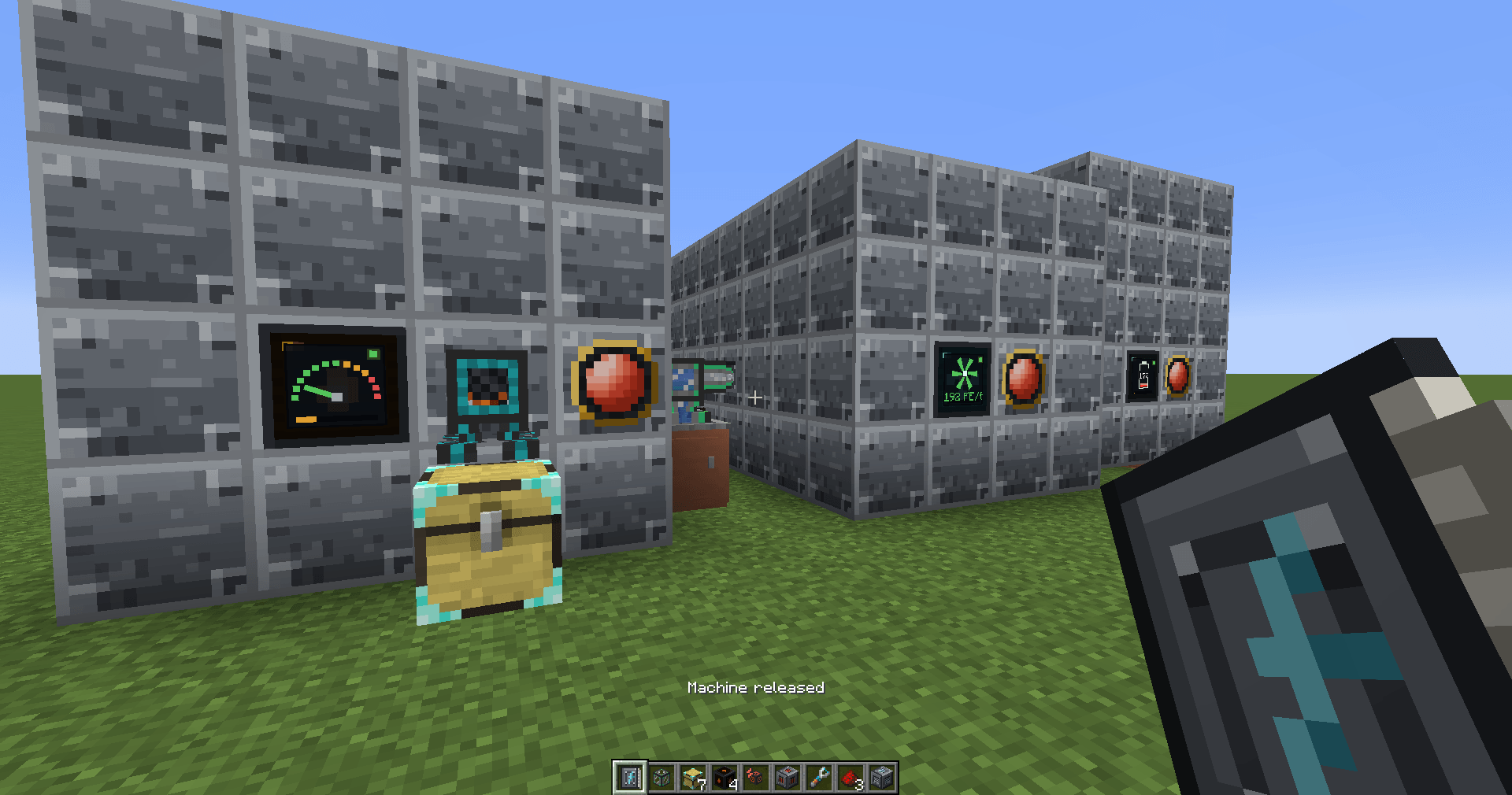
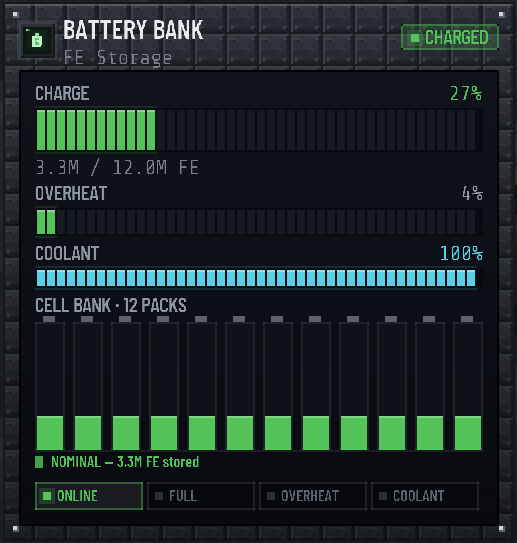
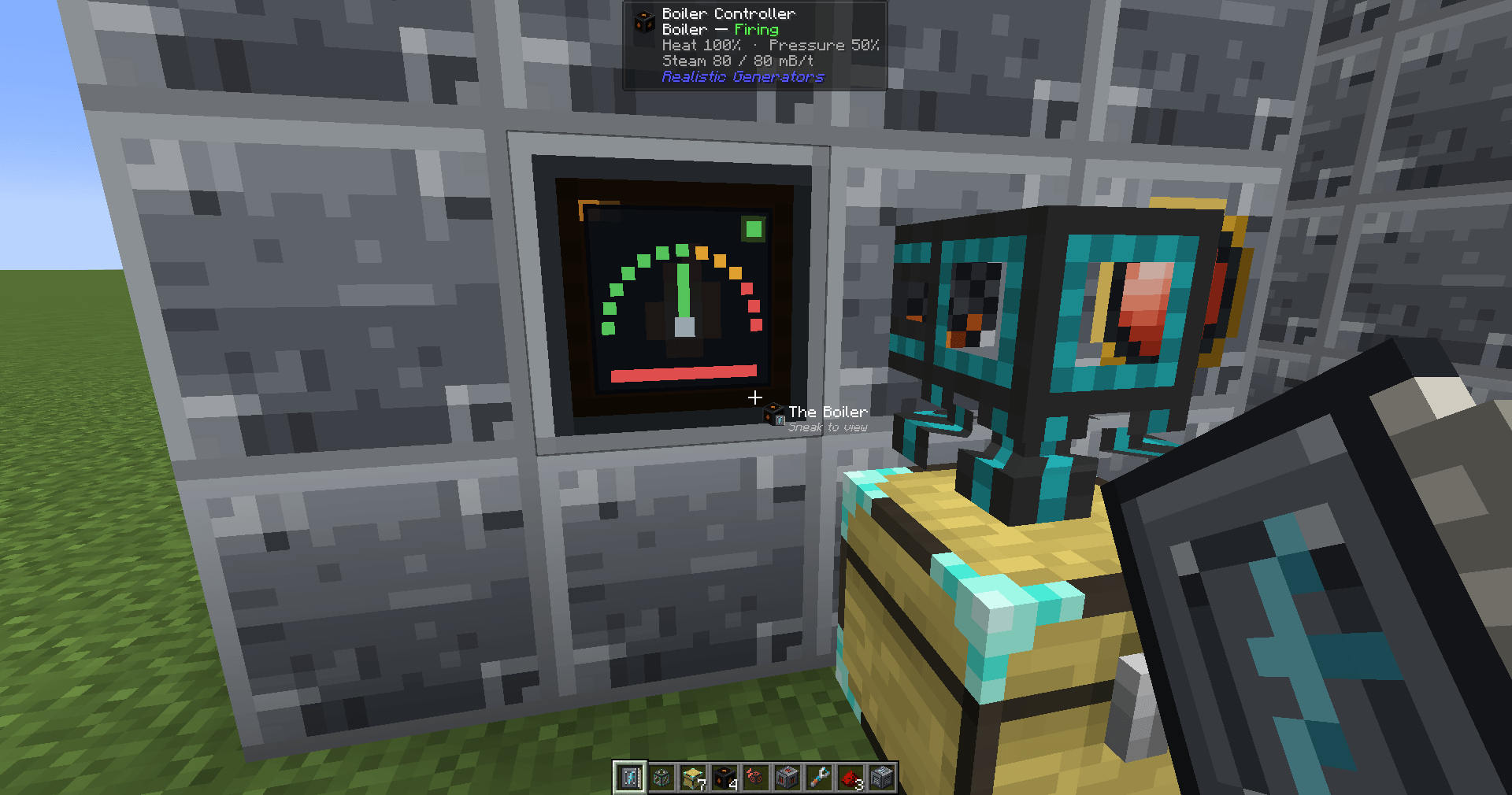
Every controller opens a full readout built for the job — not a single number on a block. Bars, gauges, stage maps and a one-line verdict at the bottom tell you what's happening and what to fix, at a glance.
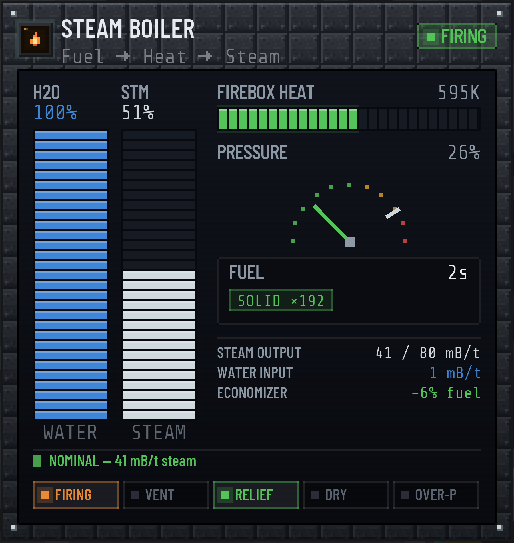 |
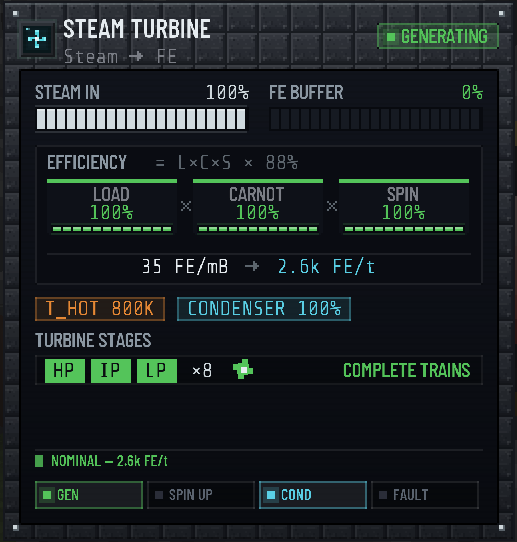 |
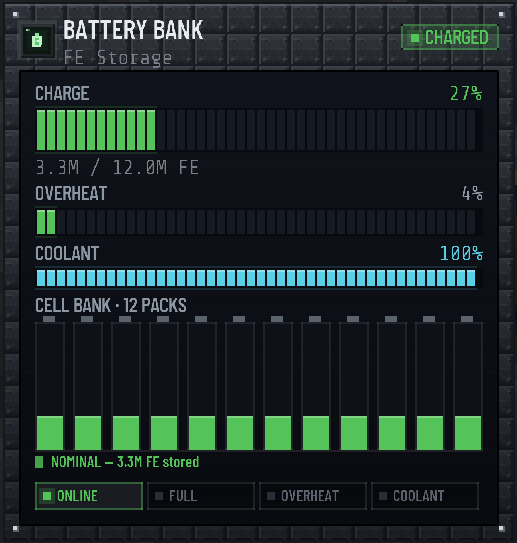 |
| STEAM BOILER — firebox heat, live pressure gauge, fuel burn and economizer. Hit the limit and the relief valve saves the shell. | STEAM TURBINE — efficiency reads as Load × Carnot × Spin, with live HP / IP / LP stage assembly. | BATTERY BANK — charge level, overheat and coolant tracking, plus per-pack cell health across the bank. |

Nothing here is a walled garden. Interop is through shared standards, so it slots into big packs — built and tested against All The Mods 10 — without conflict:
- Forge Energy (FE/RF) out — any mod's cables and machines pull straight from a generator.
- Conventional
c:tags for fuel and materials — coal, diesel, uranium, dusts and ingots from any mod just work. - Fluid capability for water in / steam out — accepts water from any source.
- No hard dependencies. It cooperates; it doesn't demand.

The full steam chain: multiblock boiler, staged turbine, energy storage, condenser, controller dashboards, and the in-game guidebook. Variable-size multiblocks — scale them up for more throughput.

Nuclear. Reactors with the same realism contract — coolant you can't skip, meltdowns you can earn, spent fuel you have to store. Same interop, same c: fuel tags, same turbine.

Right now the mod ships completely silent — no boiler roar, no turbine whine, no relief-valve hiss. The machines are begging for a voice. If you do sound design and want to help bring these plants to life, I'd love it — reach me on Discord at benware_.

- Minecraft 1.21.1
- NeoForge 21.1.x
- No other mods required — but a fluid & item piping mod (e.g. Mekanism, Pipez, XNet) is recommended for moving water, steam & fuel between machines.

This is the first public build. The machines work; the balance (burn rates, melt thresholds, efficiency curves) is what I most want feedback on. Open a comment with how it feels in your pack.

MIT — free to use, modify, and bundle in any modpack.
Realistic Generators Team