Polis
- By
A registry for land, contracts, money and a court - it records what players do and never prevents it.
1fe10786645294851fa36a3d0d7c7ea28262d361 (1).png
2e20b46e8a8921e3fb7c60dc8feef9794e7890cc (1).png
7ad326771834564acaf23a2435a502029e5c3e05 (1).png
8e0b630491697d9f9bab70822edb148140550c4b (1).png
0267f02ab826bf0b862b3b13a2ea7352293823a8 (1).png
Description
The code is a notary and an archive, never a judge
Polis does not stop you from lying, stealing or killing. It records the obligation with its signatures, watches the terms it can verify objectively, and publishes the outcome to everyone, permanently.
Breaking a contract is always possible. It is just never quiet, and never free.
Contracts
Two kinds of term, and the distinction is the whole design:
- Tracked — a delivery or a non-aggression pact. A missed deadline or a struck ally is an objective fact, judged by the code and announced.
- Untracked — a promise. The mod records the words and the parties and stays out of the verdict. The party it was made to may bring it to a bench, which answers the one question a machine never could: was it kept.
Land, borders and roads
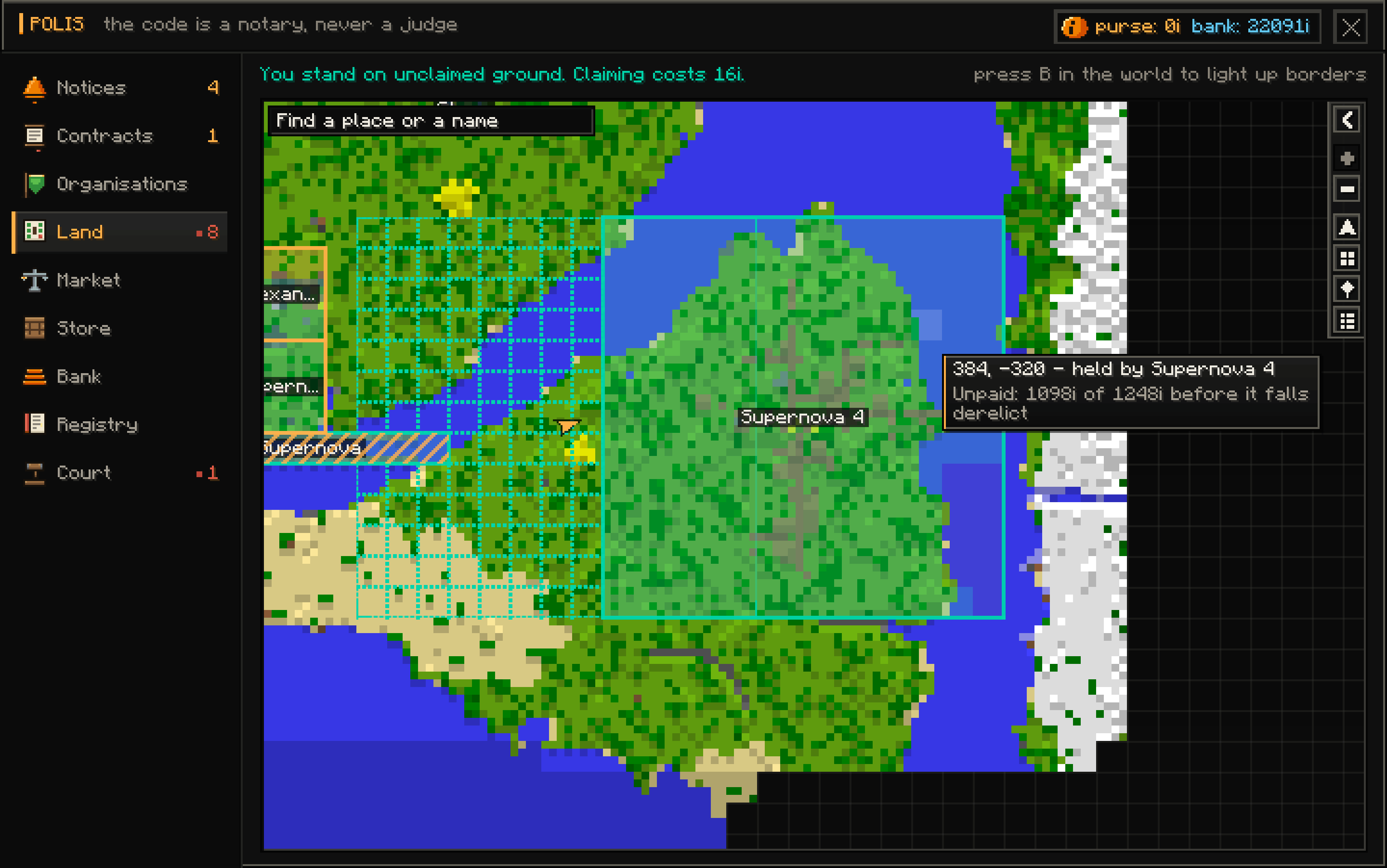
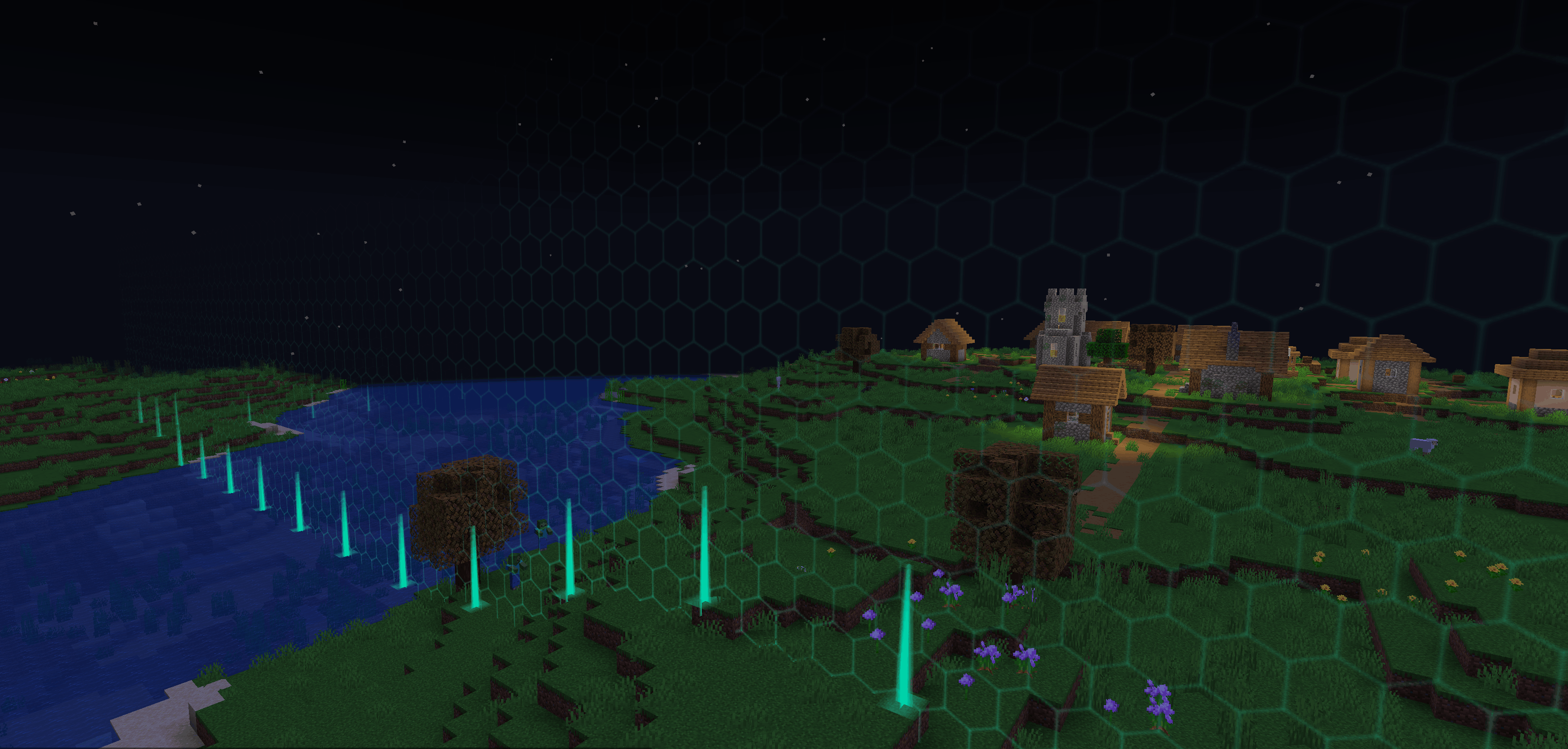
Claim ground, name it, set a charter. A closed border shows a warning and a wall you can walk through — theft is counted, not blocked. Every act on ground that has a holder goes into that holder's day-book: what was broken, what was carried out of which container, who was killed.
Roads can be priced. A toll meter runs while you travel and settles at the end of the journey, not on a total, so a drive is one line in your statement rather than a hundred.
A court, with a real hearing
A complaint is filed, the accused may answer, and a bench of elected judges votes. A finding cannot be made on the day it is asked for: the hearing lasts a day, so nobody is sentenced while they are asleep. The running tally is sealed while the bench sits. The fine reaches the person who was wronged, and only the shortfall becomes time.
A market that settles
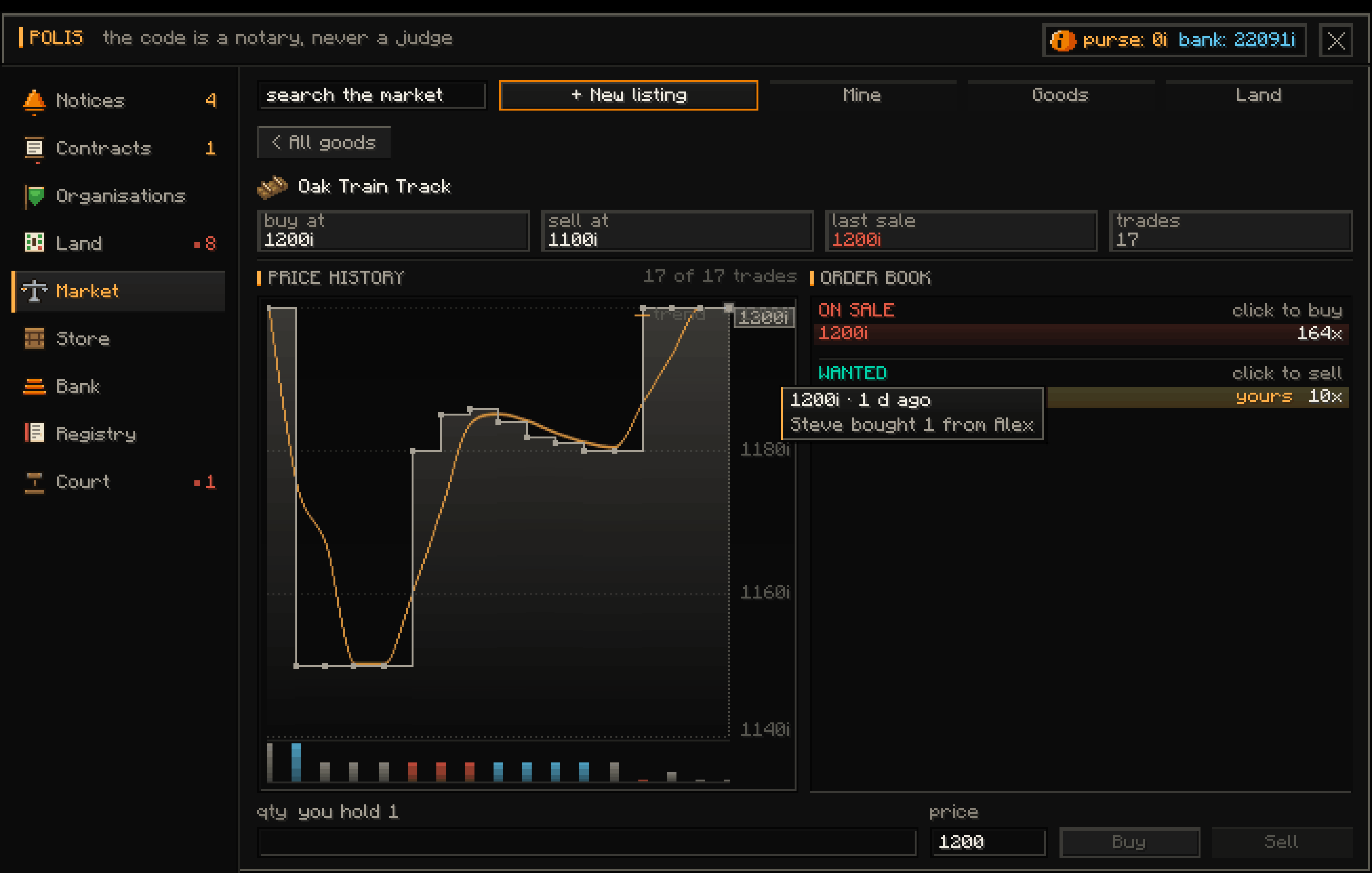
A global order book with escrow. Placing an order locks the goods or the coin at once, so a matched trade can never fail to settle. The seller names the price; a bid is a ceiling, never a quote. Commerce is mechanical; politics stays social.
Money that is a currency
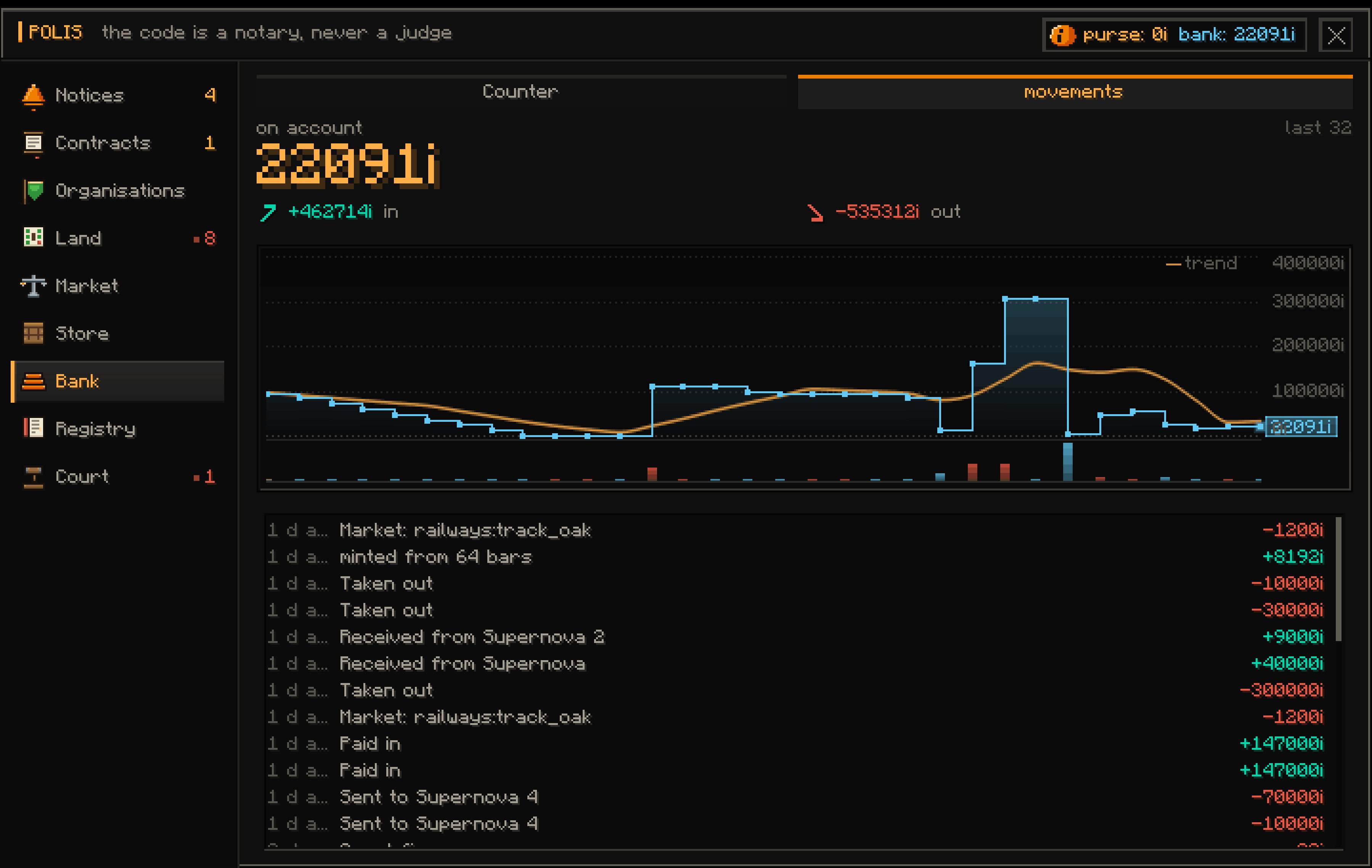
Coin enters the world only by mining, and is minted at a counter whose rate falls in published steps as coin per person rises. The market burns one coin in fifty of a settled trade. There is a source, a drain, and a number between them.
The map
The neighbourhood drawn on the register: who holds what, which ground is in reach to claim, where a border runs, and where you were robbed while you were away — a question a client-side map cannot answer at all. It searches holders, named places and your own marks.
Requirements
- Minecraft 1.21.1, NeoForge 21.1.248
- Required on both the client and the server
- Press P in game
English and Українська, switched with the normal Minecraft language setting. The server never sends finished text — every event carries a translation key, so two players read the same event each in their own language.
The Polis Team