i86 Mainframes (i8086 CPU Emulator)
- By
A Minecraft mod that lets you build and program functional 16-bit computers powered by an Intel 8086 emulator, with redstone I/O, storage, and peripherals.
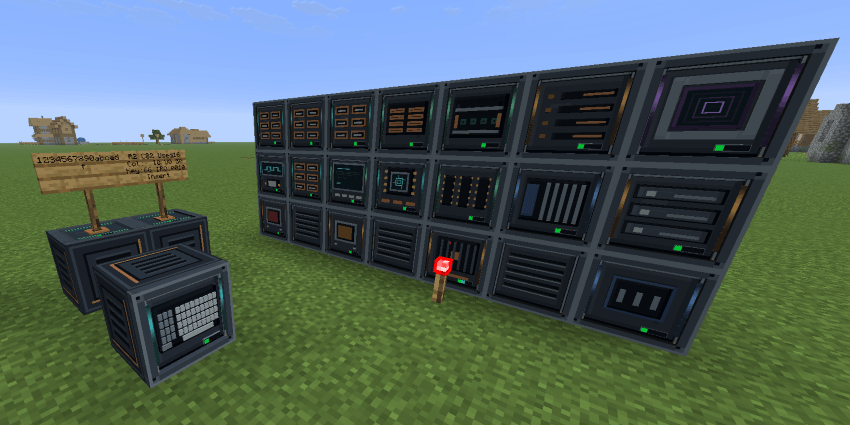
Bring programmable 16-bit computers into Minecraft!
i86 Mainframes introduces fully programmable computers powered by a custom Intel 8086 emulator. Build your own mainframe, write software, and interact with the Minecraft world through redstone, keyboards, signs, storage devices, and more.
Rather than relying on a custom scripting language, the mod executes real 8086 machine code, allowing you to develop programs in C or Assembly and run them inside Minecraft.
Features
- Modular Mainframes: Assemble a 7×3×1 multiblock computer with components that determine its capabilities.
- 8086 CPU Emulation: Run custom 16-bit programs from 256 KiB ROM images, with configurable execution speeds.
- Redstone I/O: Read and control redstone signals, including analog signal strengths and interrupt-driven inputs.
- Displays & Input: Use Minecraft signs as programmable displays and keyboards for interactive applications.
- Storage & Memory: Store persistent data and connect computers through shared memory.
- Punchcards: Read and write physical data media to transfer information between computers.
- ROM Programming: Upload and burn your own ROM images onto chips using the ROM Burner.
- Advanced Debugging: Inspect registers, memory, disassembly, and I/O through an external debugger.
Whether you want to build a simple redstone controller, create interactive software, or experiment with low-level programming, i86 Mainframes gives you the tools to do it.
Related Projects & Development Tools
The mod is part of a ecosystem, with separate projects for CPU emulation and ROM development.
The standalone Java-based Intel 8086 emulator powering the mod. Includes a graphical launcher and debugger for running and inspecting ROM programs outside Minecraft.
A C/Assembly development project and an excellent starting point for creating your own ROMs. Includes hardware-access libraries, example programs, diagnostic tests, and a build setup using IA-16 GCC to compile code into ROM images compatible with the mod.
The Minecraft Fabric implementation, including mainframe components, world integration, peripherals, and ROM management.
i86 Mainframes (i8086 CPU Emulator) Team