PlateSmith Nameplates
- By
Design your own nameplates in a live visual editor: drag parts into place, style them and add colour rules. Threat on every plate for tanks and DPS, cast bars, buffs and debuffs, quest markers, preset looks and threat windows.
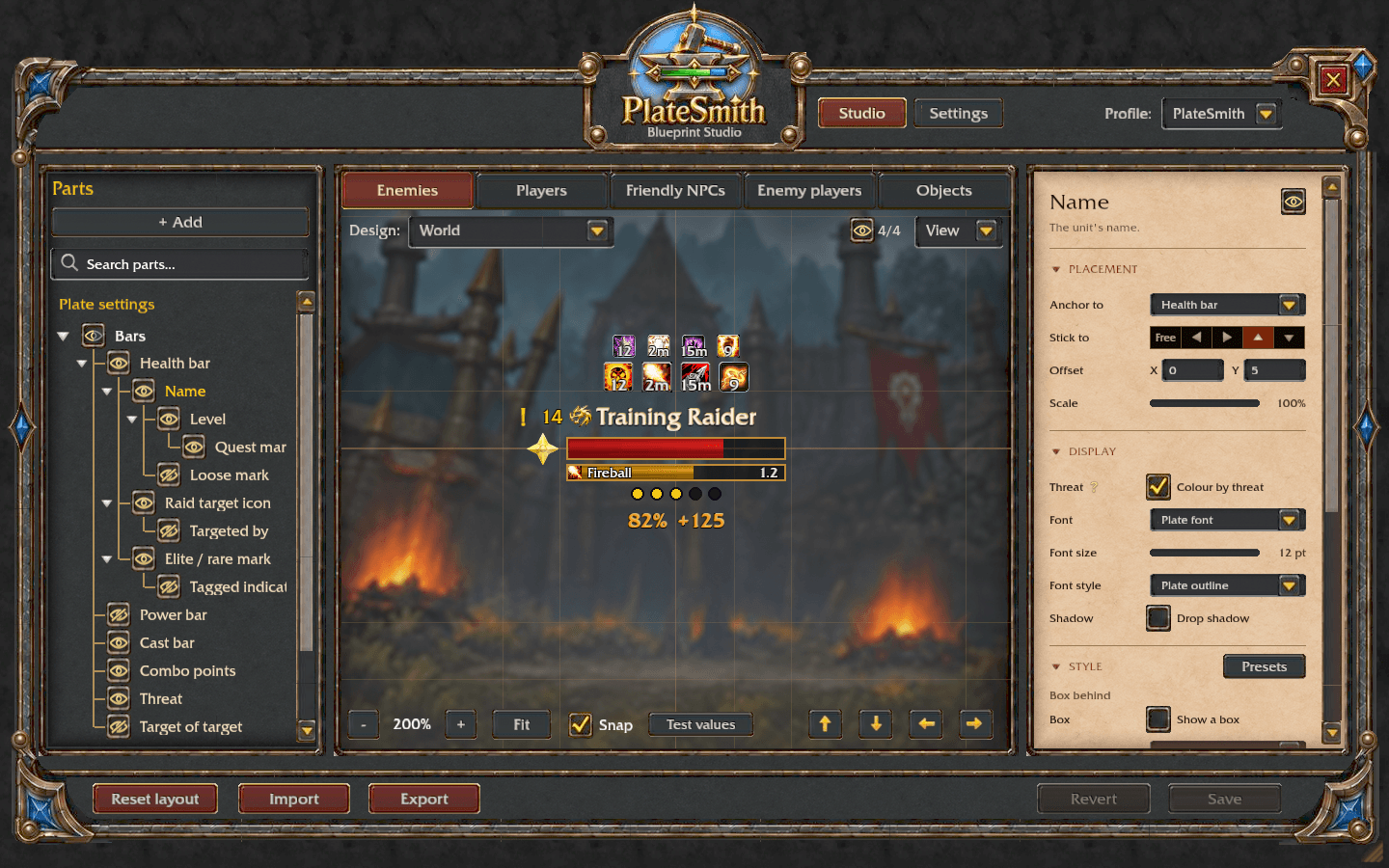
Type /ps to open Blueprint Studio: pick a plate type, click a part in the preview or the parts tree, change it in the inspector, and drag it into place.
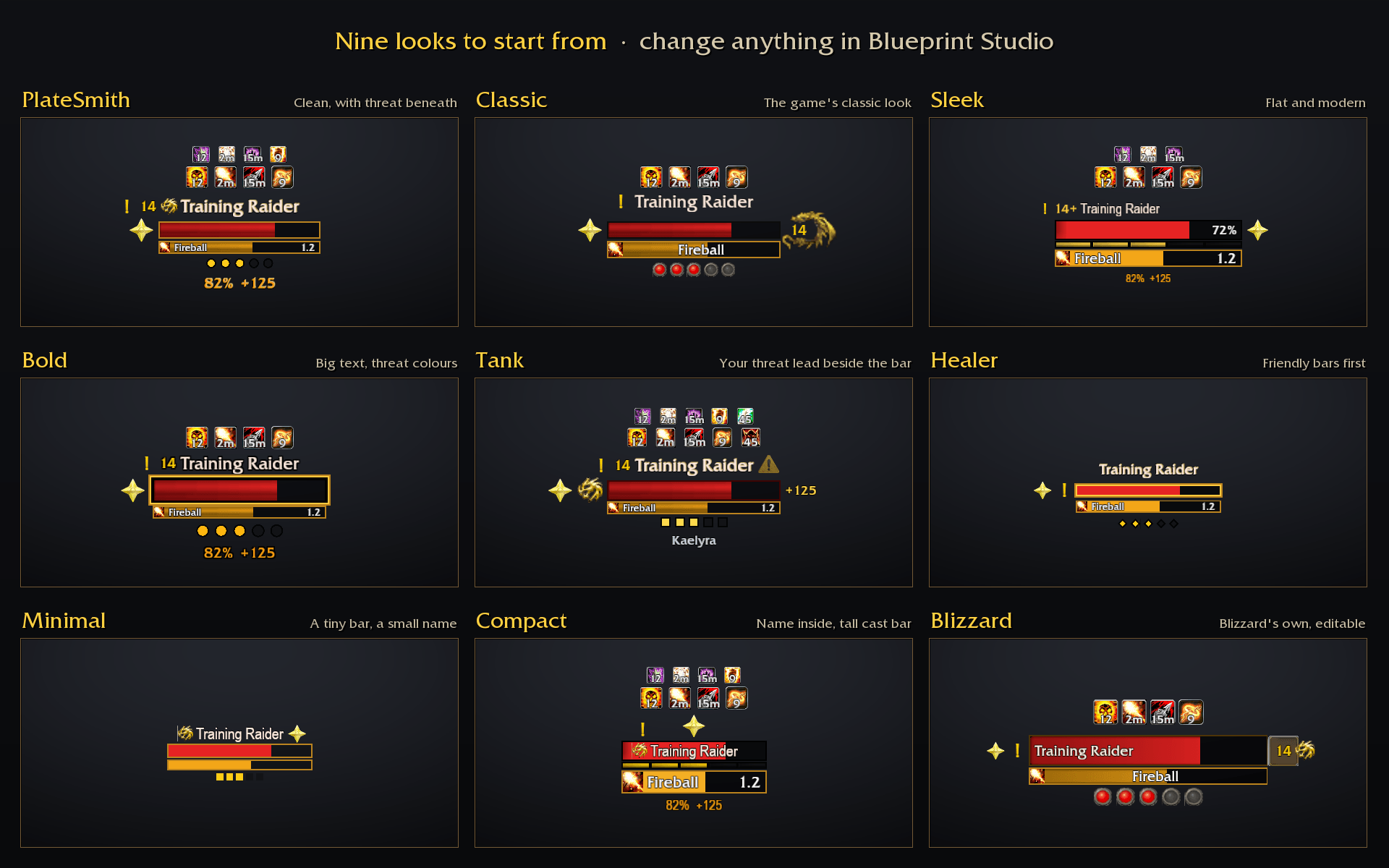
PlateSmith, Classic, Sleek, Bold, Tank, Healer, Minimal, Compact and Blizzard, refreshed in 1.3.0: each makes a new profile that you can change freely.
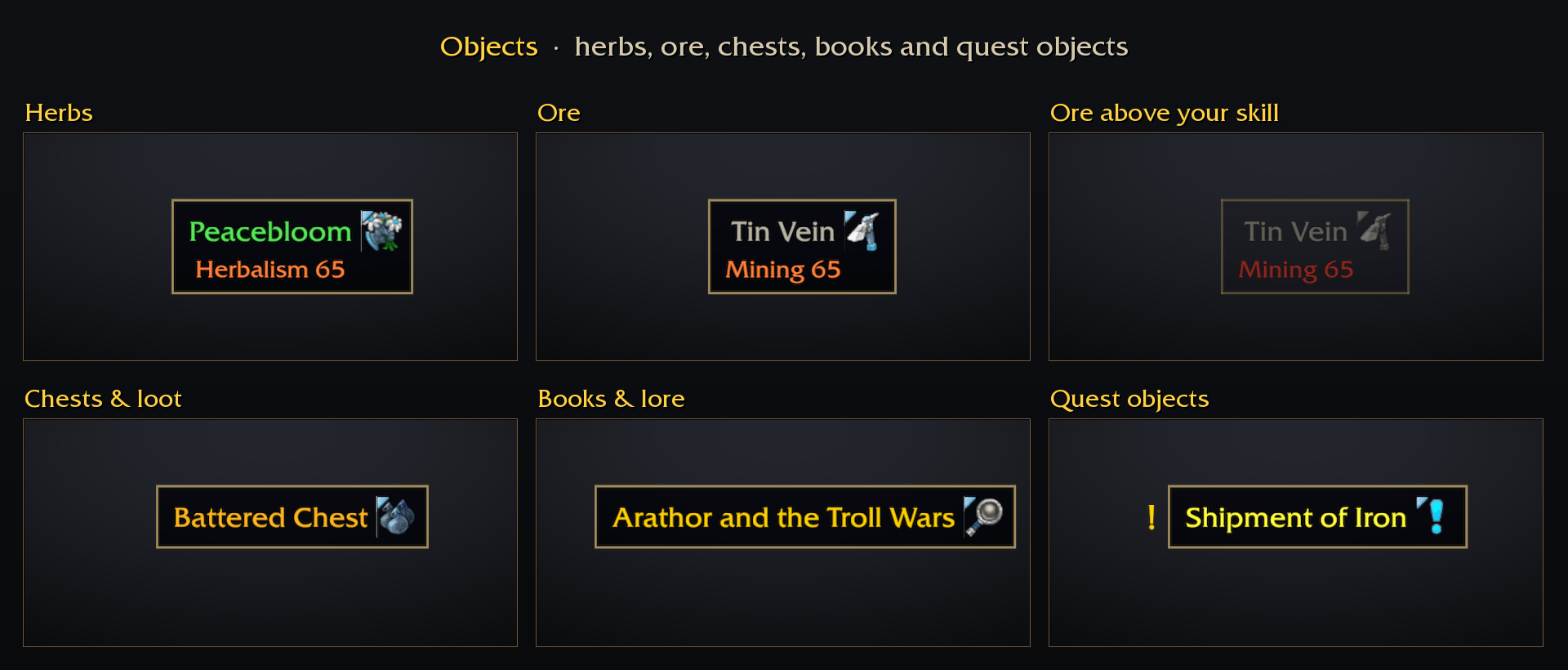
Herbs, ore, chests, books and quest objects get plates of their own: the name, the game's icon for what you can do and the skill a herb or vein needs in the game's skill-up colours for yours, together in one box.
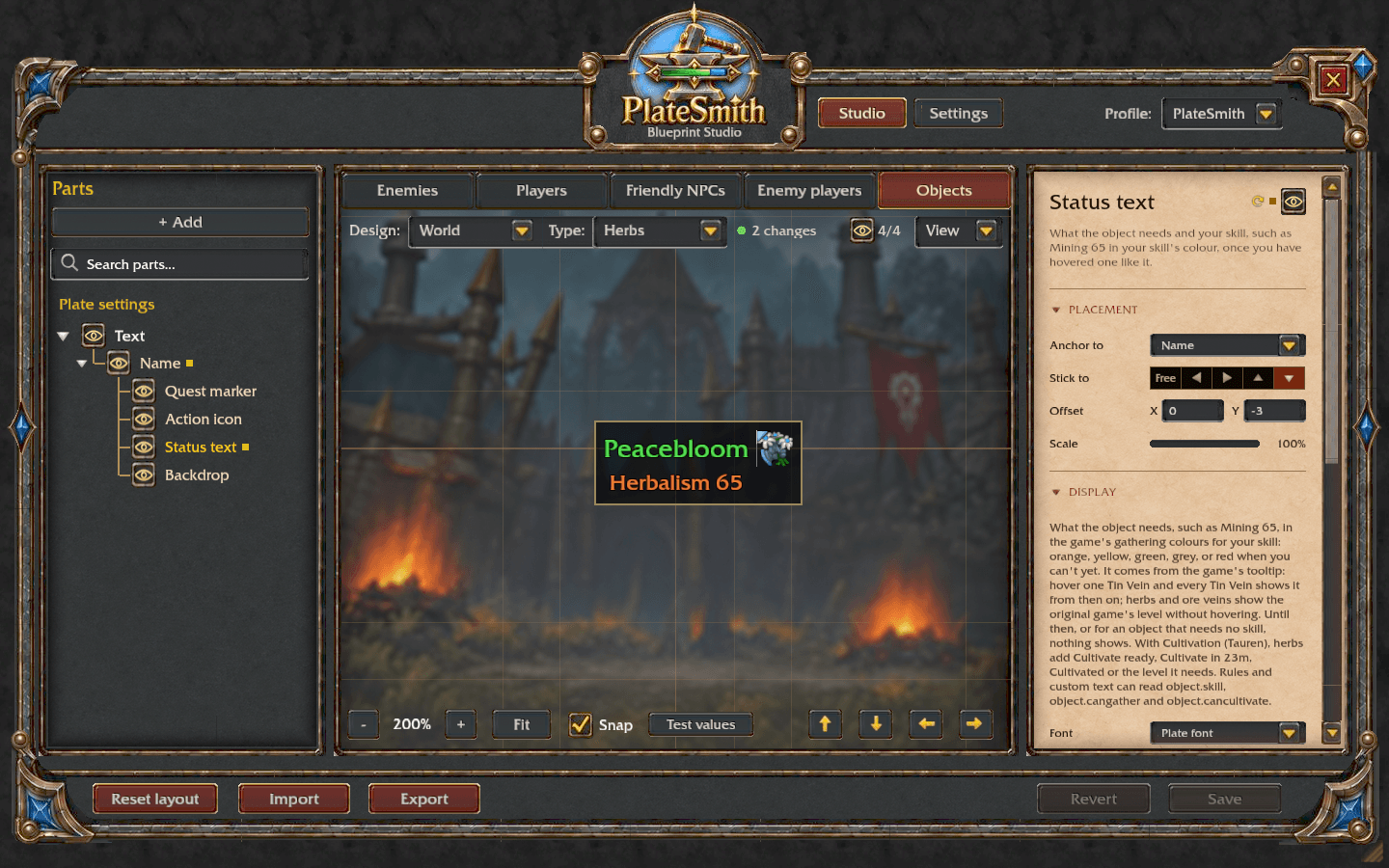
The Objects tab styles all objects at once, or herbs, ore, chests, quest objects and books apart with Type; the Status text shows the skill an object needs, coloured by how likely it is to raise yours, and the Backdrop boxes it with the name and icon.
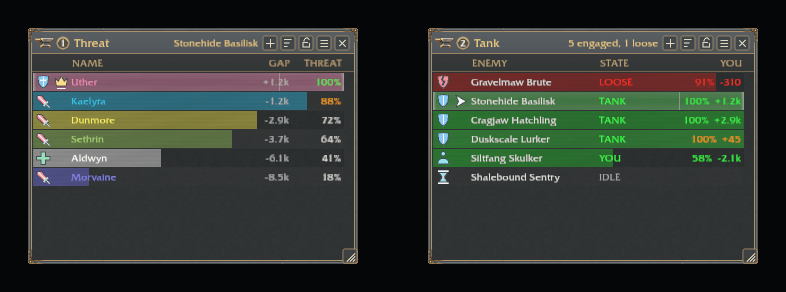
A threat meter for your group and a tank list of every enemy and who holds it, shown here in the Forge theme.
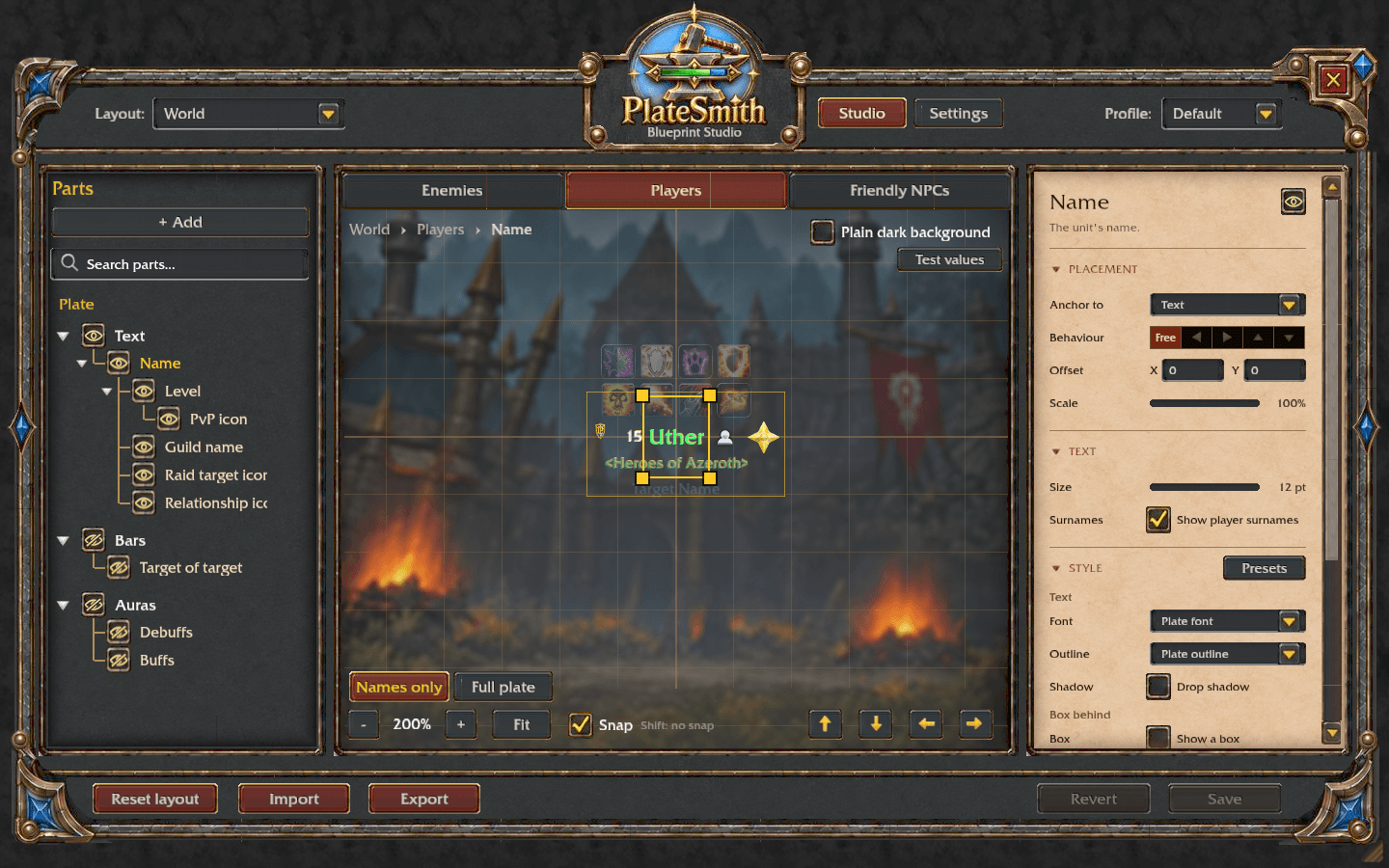
A separate layout for friendly players and NPCs. Keep them to clean names and guilds, or switch to full plates.
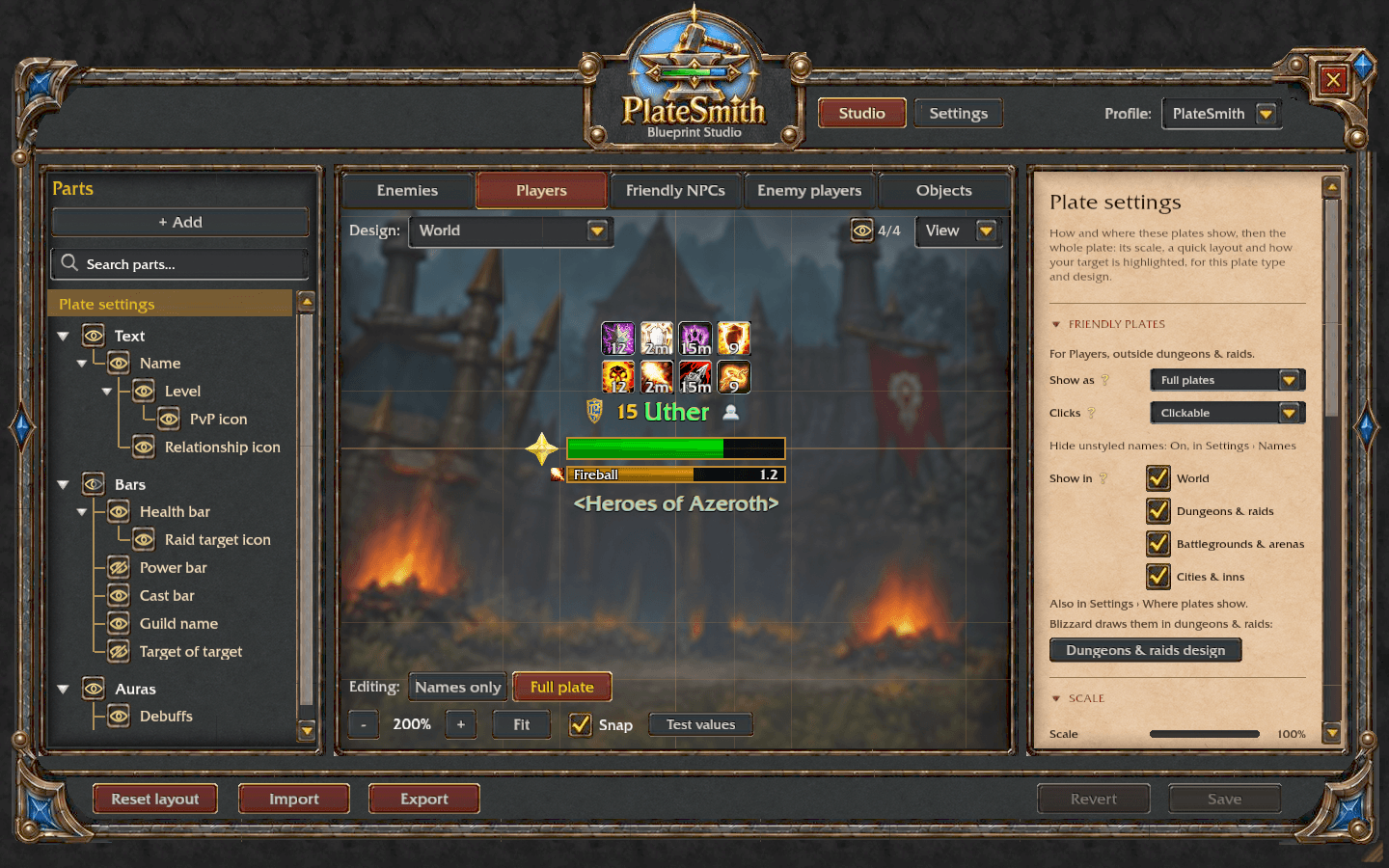
Plate settings on the Players and Friendly NPCs tabs starts with Friendly plates: Show as, Clicks, where they show, and whether Hide unstyled names is on.
Description
PlateSmith Nameplates
Clear, lightweight nameplates for WoW Forever that you design yourself. PlateSmith draws its own enemy and friendly plates, plates for herbs, ore and chests, marks quest mobs, shows your threat on every plate and lets you shape every part in Blueprint Studio, a live editor with a preview of the plate. Give dungeons, battlegrounds and cities a look of their own, colour plates by threat, and share your whole setup with one code or a chat link. It needs no other addon.
What's new in 1.3.0
- Objects: herbs, ore, chests, books and quest objects get plates of their own, with the game's icon for what you can do and the skill a herb or vein needs ("Mining 65", in the game's skill-up colours for yours), styled per type on a new Objects tab; Settings › Objects & interacting sets who draws them and the game's interact key (its range, direction and icons)
- Refreshed looks: each look's plates match its card, calmer and easier to read, with friendly plates and an elite mark of its own (new profiles made from a look; your profiles stay as they are)
- Rescue, a third threat window mode: your group at a glance, orange when someone pulls, red when an enemy is on them, and a click taunts it off them
- Skin Blizzard's damage meter (optional, off by default) in the threat windows' Forge, Ledger or Glass look, so the meter and the windows following it sit together as one set
- Four new elite, rare and boss marks: the classic dragon, an icon before the name, a level suffix such as 60+, or a frame round the bar
- Blizzard, with PlateSmith extras: keep Blizzard's own plates and add quest markers, threat text and edge, the target glow and the Loose mark to them
- Clicking: make friendly players, friendly NPCs or enemies click through, separately from how they look
- Loose mark: a small alert beside a mob's name while it attacks someone who is not a tank (on the Tank look)
- Shape the soft target glow: fit it to the parts you pick or make it a box of your own size
- Friendly plates in one place, for players and NPCs apart; Hide unstyled names keeps the game's big floating names off friendly players, even in crowded cities
- All threat settings on one page, Studio › Settings › Modules › Threat, which opens in combat too; Other tank has it is teal on new profiles, and a PvP-flagged ally's colour goes on the health bar
- Stacking & distance is always editable, with Blizzard's Stack plates (enemy and friendly apart)
- Switch profiles by dual spec on WoW Forever; less memory in quiet zones; plates show faster after a loading screen
Features
Blueprint Studio
- Type
/psto open it. Click a part in the preview or the parts tree, change it in the inspector, and drag it into place; parts snap to the plate and to each other. - Pin parts to each other, stack them, style text, bars and boxes, and write your own text such as
{health} / {health.max}. - A mob someone else tagged greys its health bar, as on Blizzard's plates.
- Rules change a part while something is true, such as red at low health or execute range.
- Test values let you preview a tagged, casting, elite, rare or boss mob before you meet one.
Nine looks to start from
PlateSmith, Classic, Sleek, Bold, Tank, Healer, Minimal, Compact and Blizzard, each with friendly plates, an Objects style and an elite mark to match. Each makes a new profile that you can change freely.
Objects
- Herbs, ore, chests, books and quest objects that the game gives a nameplate show their name in a small box that you style on Studio's Objects tab, with a quest mark when a quest needs them. Clicking the object still gathers, opens or loots it.
- The Action icon beside the name is the game's own icon for what you can do (gather, mine, loot, read, a quest), greyed or hidden when you can't yet if you like.
- The Status text says what a herb or vein needs, such as Mining 65, in the game's gathering colours for your skill (orange, yellow, green, grey; red when you can't yet); for other objects it shows once you have pointed at one like it. With Cultivation, herbs say Cultivate ready, when it will be, or the level it needs.
- Type styles herbs, ore, chests & loot, quest objects, books & lore and services apart, each following All objects except what you change. Copy style from a look… gives you a look's Objects style and changes nothing else.
- Point at an object's name for the game's cursor and a small tooltip; Fade objects you can't use dims what is above your skill.
Elite, rare and boss marks
Blizzard's icons beside the bar, the classic gold or silver dragon round the level, a small icon before the name, a level suffix (60+, 60R, 60R+, ??) or a gold, silver or red frame round the health bar. Each look has one of its own.
Friendly plates
Show friendly players and friendly NPCs as names only, full plates or Blizzard's own plates, each on its own, and pick where they show, all in Studio's Plate settings. Hide unstyled names keeps the game's big floating names off friendly players and their pets outside dungeons and raids. On a full plate a PvP-flagged ally's colour goes on the health bar, so a group or guild member's name keeps its own colour.
Clicking
Studio › Settings › Behaviour & display › Clicking makes friendly players, friendly NPCs or enemies Click through, separately from how they look; Players and Friendly NPCs also have it as Clicks in Plate settings. The game has one switch for every friendly plate, so Friendly NPCs' Click through covers friendly players too. Clickable is the default, and the game's own setting comes back when you choose it, turn PlateSmith off or log out.
Blizzard's plates, with extras
Like Blizzard's own plates? Set Who draws the plates (Studio › Settings › Behaviour & display) to Blizzard, with PlateSmith extras: Blizzard draws its plates, untouched, and Extras on Blizzard's plates picks what PlateSmith adds to them: quest markers, your threat as text, an edge round the health bar or both, the soft target glow and the Loose mark. Objects keep PlateSmith's own plates.
Designs for each place
- World is the look every place starts from. Add a separate design for Dungeons & raids, Battlegrounds & arenas or Cities & inns, and your plates switch as you enter and leave.
- A design follows World except what you change in it, and a gold mark shows each change.
Enemy players
Hostile players use your enemy plates until you customise them on their own tab, for example with larger names or their buffs shown.
Where plates show
Pick which plate types show in each kind of place, such as no enemy plates in cities. It uses Blizzard's own switches and puts them back when you log out.
Stacking & distance
Blizzard's own stacking, spacing, screen edge, scale and fade settings in one page, with Tight, Normal and Loose presets and a preview. Change any of them at any time: Stack plates stacks enemy and friendly plates apart, and Show offscreen plates keeps plates at the screen's edge. A setting you change is saved with your profile and your own value comes back when you log out; its arrow gives it back to the game. View distance is shown but cannot be changed, as the game keeps plates to a fixed range.
Target highlight and glow
Light up your target with a gold edge or a soft glow behind its plate, in your own colour, its class or reaction colour, or your threat colour on it. Fit the glow to the parts you pick, such as just the name, or make it a box of your own width and height. Each plate type can have its own.
Combo points
Your combo points on your target's plate, in the shape, size and colour you choose, as wide as the health bar if you like, and shown always, in combat or only when you have points.
Threat
- Your threat on every plate: your threat percent and the gap to the next player.
- Colour by threat colours health bars and names for tanks (holding, losing it, another tank has it) or for DPS and healers (safe, pulling, aggro).
- The Loose mark (Enemies › + Add › Icons) shows beside the name while a mob attacks someone who is not a tank. The Tank look has it on.
- Up to five threat windows: a threat meter for your target, a tank list of every enemy in view, or Rescue. They can follow Blizzard's damage meter.
- Rescue lists your group (a party as a list, a raid as a grid): a member turns orange when they pull and red, with a pulsing glow, when an enemy is on them. Click a member to taunt their target (Warrior, Druid in Bear Form, Paladin), with an optional sound, a flash of the border and your taunt's cooldown. It holds still in combat.
- Every threat setting is on one page, Studio › Settings › Modules › Threat, which opens in combat too.
- Optionally skin Blizzard's damage meter in the threat windows' look, so the two sit together as one set.
Quests
- Quest markers on mobs you still need for a quest, with optional progress such as 3/8.
- If you use Questie, choose whether its quest icons or PlateSmith's show.
- The optional PlateSmith_QuestieDB companion, included in the download, also marks mobs that can drop a quest item when QuestieDB is installed.
Blueprints
- Export your whole setup as a share code, or Link in chat for other PlateSmith players to click.
- Import shows what will change, design by design, and you pick the sections to bring in.
Profiles
- Named profiles with Save and Revert, so you can try things without losing your setup.
- Switch profiles automatically for dungeons, raids, battlegrounds or each talent spec (dual spec on WoW Forever).
Getting started
- Install PlateSmith and log in.
- Type
/ps. On a new install a short setup asks how you play this character, then lets you pick a look. - Click a part, change it, and press Save. Your plates show changes at once, but only Save keeps them.
Commands
| Command | What it does |
|---|---|
/ps |
Open Blueprint Studio |
/ps diagnose |
Open the diagnostics report |
/ps console |
Show or hide the threat windows |
Compatibility
- Made for WoW Forever. The game keeps some values private in combat and in instances. PlateSmith still shows them where the game allows, but never guesses: a rule that depends on one does not apply.
- QuestieDB, Questie and LibSharedMedia are used when installed, and are never required.
- Another nameplate addon (KuiNameplates, Plater, Threat Plates, ElvUI's nameplates and others): PlateSmith says so once a session and, by default, runs as a light overlay (quest markers and threat) on its plates. It offers to disable the other addon (for ElvUI, turn its nameplates off), or set Who draws the plates (Studio › Settings › Behaviour & display) to PlateSmith, or to Blizzard, with PlateSmith extras.
- Blizzard protects friendly plates in dungeons and raids; there PlateSmith offers what the game allows.
- English only for now.
Good to know
WoW Forever limits what addons can do in combat and in instances. PlateSmith is built around those rules:
- Some changes wait for combat to end. Where plates show, Clicking and a few Blizzard settings change only out of combat; PlateSmith applies them as soon as the fight is over. A Rescue window cannot be moved, resized or hidden in combat, and catches up with group changes afterwards.
- Some values are private. In combat and in instances the game hides some values from addons (such as a mob's exact threat or an enemy's buffs). PlateSmith shows them through the game's own displays where it can, and never guesses.
- Friendly plates in dungeons and raids are Blizzard's. You can still set their font, size and colour in Studio › Players › Dungeons & raids (Blizzard).
- Chat links pause during instance combat and encounters, and work again afterwards.
Troubleshooting
| What you see | What to do |
|---|---|
| My plates look like Blizzard's or another addon's | Another nameplate addon is drawing them. See Compatibility. |
| My changes were gone after a reload | Press Save. Changes show at once, but only Save keeps them. |
| Enemy plates vanish in a city or dungeon | Check Studio › Settings › Behaviour & display › Where plates show. |
| Big Blizzard names over friendly players | Tick Hide unstyled names (Studio › Settings › Behaviour & display › Names). |
| Plates overlap, or stack when I don't want them to | Studio › Settings › Stacking & distance: change Stack plates or the spacing; no box to tick first. |
| No threat colours on plates | Turn on Colour by threat (Studio › Settings › Modules › Threat › Threat colours) and set This character tanks (Your role, on the same page). |
| PlateSmith's Threat page in Game Options only has a button | The threat settings moved to Studio › Settings › Modules › Threat; Open in Studio takes you there. |
| The threat windows are gone | Type /ps console. |
| I can't click friendly players or NPCs | Studio › Settings › Behaviour & display › Clicking: set them to Clickable (Friendly NPCs' Click through covers friendly players too). |
| No plates on herbs, ore or chests | Which objects get a plate is the game's choice. In Studio › Settings › Objects & interacting: check Drawn by is PlateSmith; where your client has it, Interact key › Plate on it On gives the object your interact key would use a plate. |
| A chest or book shows no skill under its name | Herbs and ore veins show theirs at once; for other objects, point at one like it in the world once. |
| A Blueprint chat link isn't clickable | Both players need PlateSmith 1.2.0 or later (1.3.0 for a Blueprint that uses 1.3.0's new options). |
For addon authors
PlateSmith has a public, versioned module API. A small companion addon can add text tokens and facts for custom
text and rules, bar values and icons for custom parts, quest data, Blueprint fields and its own page under
Studio › Settings › Modules, which looks and works like PlateSmith's own Threat page (folding sections, help,
Settings search, Save and Revert, and it opens in combat). The reference is Docs/MODULES.md inside
the PlateSmith folder of the download, with a first module in ten minutes, and Examples/PlateSmith_ExampleModule
is a working example to copy (it is not loaded from there). The included PlateSmith_QuestieDB companion uses only
the public API.
Reporting a problem
Target the mob, type /ps diagnose, and copy the summary and the report code into your comment with a
screenshot and what you were doing.
PlateSmith Nameplates Team