Medical Teaching Doll
1930s-1950s clutter object for musculoskeletal disorders
Description

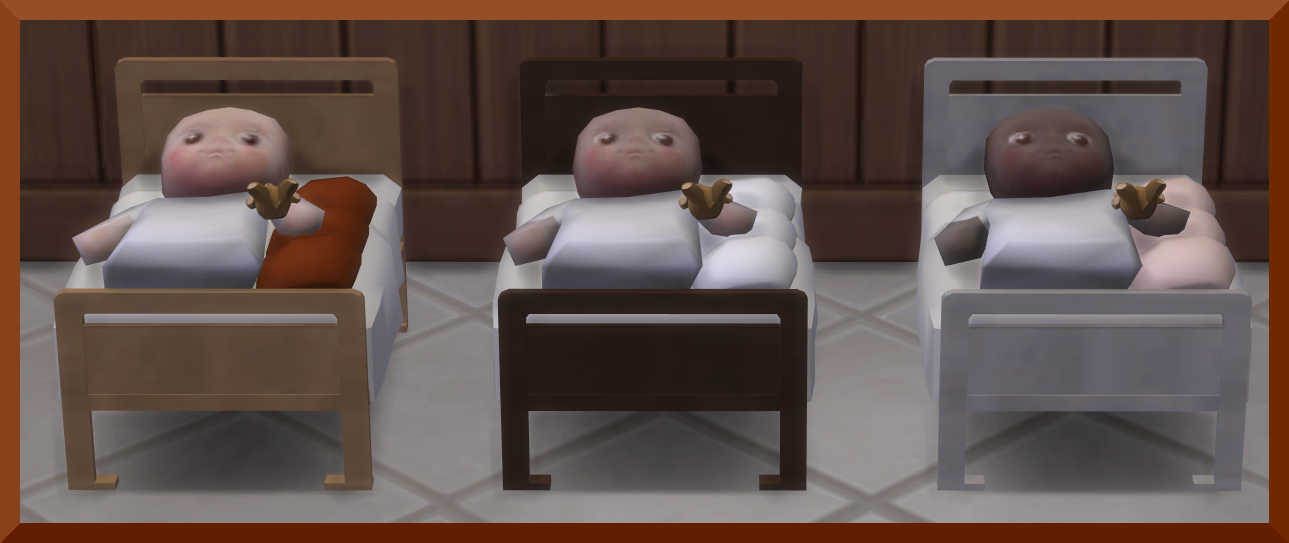
During the 1930s, children were at risk for various infectious diseases that effected mobility. Two major ones were infantile paralysis (polio) and bone tuberculosis. The prevailing treatment of the time was limb immobilization, which prevented bone deformity at the cost of muscle atrophy (withering). At the same time, advances were being made in child psychology, and doctors realized that children could learn about their diagnosis and treatment through play.
Dolls such as this were wrapped in bandages to simulate plaster casts. It was intended that the their stoic expressions would encourage the child to be brave. The dolls were still in use into the 1940s and 50s, but by this time limb immobilization had largely been replaced by the Kenny Method, which involved the application of damp heat to encourage muscle stimulation.
This is a clutter object that comes in 45 swatches: 15 wood tones with 3 skin tones/pillows. It is a frankenmesh of 4 different objects, including the mohair bear from linzlu’s Samantha collection. Visual inspiration came from The Medicine Cabinet, by London’s Science Museum.
Support me on Patreon or buy me a coffee?
My TOU are here.
The Medical Teaching Doll Team