The Game That Never Ends
- By
Explore Minecraft versions from pre-Classic rd-132211 to 26.1.2 all in one Minecraft version.

The Game That Never Ends
Play through the entire history of Minecraft in a single survival world.
Your world starts in 2009 as rd-132211 and advances, era by era, all the way to 26.1.2. Every era brings back that version's terrain, blocks, items, mobs, textures, sounds, music and mechanics — recreated as faithfully as possible.
Every chunk is permanently stamped with the era it was born in, and that never changes. Your world becomes a record of its own history: Classic hills sitting beside Infdev plains beside modern biomes, each still looking and behaving like the version that made it. Yes, the Farlands are in there.
Built for survival playthroughs.
Found a bug? Please report it on the GitHub repo. Thank you!
Requirements
| Minecraft | 26.1.2 |
| Mod loader | Fabric Loader 0.19.3 or newer, plus Fabric API |
| Java | 25 |
| Disk space | ~1 GB to start, up to ~4 GB if you play the whole timeline |
| Internet | Needed on first launch, and while era audio downloads |
| Multiplayer | Untested |
Works with Sodium and Iris. Old chunks keep their era textures on either renderer, and the border between two eras stays sharp on both.
Not compatible with terrain generation mods — biome packs, structure generators, worldgen overhauls. Each era brings its own world generator, so anything else that changes generation will conflict. Mods that only add blocks, items or mobs are usually fine, though they will show up in every era, including Classic.
What's new in 5.0
- Placing a block is finally instant. Every block you placed used to flash its modern texture for a moment before snapping to the right era. That is completely gone — a placed block is drawn in its own era from the very first frame, with no rebuild behind it. Doors and beds included.
- Pause the era with N. The world stops advancing and stays exactly where it is until you press it again. It is saved with the world, so a paused world is still paused tomorrow.
- Advancements, in their own tab: Alpha, Beta, The Release!, Halfway through! Keep going, Prime Bedwars, and The Present is now for reaching 26.1.2 — that last one a challenge advancement, with the rare fanfare to match. There is also a hidden one for reaching the present without ever skipping a day.
- Stack sizes are per era. A Beta bucket stacks to 1 and a 1.3 one to 16. Beta cookies stack to 8. Doors do not stack at all until 1.8. Items from different eras never merge, so an old stack and a new one sit side by side in your inventory with different limits.
- Snowy grass looks snowy again, instead of green sides with a white cap floating above them.
- Old chunks load with the right colours. Freshly loaded old chunks were being tinted like modern ones, in patches and in stripes along chunk borders, until something made them redraw.
- Fall damage works in the Nether and the End again — along with hunger, fire and the day/night cycle, all of which were quietly stuck on the first era in those dimensions.
- The crafting grid lines up in the oldest eras. The Classic inventory slots were being drawn a few pixels off the boxes they belong in.
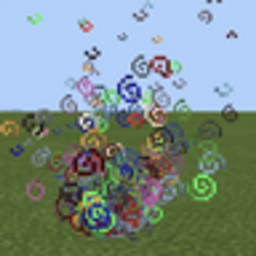
- Eating a golden apple no longer throws purple particles. A whole row of old item textures had been missing — apple, golden apple, egg, sugar, snowball, coal, flint, string, seeds and the helmets.
/tgtnelocatenow requires operator permission.
Previously
4.1 — enchanting works again on pre-1.8 tables. 4.0 — era-accurate dropped items, skies and clouds; boats break when you crash them; boats and minecarts remember their era. 3.0 — Sodium and Iris support, the old Ender Dragon fight, and villagers that keep their trades.
What changes as the eras pass
Everything is taken from that version's own files rather than recreated by hand.
World generation
| Era | World |
|---|---|
rd-132211 – c0.30_01c |
Classic's finite island, with its own sea and bedrock |
inf-20100618 |
Infdev's endless noise |
a1.0.4 – b1.7.3 |
The Alpha/Beta climate system |
b1.8.1 – 1.6.4 |
Beta 1.8 terrain with biome shaping |
1.7.10 onward |
The 1.7 biome world, then modern generation |
World height, sea level, caves, ores, strongholds, the Nether and the End all follow the era too. Before 1.9.4 the Ender Dragon fights the way it used to — circling the portal and diving at you, with no perching, breath attack or fireballs.
Blocks, items and drops
- Blocks and items only exist from the version that introduced them.
- Broken blocks drop the era of the block itself, not the era you are standing in.
- Maximum stack sizes are the era's own, and stacks from different eras never merge.
- Loot, chest contents and mob drops are the era's own.
- Recipes are per era, including ones the modern game has since removed.
- Enchanting works the way it did at the time.
Mobs
- Each era has its own spawn list — anything too new is removed.
- Mob models, baby variants, equipment and textures match the era: horses, rabbits, sheep, piglins, skeletons and more.
- Zombies only start breaking doors from 1.2.5, and only on Hard.
Villages and villagers
Old-style villages exist from Beta 1.8.1 to 1.13.2. From 1.14.4 the modern villages take over.
Because old villages have no beds, job sites or bells, everything villages do was rebuilt the way those versions actually did it — by counting doors.
| Behaviour | How it works |
|---|---|
| Iron golems | 5+ villagers and 3+ doors nearby, one golem per 10 villagers |
| Breeding | Population under 35% of the door count, two adults close together |
| Zombie sieges | From 1.4.7, after dark, once per night, 20 zombies at the village edge |
Villagers use the old behaviour set: flee zombies, trade, head indoors at night or in rain, open and close doors behind them, stay near home, wander. They keep their profession for life.
Trades
Villagers trade their birth era's wares for life — one you met in 1.3.2 is still selling 1.3.2 goods long after the world has moved on. Like the versions they come from, old villagers start with a single trade and earn more as you trade with them, and they restock on their own.
Trades are era-accurate for all 29 trading eras.
Look and feel
- Textures, models and colours from the era.
- Old boats, signs, minecarts, beds and chests, with the right shapes.
- Animated water and lava from the eras that had it.
- Era-accurate particles, lighting, fog and skies.
- Old menus — inventory, enchanting table, furnace, trading — including the pre-1.9 crafting layout and the hidden off-hand slot.
Sound and music
Sound is era-accurate as far as Mojang's own files allow.
- The three oldest eras are completely silent — those versions had no sound at all.
- Classic 0.30 has 16 sounds, all footsteps. Breaking a block plays a footstep, and mobs are silent.
- Blocks get their own breaking sounds in 1.4.7.
inf-20100618anda1.0.4have no music, by design — music was switched off in those versions.- Nether, End, Creative and menu music all arrive in 1.7.10.
A track never plays in an era that came before it.
Era borders
Two neighbouring chunks can belong to versions years apart, and the border between them is where things get interesting. None of the following is a bug:
- A sheer cliff where two world generators meet — they are unrelated and make no attempt to blend.
- Grass, leaves or water changing colour sharply across a single chunk line.
- Water animating on one side and sitting still on the other.
- Mobs, ores and structures stopping dead at the line.
White leaves? That means a tree has grown into a chunk older than leaves themselves. The three oldest eras have no leaves at all, so there is no old texture to fall back on.
First launch takes a while
On first run the mod downloads and unpacks the files for every version in the timeline. This is one-time work and takes a few minutes.
It starts as soon as the game launches, so it runs while you are still on the title screen. After that, launches are quick and switching eras is near-instant.
Two tips:
- On Windows, excluding the
tgtne-cachefolder from real-time antivirus scanning makes setup much faster. - The cache is disposable — delete
tgtne-cacheany time. You only lose the setup time. No world data is stored there.
About the space: a full playthrough uses around 1 GB, most of it fixed. Only the audio keeps growing as you visit more eras, and it stops at 3 GB, clearing out what you have not heard recently. 2 GB free is enough to start; 5 GB if you want everything kept.
Commands and controls
- B — skip forward five in-game days, for jumping between eras without waiting.
- N — pause the era, or start it running again.
/tgtnelocate village— find the nearest old-style village. Operator only.
Both keys are rebindable in Options → Controls.
Advancements
| Advancement | When |
|---|---|
| The Game That Never Ends | The start of the tree |
| Alpha | Reaching Alpha v1.0.4 |
| Beta | Reaching Beta 1.0 |
| The Release! | Reaching 1.0 |
| Halfway through! Keep going | Reaching 1.8.9, the midpoint of all 53 eras |
| Prime Bedwars | Reaching 1.8.9 |
| The Present is now | Reaching 26.1.2 |
| [secret…] | Reaching the present without ever skipping a day |
Config
Found in config/the-game-that-never-ends.json:
| Option | Default | What it does |
|---|---|---|
eraCycleDays |
20 | In-game days per era |
downloadTextures |
true | Download era files for textures and sounds |
showEraHud |
true | Show the current era on the HUD |
allowAllPlayersToSkip |
true | Who may use the skip key |
skipDaysCooldownSeconds |
0 | Cooldown on the skip key |
debugMode |
false | Extra logging |
Known limits
- Double chests before 1.15.2 use modern art. The old and new chest textures are not convertible.
- Nothing is craftable before
inf-20100618. Those versions had no recipes at all, so crafting is refused rather than invented. - Advancement icons use modern art. The icons in the tab are ordinary items and do not get the era treatment.
- April Fools snapshots are not included. Real releases only.
- Multiplayer is untested. It should work with the mod on both the server and every client, but it has only ever been played in singleplayer. A client without the mod cannot join a server with it, and the reverse is also true.
Please consider donating. This took a long time and a lot of effort. Thank you! :D
Patreon: patreon.com/cw/Zellior/membership
Not after a membership? Swills is a one-time buy with a 15% discount, and worth it: swills.gg
Mod ID the-game-that-never-ends — by Zellior — ModJam 2026
The Game That Never Ends Team