Realistic Nukes
- By
Screenshot (464).png
Screenshot (552).png
Screenshot (466).png
Screenshot (587).png
Screenshot (537).png
Description
Description:
RealNukes
Forge 1.20.1 — 1 block = 1 metre — surface-burst effects modelled on published weapons-effects data.
Edit : As the scope of the mod has expanded we now have airburst craters , scorchmarks , rugged terrain type craters , underwater craters , coastal craters , underground craters and underground subsidence craters. Different items and a dozen yields including 9 and 20 Megatons. Ground shock mechanism , imrpoved crater mechanics and destruction logic and more accurate radiuses. Read the changelogs of the releases to see what is actually inside the mod as of the latest version.
Why this exists
I started this to find out whether real nuclear weapon effects could actually be represented in Minecraft: accurately scaled craters, blast overpressure, thermal radiation, and the way those three interact. It was only ever meant to be a private toy. It came out well enough that keeping it to myself felt like a waste, so here it is.
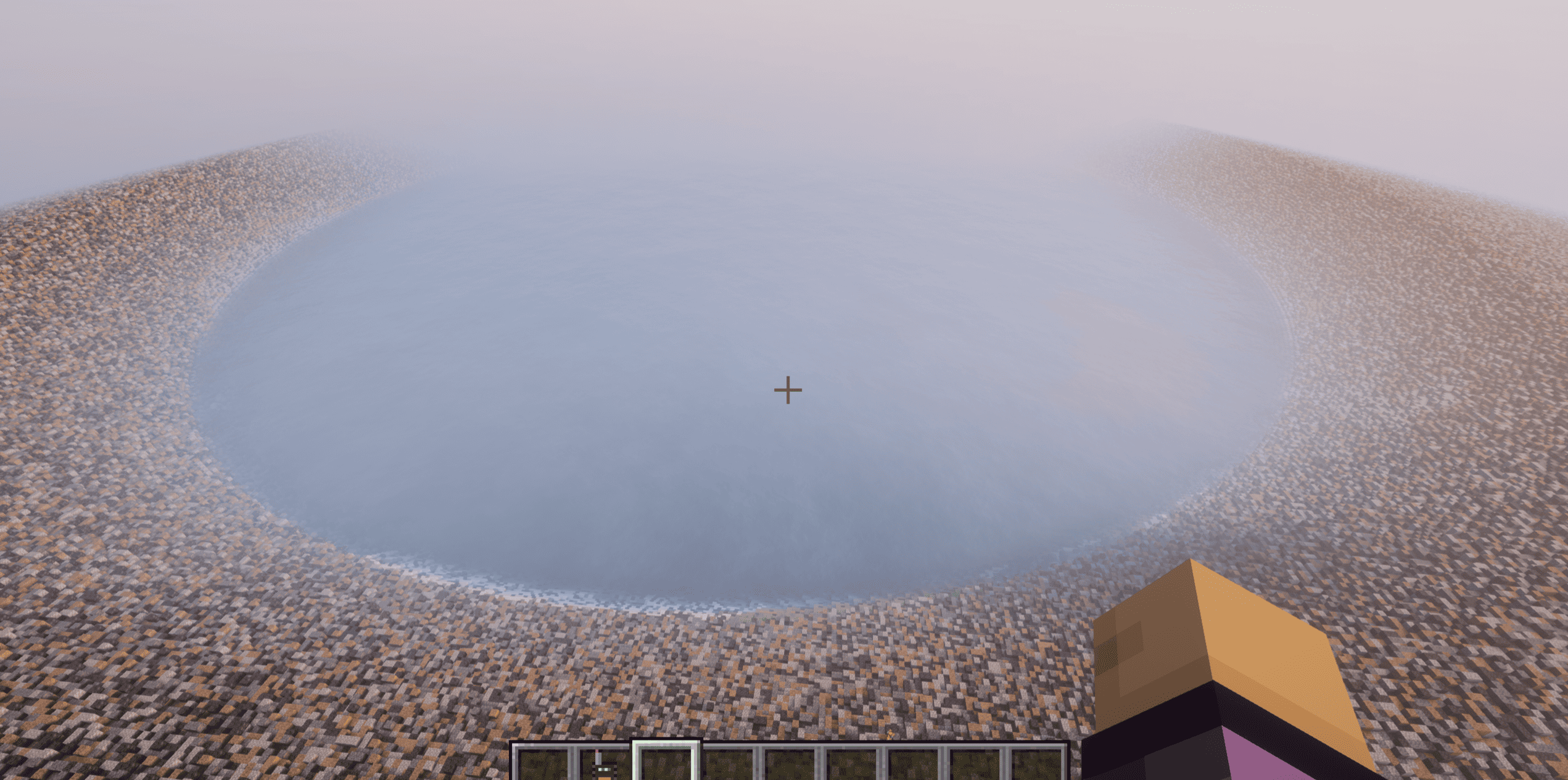
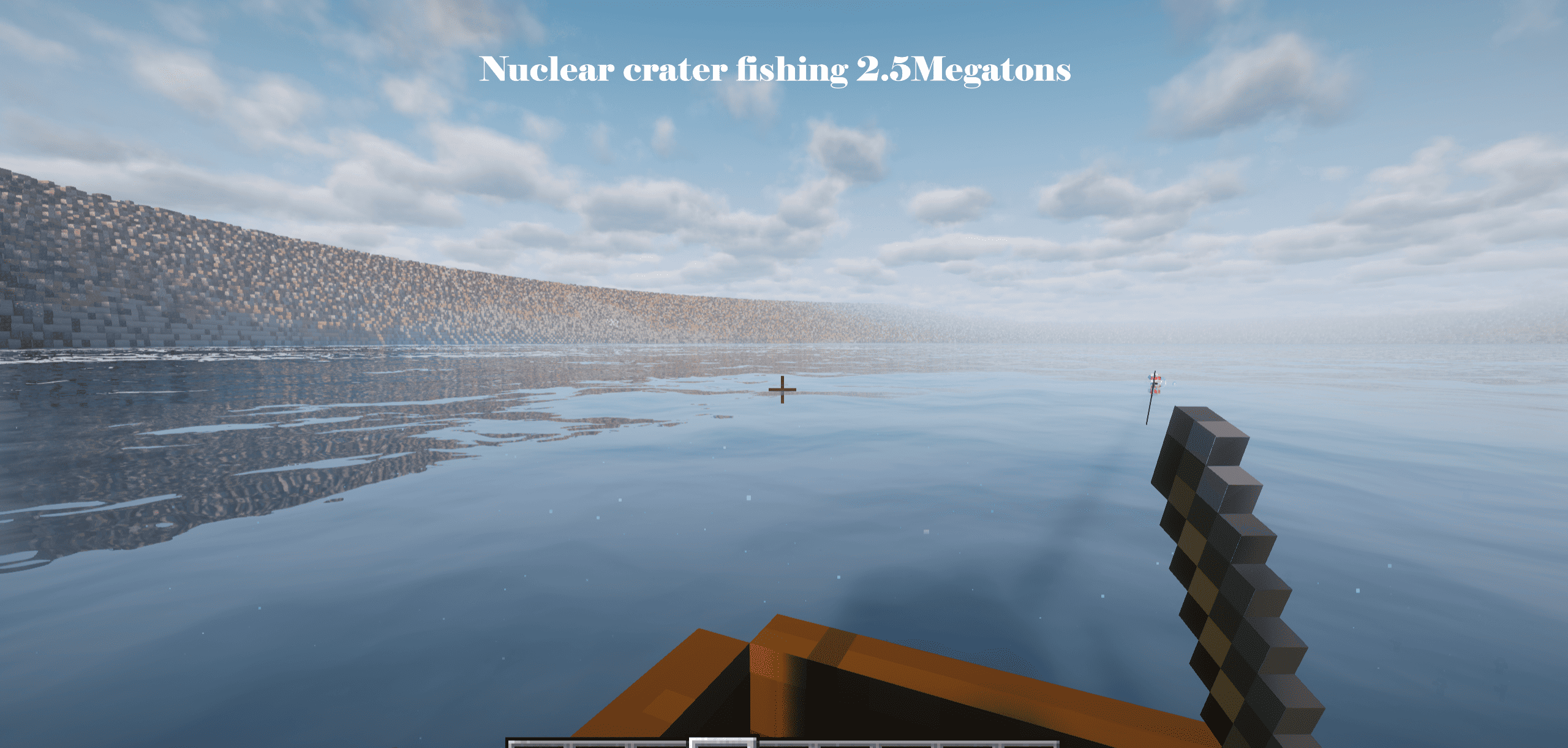
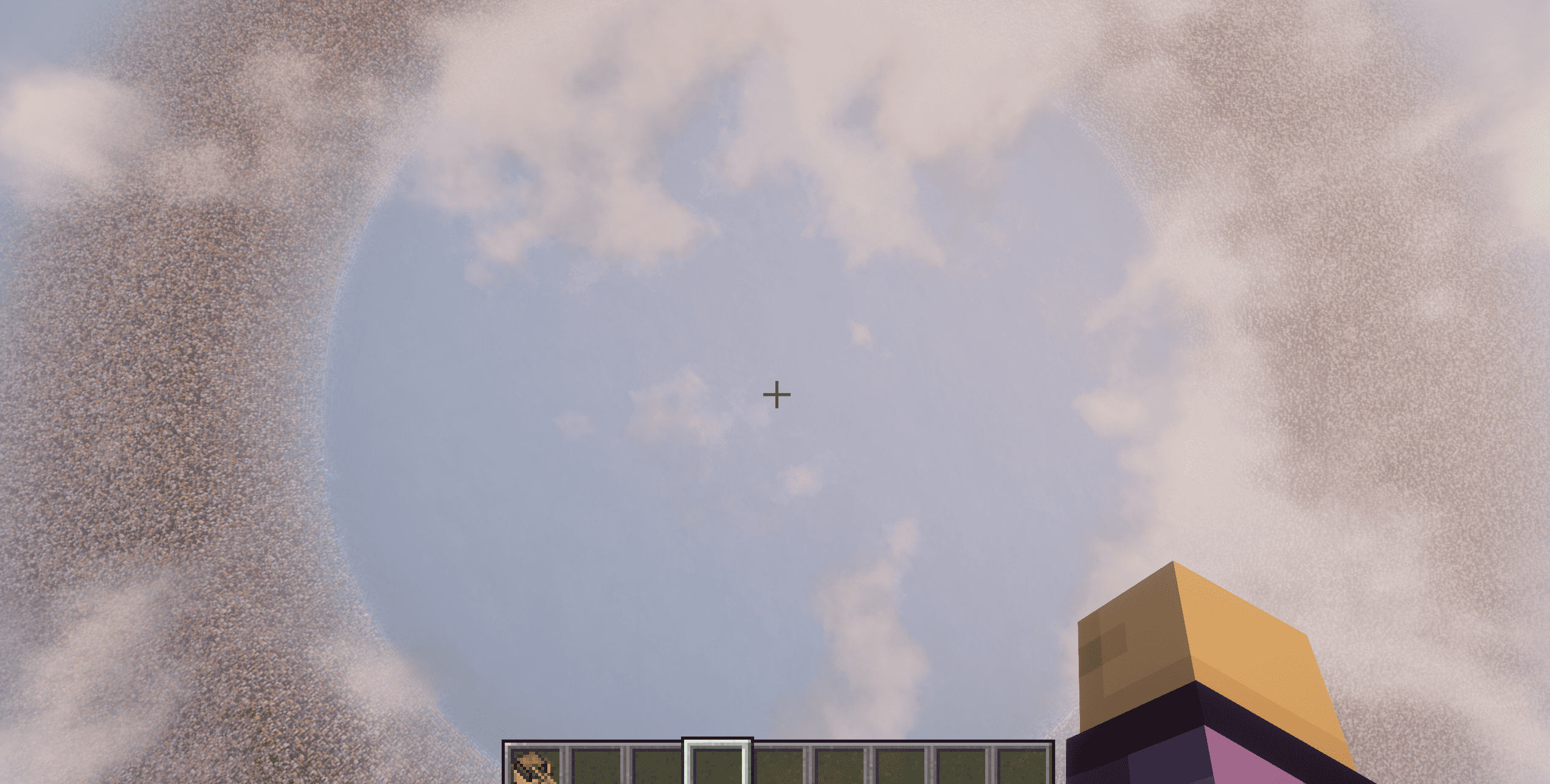
It turns out the game has room for it. Minecraft's build depth is deep enough to hold a 2.5-megaton crater — 125 metres deep from sea level, with the floor of the bowl sitting just above bedrock. That's the ceiling, and the mod goes right up to it.
On authorship. The code was written by AI — Anthropic's Claude models. I specified the physics, the behaviour and the design, and I field-tested it at length, but I can't write Java and I'm not going to pretend otherwise. I claim no credit for the implementation and I want none.
The physics
Craters follow the NUKEMAP model (Alex Wellerstein): cube-root yield scaling, radius R = 19.3 × W^(1/3) metres, depth about 0.48 × R, ejecta lip out to twice the crater radius. Blast overpressure uses 1-kiloton reference distances scaled by the cube-root law, from Glasstone & Dolan, The Effects of Nuclear Weapons. Thermal fluence is inverse-square with atmospheric transmission, and the ignition and burn thresholds scale with yield.
Yields: 1 kt, 10 kt, 20 kt, 100 kt, 250 kt, 500 kt, 1.2 Mt and 2.5 Mt.
A few reference points :
10 kt — crater radius 42 m, 20 m deep, lip out to 83 m. Total destruction to 485 m. Masonry fails to 676 m. Wooden buildings levelled to 985 m. Trees blown down to 1.4 km. Glass shattered to 1.9 km. Wood ignites out to 682 m; third-degree burns to 1.5 km.
1.2 Mt — crater radius 205 m, 98 m deep, lip to 410 m. Total destruction to 2.4 km. Masonry to 3.3 km. Wooden buildings to 4.9 km. Treefall to 7 km. Glass to 9.4 km. Fires out to 6.6 km; third-degree burns to 11.4 km.
2.5 Mt — crater radius 262 m, 125 m deep, lip to 524 m. Total destruction to 3 km. Masonry to 4.3 km. Wooden buildings to 6.2 km. Treefall to 8.9 km. Glass to 11.9 km. Fires out to 9.1 km; third-degree burns to 15 km.
What happens where
Inside the crater, everything is excavated into a bowl and ringed by a raised ejecta lip.
At 20 psi and above, nothing survives but obsidian-class material. At 10 psi, stone, brick and concrete give way. At 5 psi every wooden structure is levelled — a village house at that range is destroyed. At 3 psi you get heavy structural damage and trees are blown flat, producing a belt of felled forest that reaches well past the fires. At 2 psi, glass and leaves go.
Inside the ignition ring, exposed wood catches fire, and trunks are left standing, stripped and burning. Thermal burns are applied to mobs by line of sight, so cover genuinely shields them.
One detail I'm fond of: at 1 kt the fire ring sits inside the 20 psi ring, so the weapon is blast-dominated. At 2.5 Mt the fire ring reaches out past the 3 psi line and the weapon becomes thermal-dominated. Nothing in the code scripts that crossover — it falls out of the scaling laws on its own, exactly as it does in reality.
The B83
The B83 isn't a bomb you place. It's a physics package you assemble.
Place the B83 Assembly Bracket — it needs a clear 1×2 space and orients to the way you're facing. It starts as an empty cradle. Right-click it with each component in turn.
First the Plutonium Primary. Seated, but inert — there's no way to initiate it yet.
Then the Electronics & Firing Set. The weapon is now live: 1 kiloton, unboosted.
Then the Tritium Reservoir — a boosted primary at 20 kilotons. Sneak and right-click with an empty hand to drop it to a 10-kiloton low-boost setting.
Then the Interstage Front, the forward end of the radiation channel.
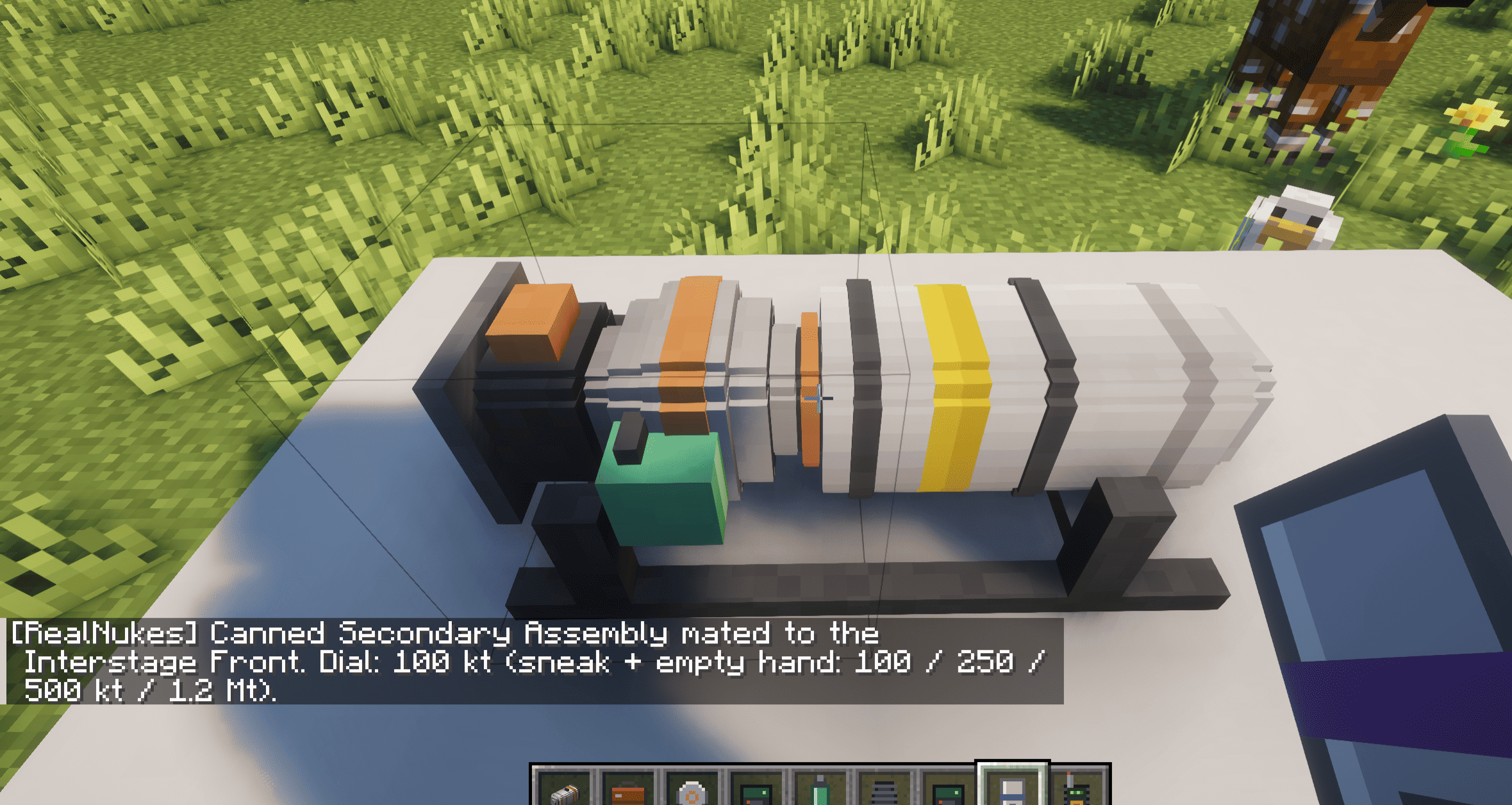
Finally the Canned Secondary Assembly (CSA), the thermonuclear secondary — the largest component by far, and it slides over the interstage and covers it. With the CSA fitted, sneak and right-click with an empty hand to cycle the yield: 100 kt, 250 kt, 500 kt, 1.2 Mt.
The model physically grows as each part goes in, and the assembly order is enforced — an unboosted primary can't drive a secondary.
Arming it. The weapon can't be armed while it's still on the bracket. Right-click the assembled package with an empty hand to strike the bracket: the casing closes and the weapon settles onto the ground. An empty hand again puts it back on the bracket if you want to change the loadout. Once sealed , sneak and right-click it with the Radio Detonator to link it, then right-click anywhere to fire it remotely. The yields for the total assembly from 100kt upwards can also be changed with the device assembled and off the bracket.
The F485
A fixed 2.5-megaton Soviet heavy MIRV warhead. A stepped re-entry cone, two blocks across the base and three tall. No assembly — place it, then arm it with the radio detonator. It produces the largest crater the mod supports, deep enough that the floor is close to bedrock.
Performance — read this before you fire the big ones
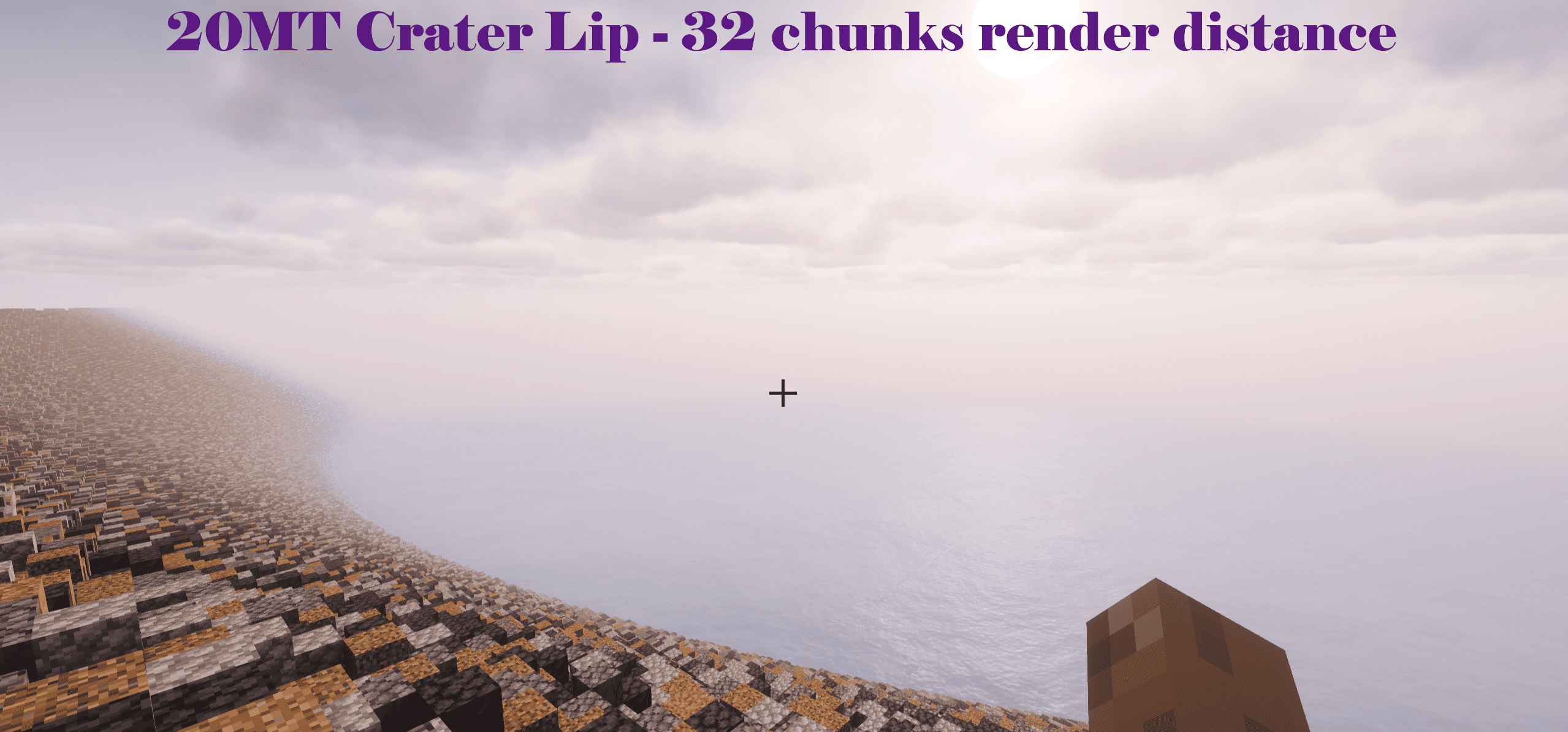
Anything up to about 100 kt runs comfortably on ordinary hardware. The large yields — 1.2 Mt and 2.5 Mt in particular — are genuinely demanding and want a high-end machine. The engine spreads its work across ticks to stay stable, but the scale is real: a 2.5 Mt crater excavates on the order of 13 million blocks, and the effects reach nearly 12 km. It runs well on my systems, but they're very high-end. Judge it against your own hardware and start small. Also note that 32 chunk render distance is essentially necessary for proper experience.
Two things you'll see on the large detonations. Both are normal.
Damage arriving in stripes. Out around the ejecta zone including on its own edges for the very large yields and beyond, you may see bands of terrain that look untouched — lines of trees left standing or even at 2.5Mt ejecta edge not completely loaded. Those are chunks that haven't been processed yet. Walk over and stand at or near the untouched patch, and the mod applies the damage as those chunks load. Outside the crater it's often instant; in the heavier zones it takes a few seconds icluding for the 2.5Mt for unfinished ejecta edges, sometimes a dozen seconds or sligtly more. It always resolves. The mod also seamlessly loads damage in unloaded terrain as you visit it.
Crater flooding. If you detonate near a large enough body of water, the crater floods — water fills the bowl back to the original ground line and leaves you a crater lake. The mod checks for adjacent water before the blast, so it only floods where it should. For the 2.5 Mt crater the volume of water involved is enormous, and filling it is by far the heaviest thing this mod ever does. Expect a sustained load while a megaton crater floods, and let it finish.
Warning as of 3.13.3 The yields go up to 20MT! Please read the warnings in the 3.13.3 release changelog as to the dangers of using the 20MT yield on any world which you still might deem usable.
Notes
Forge 1.20.1, Java 17+. Singleplayer and servers.
Crater and damage geometry are computed from constants fixed at the moment of detonation, so terrain changes are bounded and can't cascade or run away.
There are no particle effects on detonation. Pushing a kilometre-scale cloud through Minecraft's particle system isn't possible at this scale, so it's deliberately left out.
The Realistic Nukes Team