Ore & Alloy
- By
A material unification framework that eliminates duplicated ores and fragmented recipes. Best for tech modpacks.
What's Next?
Ore & Alloy is expanding beyond a material database into a comprehensive, native tech ecosystem for NeoForge! Here is a roadmap of what is currently in active development:
- Advanced Multiblock Machinery: High-performance multiblock structures featuring custom controllers, functional hatches, and specialized casings built for heavy industry.
- O&A Processing Line: Dedicated industrial machines (Centrifuges, Assemblers, Chemical Reactors, Ore Processors) designed natively around the O&A material tree.
- First-Class KubeJS & Public Java API: Deep exposure of recipe mechanics, processing pipelines, and energy tiers for seamless modpack scripting and integration.
- Native Logistics Infrastructure: Fully integrated item, fluid, and energy transport systems engineered specifically to support high-throughput production chains.
About
Ore & Alloy is a focused ore, metal, and alloy database designed to provide a clean, canonical material unification framework for large tech modpacks. Stripping away unnecessary bloat, it serves as an optimized, code-driven foundation that eliminates duplicated ores, fragmented recipes, and viewer clutter (JEI/EMI) in modern NeoForge ecosystems.
Core Features:
- Focused Material Database: Streamlines items strictly to essential forms (ores, raw and crushed materials, ingots, nuggets, dusts, plates, rods, gears, and storage blocks). Unrelated gems and non-metal materials have been removed to maintain focus.
- Authoritative Unification: Enforces canonical recipe rewriting, shared tags, and automatic duplicate hiding in JEI/EMI. Vanilla materials are always registered, while additional catalog materials dynamically activate only when a known provider mod is installed.
- Native Compatibility: Includes comprehensive, built-in processing chains for Create (pressing, milling, splashing, and mixing flows) and native integration for Add-ons like Create Crafts & Additions.
- Code-Driven KubeJS DSL: Replaces complex runtime configurations and in-game menus with a structured KubeJS startup-script DSL (
OreAndAlloy.registry). Pack makers can easily manage material validation, alias normalization, and optional material activations. - Lightweight & Optimized: By migrating worldgen, custom workstations, and modular tools to separate companion mods, Ore & Alloy ensures maximum performance and stability purely as a unification utility.
Visual Preview
Take a look at the complete material roster. Here is an overview of all the unified ingots currently supported in the database:
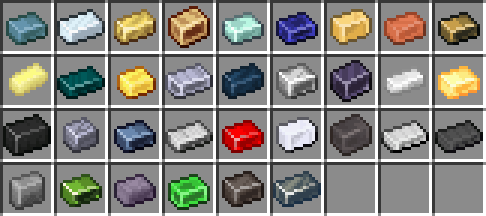
Support & Feedback: Missing any materials, want to contribute to art/textures, or found a bug? Drop a line on Discord: https://discord.gg/aX3GSctcNS
Ore & Alloy Team