Doomsday Arsenal
- By
01_arsenal.jpg
02_film_solar_lance_08p1.jpg
04_film_sagittarius_maw_08p5.jpg
06_film_jovian_storm_13p6.jpg
07_world_solar_lance_t245.jpg
08_world_sagittarius_maw_t340.jpg
11_guide_en_us_salvage.jpg
Description
Doomsday Arsenal
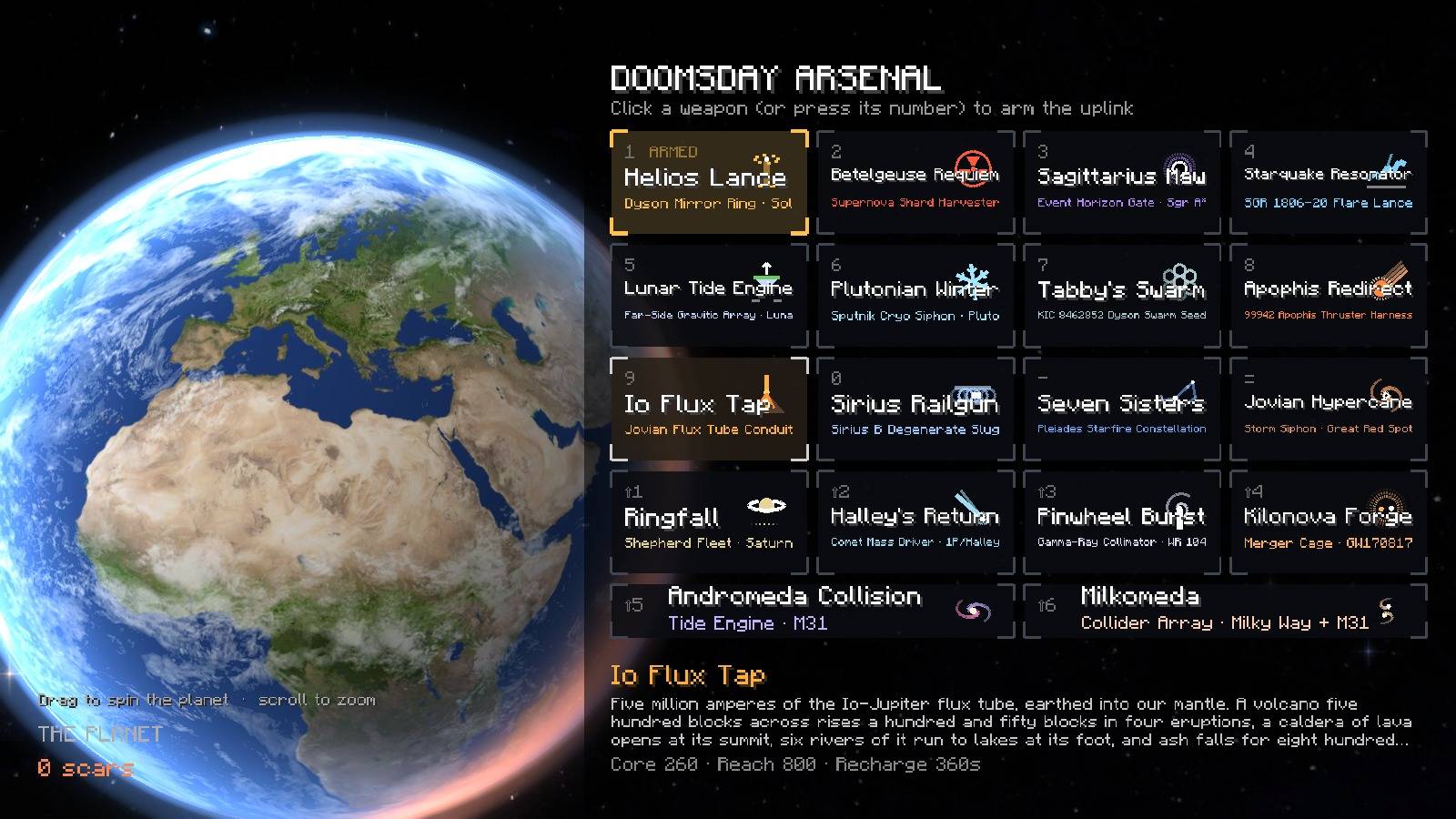
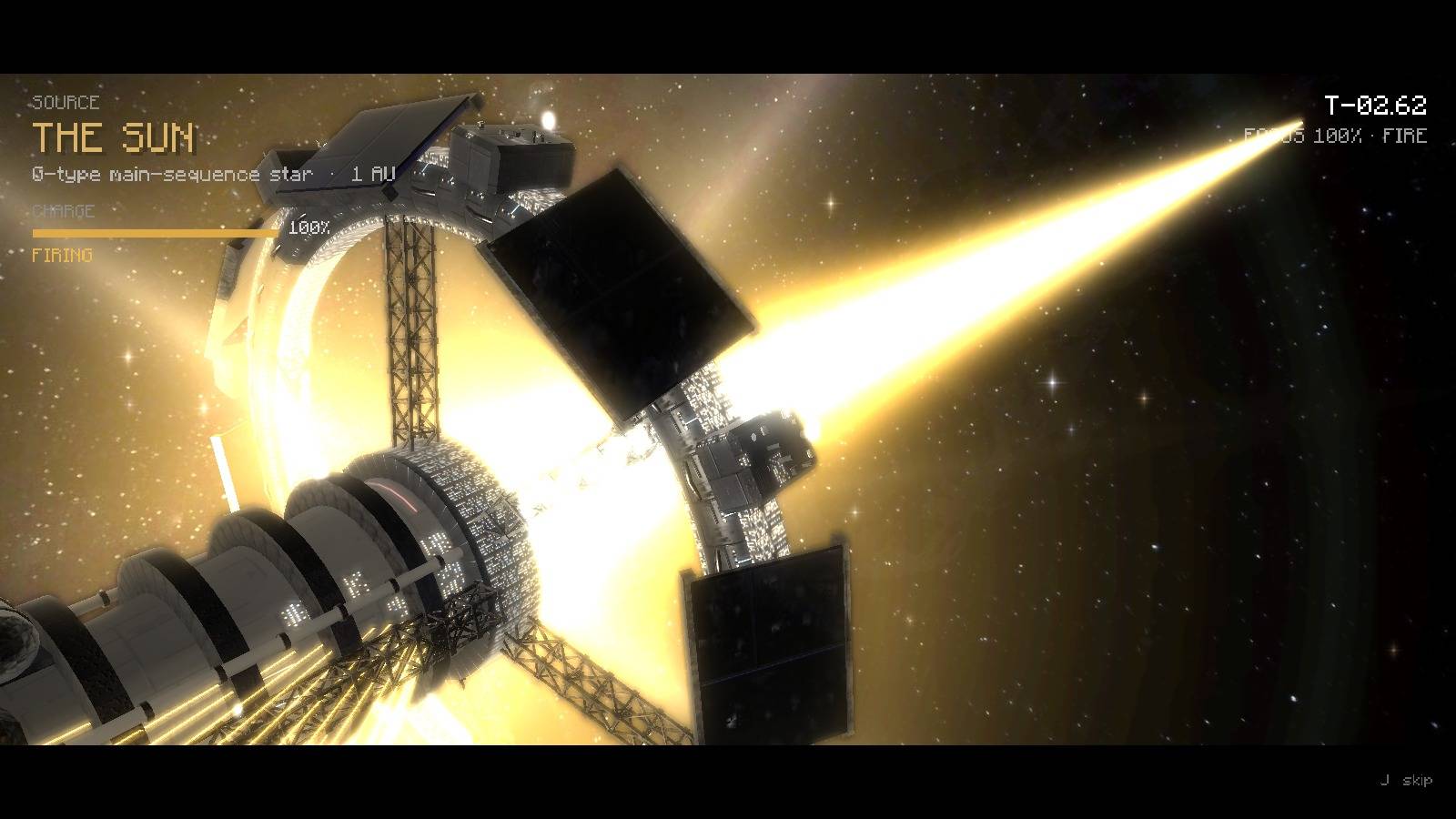
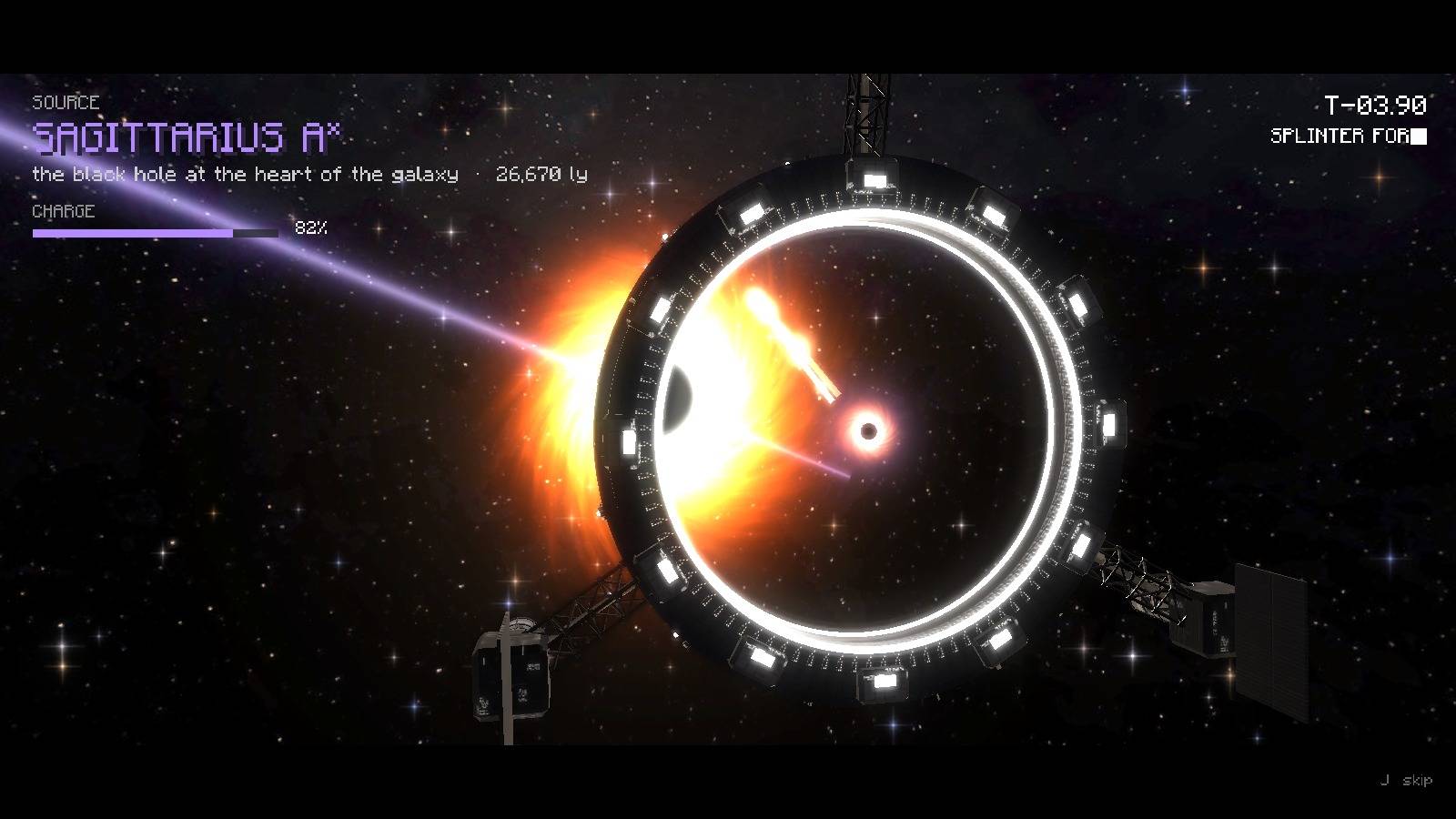
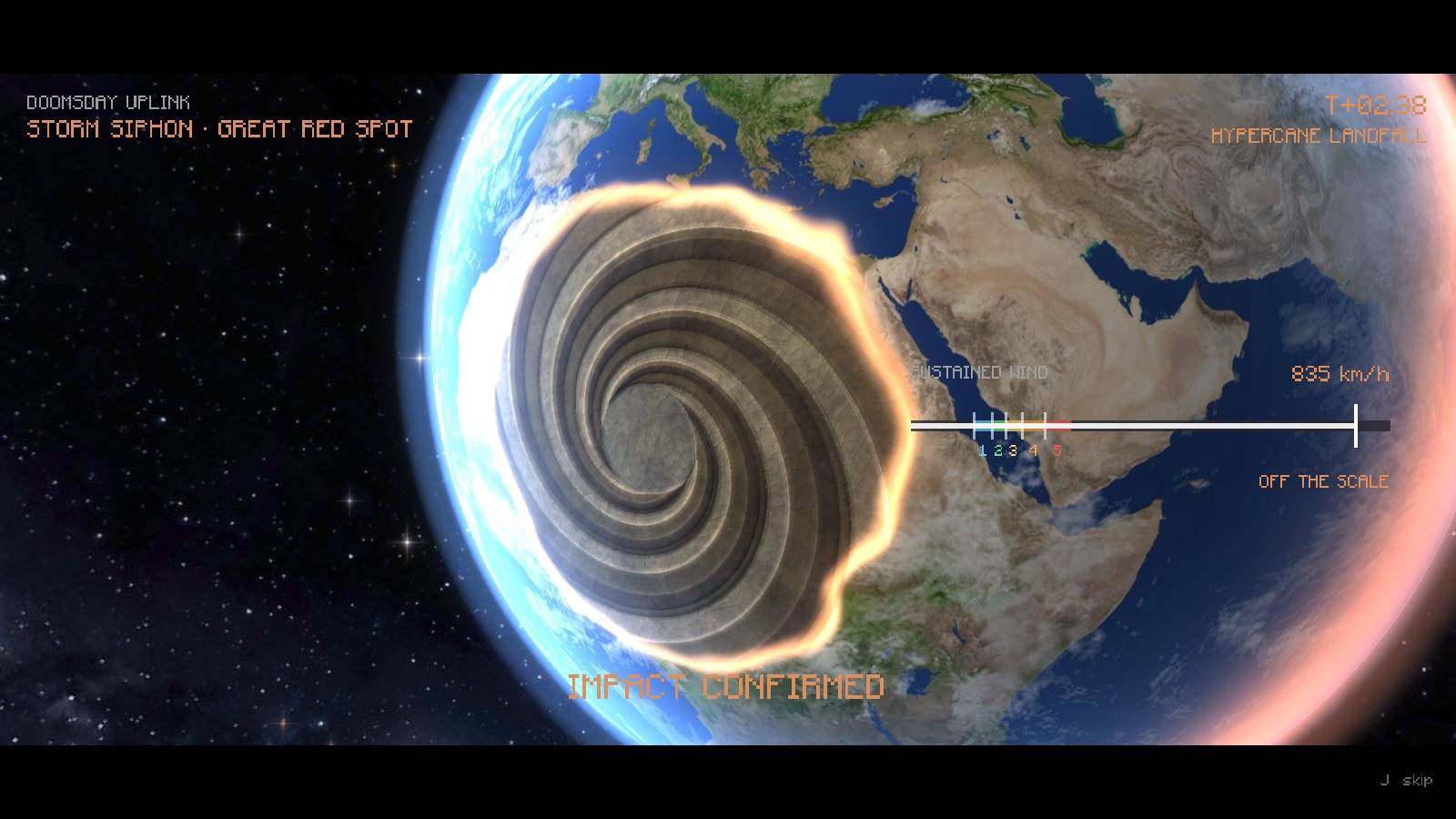
Eighteen world-ending weapons, each drawn from a real star, planet or galaxy. Fire one and you first watch it happen from orbit: the view pulls back from the Earth past the Moon and the planets to the weapon's body, at its real place in today's sky, and a 3D film follows the blow all the way down to the planet. Then the game cuts back to your own world, and the same destruction plays out on the real ground, rewriting it for good for 600 to 900 blocks in every direction.
Strikes change your world permanently. Back up any world you care about before you fire. Every creature in reach dies (creative and spectating players are spared, and the
hurtPlayers/spareCastersettings apply).
Getting started
- Craft the Doomsday Uplink: a lightning rod over two diamond blocks and a nether star, over netherite ingots and a redstone block.
- Hold it and press V (or sneak and use it) to open the arsenal, pick a weapon, then use the uplink while looking at the ground to lock the target. After a three-second countdown you watch the film (J skips it), and the strike lands when it ends.
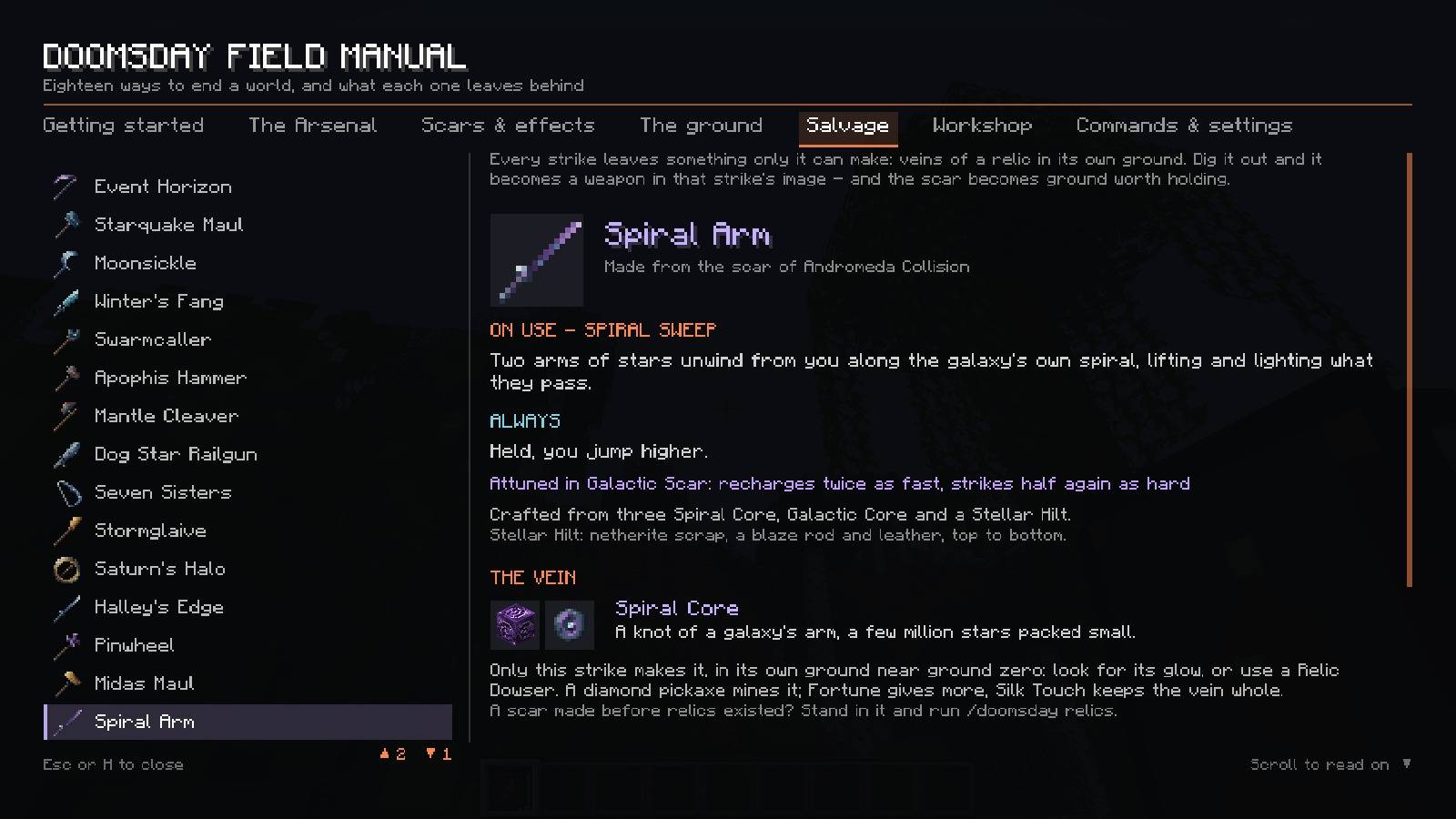
- Every player is handed the Doomsday Field Manual on first join. Press H anywhere to read it: a page per weapon, every scar and its effect, every block, and the commands and settings.
The arsenal
| Weapon | Drawn from | What it leaves |
|---|---|---|
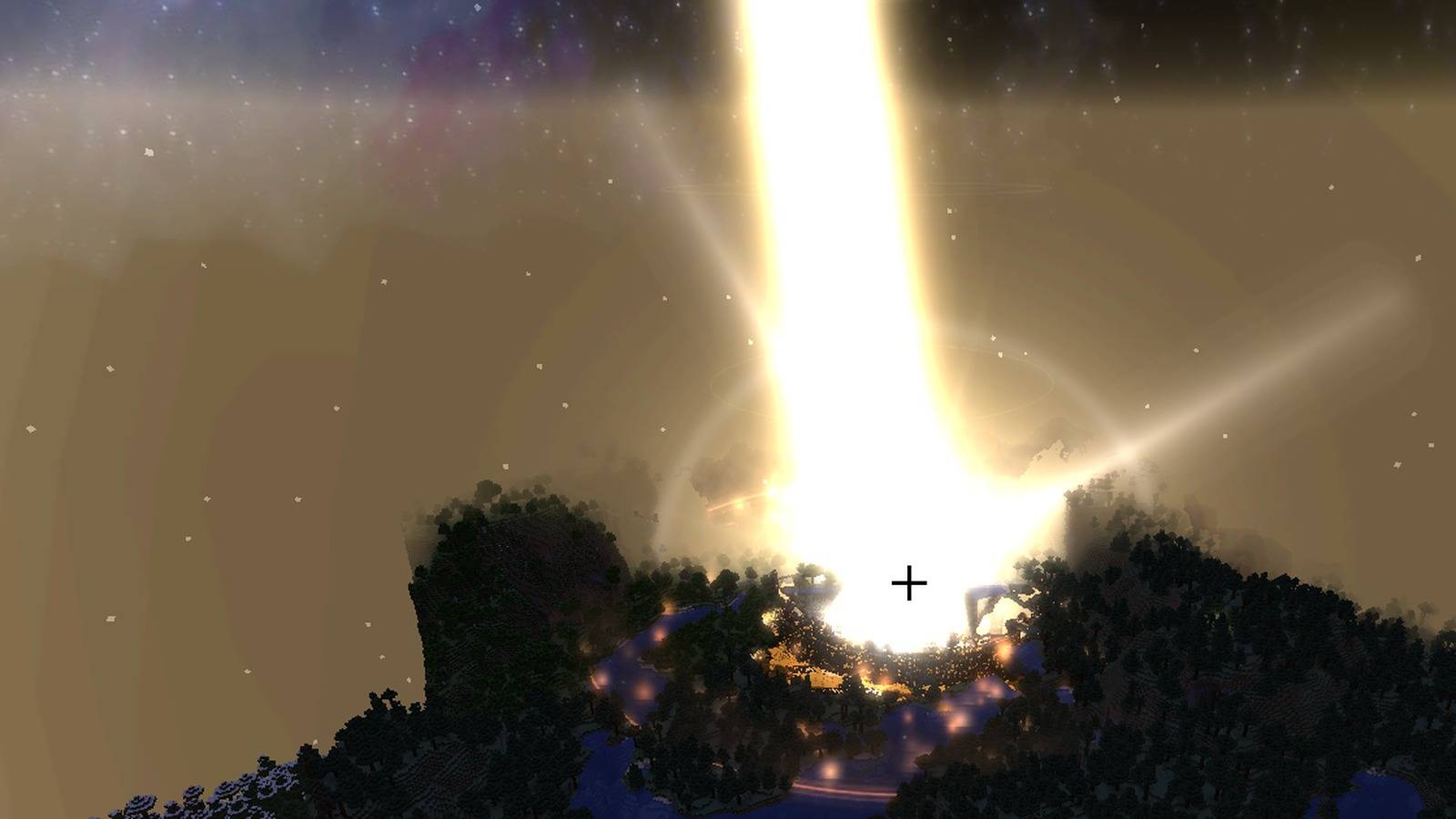
| Helios Lance | the Sun, through a Dyson mirror ring | a shaft of molten rock to the bottom of the world, the plain fused to glass down to bedrock |
| Betelgeuse Requiem | the red supergiant's collapse | a 150-block crater, glassed ground, a blast front to 760 blocks, a fallout plume downwind |
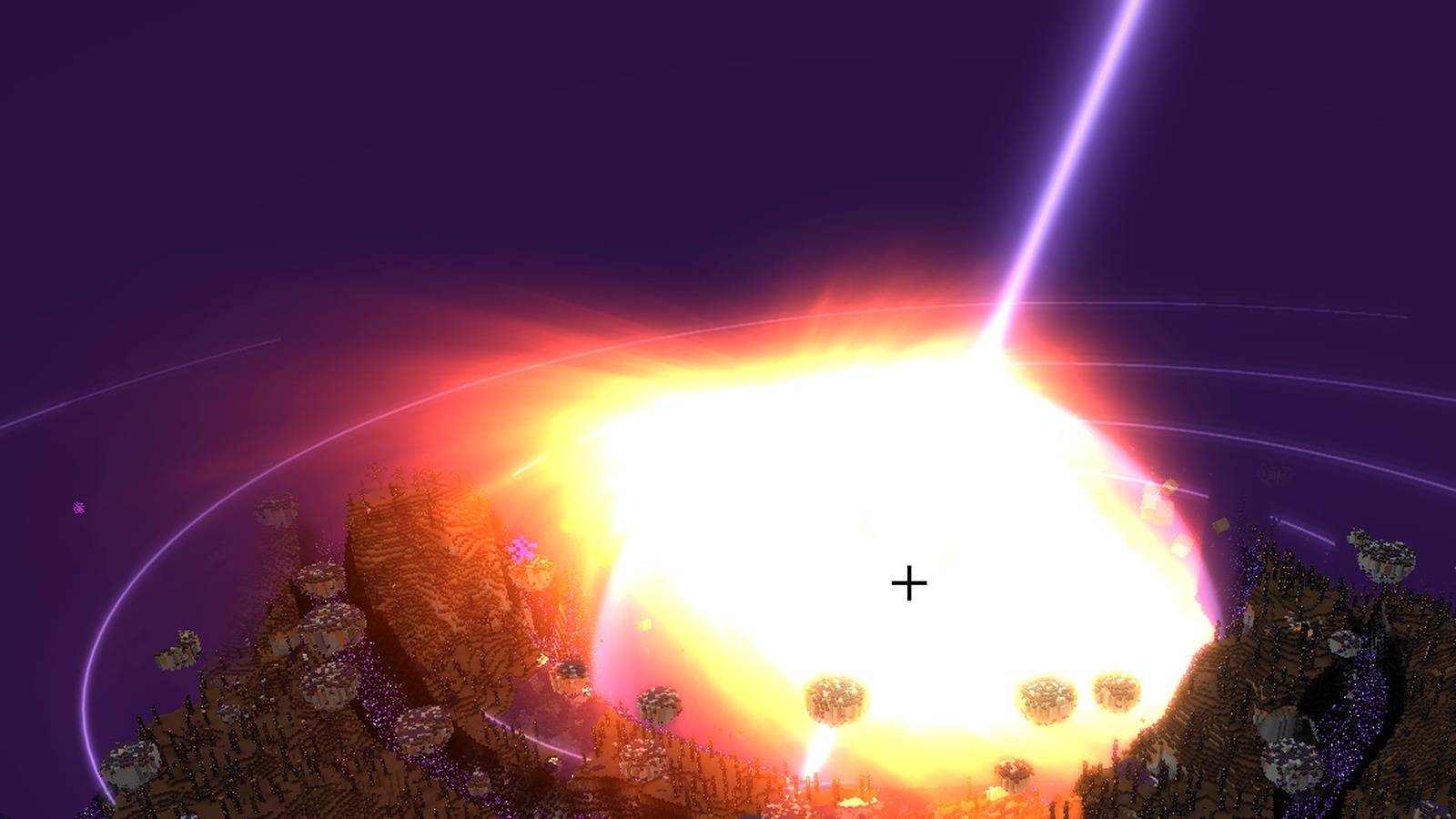
| Sagittarius Maw | Sagittarius A*, through an event horizon gate | a black hole that tears up the land block by block for half a minute, then bursts |
| Starquake Resonator | magnetar SGR 1806-20 | a rift 1,440 blocks long, ridges heaved up either side |
| Lunar Tide Engine | the Moon | a 130-block island torn out of the ground and left hanging in the sky |
| Plutonian Winter | Pluto's nitrogen ice | 750 blocks frozen, a glacier 70 high, crevasses and ice spires |
| Tabby's Swarm | Tabby's Star | a 650-block plain of machine plating, everything under it turned to circuitry |
| Apophis Redirect | asteroid 99942 Apophis | a 260-block impact crater with a central peak and ejecta rays |
| Io Flux Tap | Io and Jupiter's flux tube | a volcano 150 blocks high, lava channels and lakes |
| Sirius Railgun | a slug of white-dwarf matter from Sirius B | a bottomless shaft through bedrock, the land sagging toward it |
| Seven Sisters | the Pleiades | seven craters in the figure of the cluster, joined by trenches of fire |
| Jovian Hypercane | Jupiter's Great Red Spot | the land planed into a four-armed spiral 720 blocks across |
| Ringfall | Saturn's rings | the rings brought down whole across 780 blocks, Cassini Division and all |
| Halley's Return | Halley's Comet | an oval crater lake, butterfly ejecta, black comet dust, then rain |
| Pinwheel Burst | WR 104's gamma-ray burst | 820 blocks sterilized and bleached white; only the shadows stay green |
| Kilonova Forge | GW170817, two merging neutron stars | a rain of molten heavy metal: gold veins down to bedrock |
| Andromeda Collision | M31 | the land becomes a galaxy 900 blocks across, nebula clouds hanging over it |
| Milkomeda | the Milky Way and M31 colliding | the collision simulated star by star and printed 1,000 blocks across |
Each strike leaves its own biome and blocks (sunfire glass, trinitite, nanite circuitry, cryo ice, ring ice, starmatter and more), a scar on the planet that every later film shows, and a mark on whoever walks it: sunstroke on the glass, time dilation over the void, low gravity on the moonstruck land, a gale in the storm scar, hail under the fallen rings.
What the scars give back
- Relic veins that nothing else makes grow in each scar's own ground near ground zero. The Relic Dowser finds them.
- Eighteen handheld weapons, one per strike, each calling a small version of its strike: a ray of the Sun, a pocket singularity, a fault line, a meteor, a railgun slug, a comet dash. In its own scar a weapon is attuned and hits harder.
- Anchors turn a scar's harm into a blessing over a wide land. The Swarm Commander's drones fight for you, the Helios Altar grows crops by day, the Gravity Anchor stops hostile spawns, and the Tide Engine grants flight.
- Suits: the Scarwalker hazard suit, self-mending Nanoweave, fireproof Sunforged, Starmatter with a second jump and a glide, and the Doomsday plate that has it all.
- The ground at work: molten slag smelts what you throw on it, nanite goo repairs tools, placed void scar is a rift elevator, a sunfire-glass roof makes a greenhouse.
Settings
Common: terrainChanges, scale (0.25-3.0), tickBudgetMs, hurtPlayers, spareCaster, permissionLevel, biomes, radiation, zoneEffects, relicVeins, anchorFlight.
Client: films, impactFrames, photosensitive (replaces every flash with a fade), shake, fxDensity, bloom (turn it off with shader packs or on slow machines).
Operator commands: /doomsday strike, call, film, jobs, reset, scars clear, relics.
Compatibility
Forge 1.20.1 (47.4 or newer). Needed on both the client and the server.
Credits
The films' planets, moons and sky are drawn with free imagery. Thank you to everyone who makes it free.
- Earth (day, night lights, clouds), Moon, Sun, Jupiter and the Milky Way panorama: Solar System Scope (solarsystemscope.com/textures), CC BY 4.0, based on NASA imagery and elevation data; the Milky Way panorama derives from ESO/S. Brunier (CC BY 4.0). Resized for the game.
- Pluto and Charon: NASA/Johns Hopkins University Applied Physics Laboratory/Southwest Research Institute (New Horizons), public domain.
- Io: USGS Astrogeology Research Program, public domain.
- Andromeda Galaxy (M31): Taavi Niittee, "Andromeda galaxy 2023", CC0 1.0.
- The Milky Way seen from outside: NASA/JPL-Caltech/R. Hurt (SSC/Caltech), public domain.
- Apophis is built on NASA's shape model of the asteroid Bennu (NASA/Goddard/University of Arizona, OSIRIS-REx), public domain.
- The machines' metal is built from CC0 scans from ambientCG (ambientcg.com).
- Milkomeda's collision is a restricted N-body simulation after Toomre & Toomre, "Galactic Bridges and Tails" (1972).
- inspiration:shooting strar mods! really a huge impact on internet. aimed to be a more scientifically relatable and a mod you can actually added to your survival world. Shooting star mods is incredibly amazing though, and you should definitely try that.
CC BY 4.0: https://creativecommons.org/licenses/by/4.0/ - the full list is in CREDITS.md inside the jar.
Doomsday Arsenal Team