2026-11-11_15.13.26.png

2026-11-11_15.14.54.png
screen_01.jpg

screen_04.png
screen_03.png
screen_02.jpg
Description
DeltaFoxes
Set out on a journey through a world now home to the fox folk.
The fox folk live in this world: shrines and fox villages, fox villagers with professions and trades, the priestess and the kumiho, the Festival of the Fox Goddess, rice and the Rice Valley, a fox kitchen with a fermentation barrel and a seiro, roads, ports, ferries and caravans.
The mod is in English and Russian, following the game language.
Fox villages
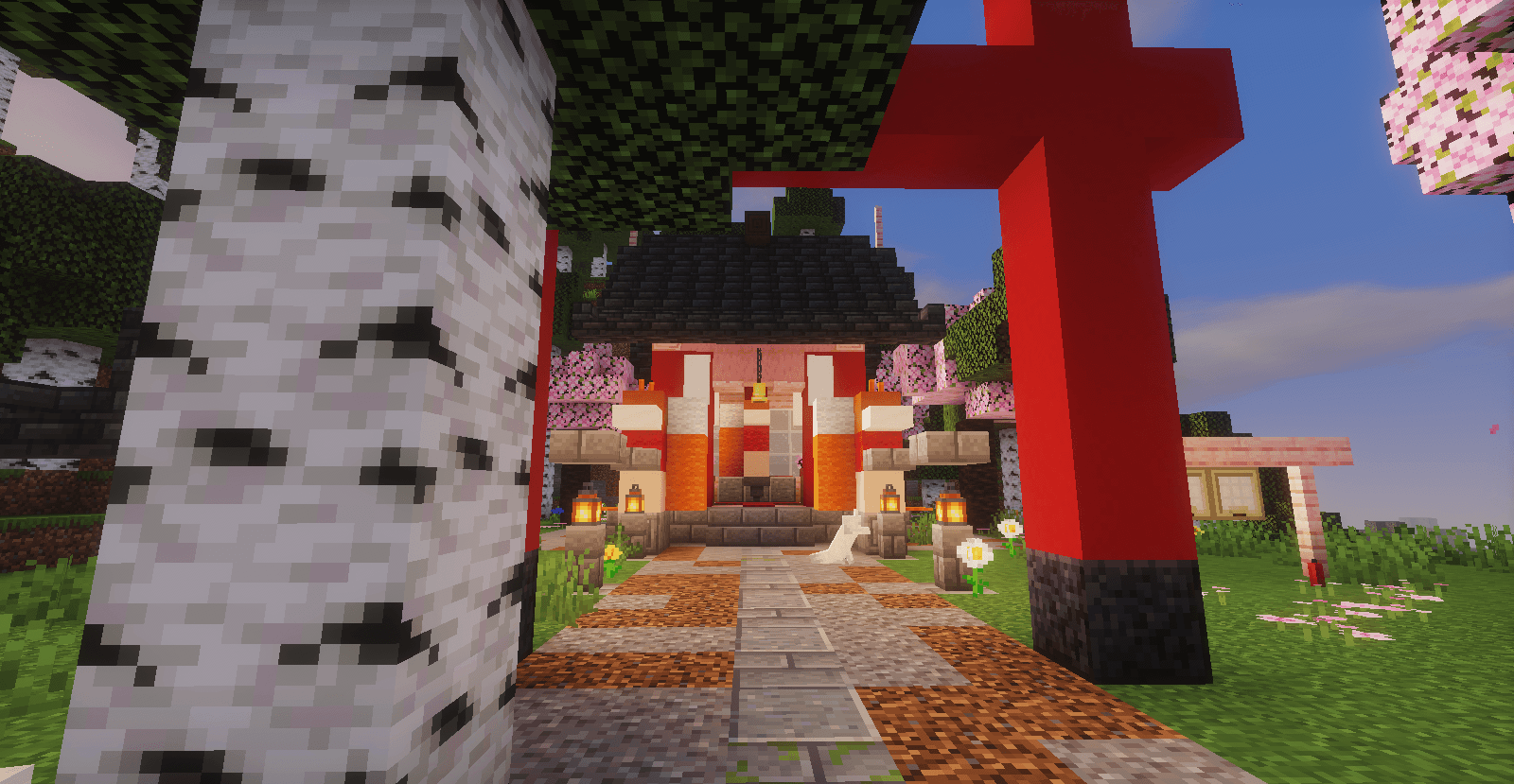
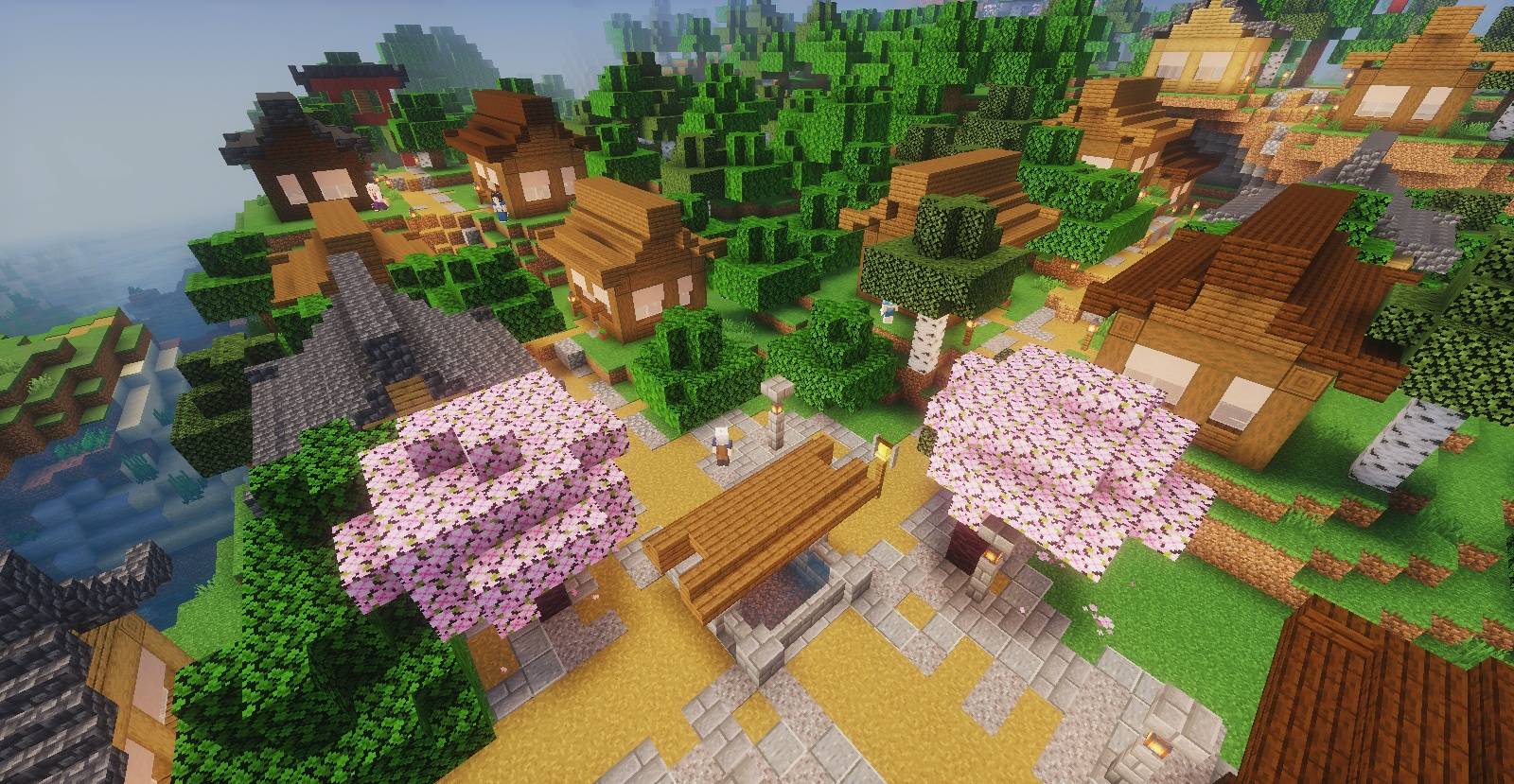
Living fox villages have houses, lanterns, a well, a bell, a sakura and a torii. The villagers sleep at night, open doors and run from monsters. They talk, trade and accept gifts. Village trust lowers prices and unlocks rare goods.
The professions are smith, herbalist, onmyoji, archer, kimono maker, cook, potter, fisher, guard, elder and farmer. A ferryman works at port piers.
The elder gives quests: bring items, drive off monsters, visit a shrine, deliver a letter, or keep the night watch. The reward is emeralds and trust.
Guards with naginata protect the village from monsters. They patrol during the day, and at night one of them keeps watch. Hitting a villager costs trust, and the guards stand up for them. If trust falls low enough, the guards turn hostile.
Fox villagers can be ordinary, northern or coastal. Their look depends on the village or biome. After one or two game days in another region, a fox changes into the local outfit. Northern and coastal villagers have their own trades.
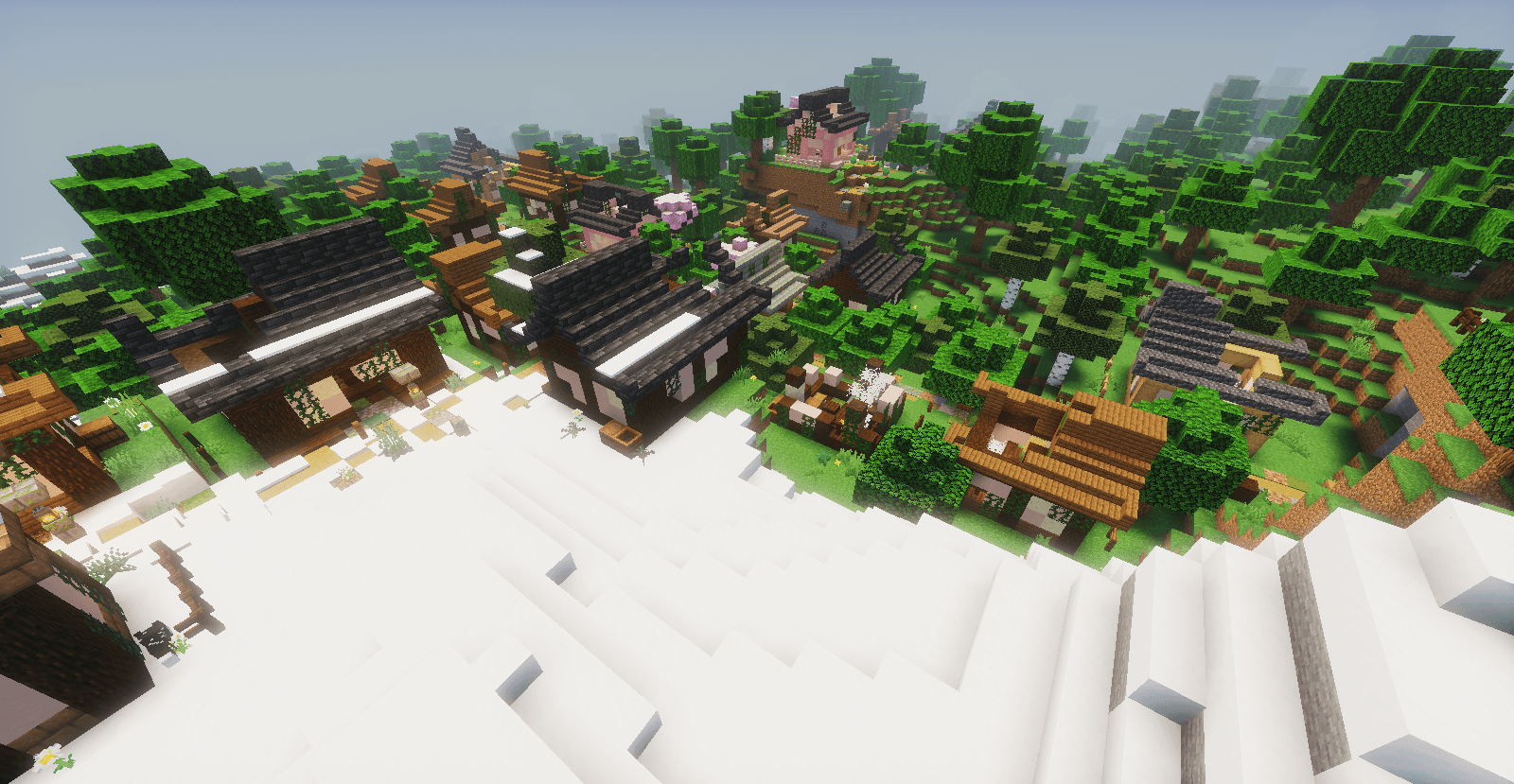
Northern villages stand in taiga and snow. Coastal villages have piers, stilt houses and a torii in the water.
Shrines, the priestess and the kumiho
Every shrine has a priestess. She accepts food offerings once a day and can heal you and lift the kumiho's curse. Sake or mochi offered to her sometimes brings a blessing of the kami: Luck and Regeneration.
The kumiho is a lone nine-tailed fox. She lives on temperate land: forests, taiga, plains, hills, meadows, savanna and cherry groves. She protects her animals, and for raw meat she lets you hunt in her forest.
The kumiho's curse lasts a game day: whispers, darkness, warped sounds and a risk of death. As it shows itself, a blood-red kumiho watches from afar, mobs stare at the cursed player, footsteps sound behind you, sudden silence falls, fake loot appears, animals shy away, and nightmares come. Hitting animals makes the curse stronger.
The priestess's curse: foxes answer coldly and refuse gifts and offerings, the elder gives no quests, guards follow you around, kits and shrine foxes run away, bells ring on sacred ground, and village trust drops. Hitting the priestess always brings this curse. Shrines and fox villages count as sacred ground.
Festival of the Fox Goddess
The festival lasts 10 days out of every 15: flags, lanterns, fireworks, a fair with merchants and guests, and villagers in yukata. During the festival, monsters do not spawn near villages and shrines.
The fair has stalls, a roofed stage with taiko, and a road from the village with a curb, a little bridge, lanterns and a torii. Day and night tunes play through the festival. Vanilla music fades near living villages and the fair.
Yukata come in three colours and are worn in the chestplate slot.
Rice and the Rice Valley
Use a hoe on dirt next to water: the first use makes a plot, the second floods it. Rice, soy, ginger and green onion are planted only on a flooded plot. The plot is not trampled, and water does not wash the crops away. Rice grows in 8 stages and ripens in about 3 game days. It needs light. Ripe rice gives rice and seeds. Seeds also drop from grass; 1 rice crafts into 1 seed.
Fox farmers plant and harvest these crops and put the extra harvest into a nearby chest or barrel. The farmer sells seeds, rice, bowls of rice, a straw hat, soybeans, green onion seeds and ginger rhizomes.
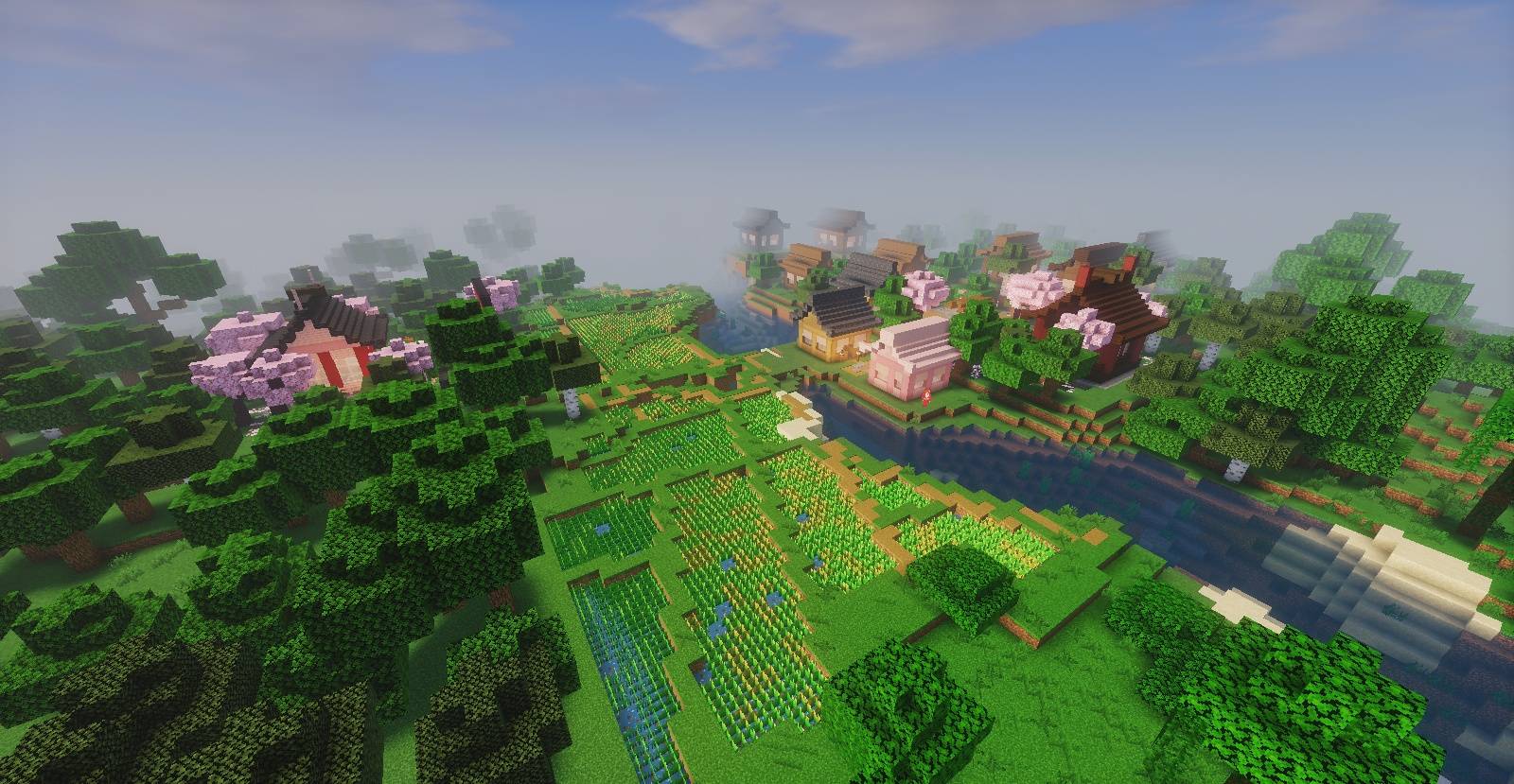
The Rice Valley is a biome with rice paddies along a river and narrow tanada terraces on the slopes. It appears on plains, sunflower plains, savanna and along the rivers that flow through them. A rice farmers' village stands there: straw houses, a granary, rice drying racks, an Inari shrine and scarecrows.
Fox kitchen
New ingredients include rice flour, sea salt, koji, tofu, ume and umeboshi, shrimp and squid tentacles. Ume falls from cherry leaves. Shrimp are caught in a shrimp trap or with a fishing rod in warm seas, and the coast fisher sells them. Tentacles drop from squid and glow squid, and the fisher sells them too. Sea salt is made by smelting a bucket of ocean water in a furnace; you get the bucket back.
The fermentation barrel's lid works like a vanilla barrel's: it stays closed until someone opens it, and when it is open you can see what is inside. Nothing ferments while the barrel is open. Fermenting is slower in cold lands and faster in hot ones.
- Sake: 4 rice, koji and a water bucket, 2 days. Pour it into a tokkuri. If the sake is left in the barrel, it turns into rice vinegar after one more day.
- Miso: 4 soybeans, koji and sea salt, 4 days. Collect it into a miso tub.
- Soy sauce: 4 soybeans, wheat, sea salt and a water bucket, 4 days. Pour it into a soy sauce bottle.
A batch gives 4 to 6 portions. A wrong mix turns into spoiled mash, which can go in a composter or be fed to pigs.
The seiro is a bamboo steamer. Place it over water or on a water cauldron. It steams a bowl of rice into koji, and a shrimp or a squid tentacle with rice flour into tempura.
Dishes include salmon onigiri and ume onigiri, miso soup, tempura, daifuku, rice pudding, rice bread, senbei, ika-yaki and ginger tea, as well as earlier foods such as mochi, dango, inari sushi, nabe, amazake, smoked salmon, himono and kaisendon.
Sake gives Strength for 2 minutes and Nausea; three in a row bring Weakness and Slowness. Amazake warms you: with the Warmth effect you do not freeze in powder snow. Miso soup gives Regeneration, salmon onigiri gives Water Breathing, ume onigiri cures Poison and Hunger, mochi and dango give Speed, daifuku gives Jump Boost, rice pudding cures Weakness. Kaisendon and himono give Luck, nabe gives Resistance.
The Fox Cookbook is a picture book covering the field, gathering, crafting, the furnace, the seiro, the barrel, food effects and offerings. The fox cook sells it once the village trusts you, and now and then it turns up in the chests of fox houses. The book is in English or Russian, following the game language.
Treat a villager to a good dish and the village's trust grows.
Roads, ports and caravans
Roads with little bridges and side paths to shrines are laid between neighbouring villages. Where a road reaches the ocean, a port is built with docks, a market, sailboats and fishers. A ferry runs across narrow straits; after a crossing the screen fades out and back in.
On long roads, caravan camps are set up: a campfire, wagons with chests, merchants and guards. You can lead a caravan to a village, and it stays there for 3 days. Sometimes you find a looted camp.
Commands
/foxkin festival start/end/stop/status— the Festival of the Fox Goddess/foxshrines locate living/abandoned/north/coast/any— find a fox village/foxshrines ricevalley tp— go to a Rice Valley/locate biome foxshrines:rice_valley/locate structure foxshrines:rice_village/foxkin rice plot/seeds/grow/age <0-7>/status/foxkin curse kumiho/priestess/clear/status/foxkin kumiho— summon a kumiho nearby/foxkin namesand/foxkin chatter
Shrine commands also work as /foxkin shrines ….
This is Delta! This is my first mod, so there might be some bugs. Please don't be mad at me, and let me know about any bugs you encounter during your adventure.
Delta Foxes Team