Create Aeronautics: Freeze Staff
Create Aeronautics Freeze Staff adds a single tool for taking a Simulated contraption out logic — recovering TPS on worlds with many contraptions.
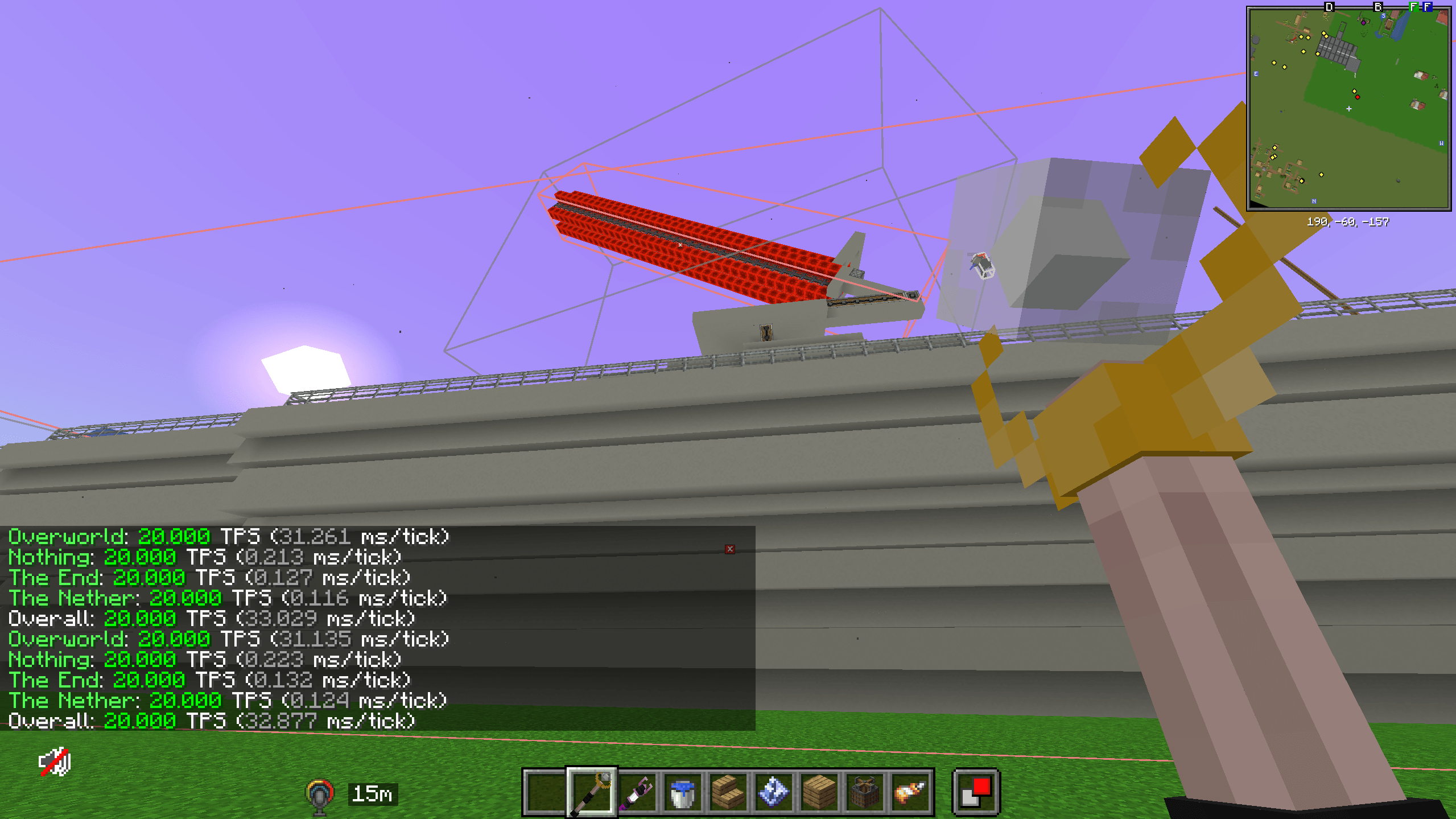
image3.png
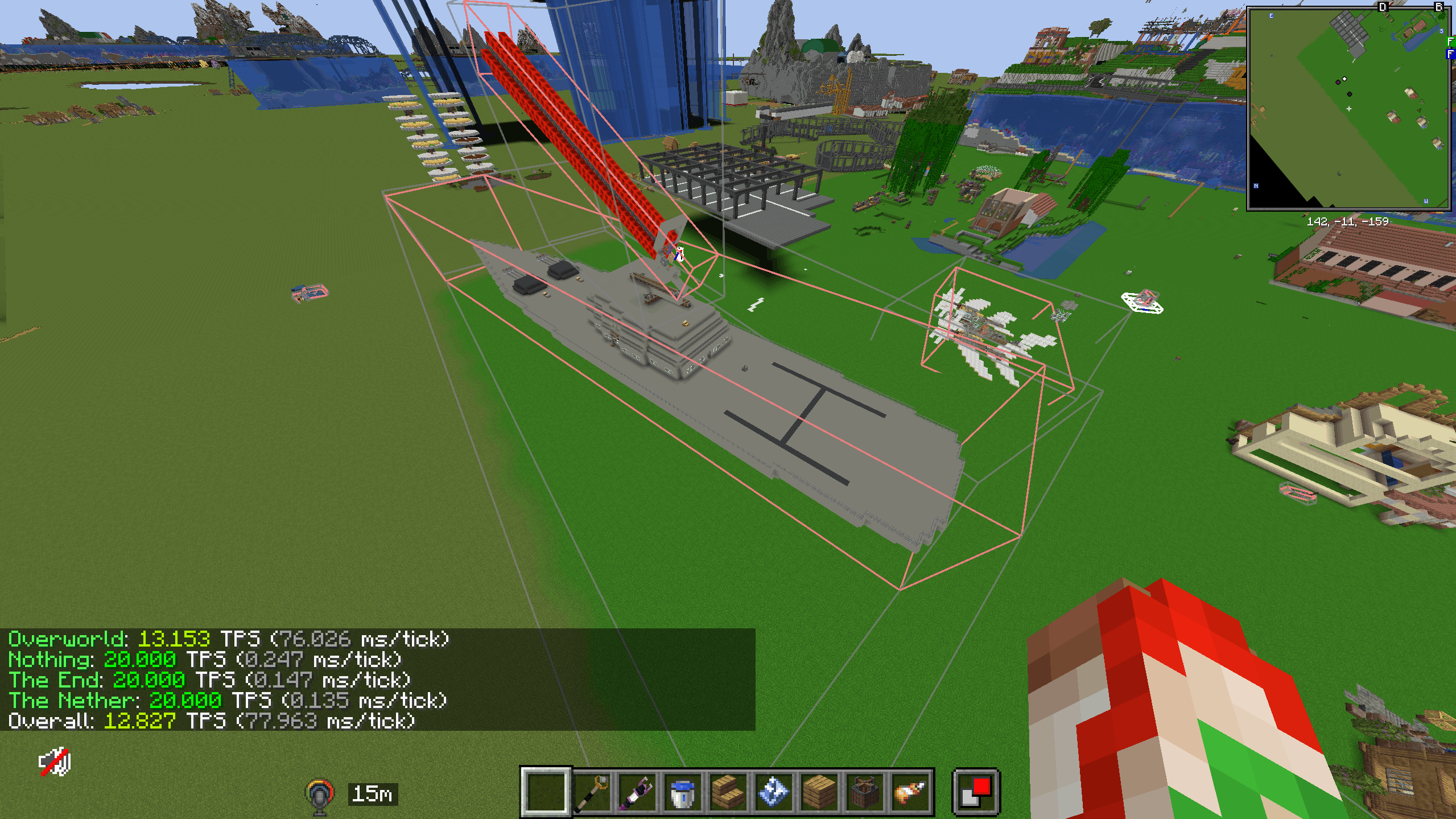
image2.png
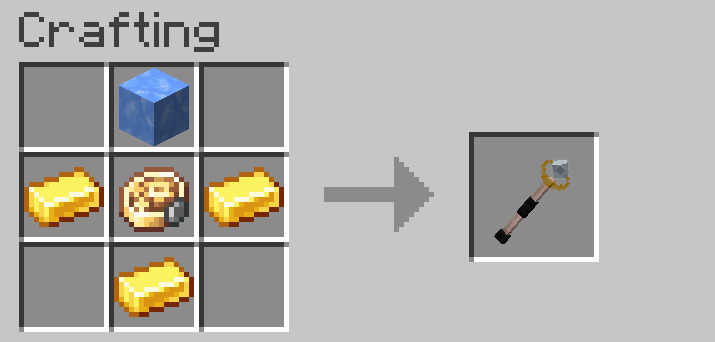
image_2026-08-23_195042003.png
Description
The problem
Every loaded Simulated contraption costs server tick time whether or not it is doing anything.
A sub-level is stepped by the physics pipeline several times per game tick, its actors are advanced on every substep, and every block entity inside it is ticked by the server exactly as if it were part of the world — because it is. A parked airship, a docked barge, a stack of freight crates and a half-finished build in the corner of the base all keep paying that cost, permanently, at full rate.
This scales linearly. Ten contraptions cost ten times one. On a world built around Create Aeronautics, the contraptions that are actively in use are usually a small fraction of the contraptions that exist, and the rest quietly consume the tick budget until TPS starts falling.
What this mod does
Create Aeronautics Freeze Staff adds one tool that takes a contraption out of the simulation entirely while leaving it standing exactly where it is.
A frozen contraption keeps its blocks, its position and its appearance. What it stops having is a per-tick cost.
What freezing removes
For a frozen contraption, the following work is suppressed at its source:
| Work removed | Rate, per contraption |
|---|---|
| Physics force application — motors, propellers, thrusters | 80 / second |
| Per-substep actor logic — propellers, reaction wheels, Create motors feeding RPM | 80 / second |
| Sub-level actor ticks | 20 / second |
| Structure-splitting flood fill | 20 / second |
| Vanilla block entity ticks | 20 / second, per block entity |
Create SmartBlockEntity ticks |
20 / second, per block entity |
| Random chunk ticks — growth, spreading, decay | per chunk |
| Scheduled block and fluid ticks — repeaters, comparators, observers | as scheduled |
Rates assume the default of four physics substeps per game tick.
The rigid body itself is pinned by a fixed constraint and allowed to sleep, so it is no longer being solved or moved. Its network position stays intact, so clients continue to see it correctly.
Block entity ticking is intercepted on three separate paths, because Sable sub-level chunks live in the parent world and are reached by vanilla chunk iteration as well as by the sub-level pipeline. Suppressing only the physics phase would leave most of the cost in place.
Freezing is not destructive
A frozen contraption is paused, not disassembled or unloaded.
Scheduled block and fluid ticks that were suppressed while frozen are recorded and replayed on release: the affected blocks are rescheduled and their neighbours forced to re-evaluate, so redstone signal strength and fluid flow resume consistently instead of latching in a stale state.
The freeze is recorded against the contraption's own identity rather than its position, so it survives chunk unloads, world reloads and server restarts. On reload, a frozen contraption is restored to the exact pose it was frozen at — it does not drift, settle or slide out of alignment while nobody is watching.
While frozen, its blocks cannot be broken, placed into or interacted with. Blocked attempts report the reason on the action bar rather than failing silently.
Usage
| Input | Result |
|---|---|
| Right-click a contraption | Freezes it and everything connected to it |
| Right-click a frozen contraption | Releases it and the rest of its frozen group |
| Sneak + right-click a contraption | Affects only the targeted contraption |
| Sneak + right-click anything else | Reveals frozen contraptions through terrain for 3 seconds |
Connected freezing
Freezing propagates along two independent relations, both enabled by default and both configurable:
- Contact — contraptions whose bounds touch the frozen one, within a configurable tolerance.
- Ropes — contraptions attached to the same rope.
Propagation is transitive. Freezing the lowest crate in a stack freezes the entire stack; freezing one end of a rope chain freezes the chain. This matters for performance as much as for physics: a docked assembly is usually the unit you want to park, and freezing it one piece at a time would leave most of its cost behind.
Releasing works the same way and is confined to contraptions that are actually frozen, so it cannot reach past the group into unrelated structures. Sneaking suppresses propagation in both directions for a single interaction.
Configuration
config/freeze_staff-common.toml
| Option | Type | Default | Description |
|---|---|---|---|
freezeNearbySubmodules |
boolean | true |
Propagate the freeze to contraptions in contact with the target |
nearbyFreezeMargin |
double | 0.05 |
Contact tolerance in blocks, beyond a contraption's own bounds |
freezeRopeConnectedSubmodules |
boolean | true |
Propagate the freeze along rope connections |
Commands
Both require permission level 2.
| Command | Description |
|---|---|
/freezestaff status |
Totals: frozen, currently loaded, currently pinned |
/freezestaff list |
One line per frozen contraption, with dimension and pose |
The Create Aeronautics: Freeze Staff Team