Cheonsang
- By
Replaces the overworld sky with the real sky for any date and place, with a telescope that uses real optics.
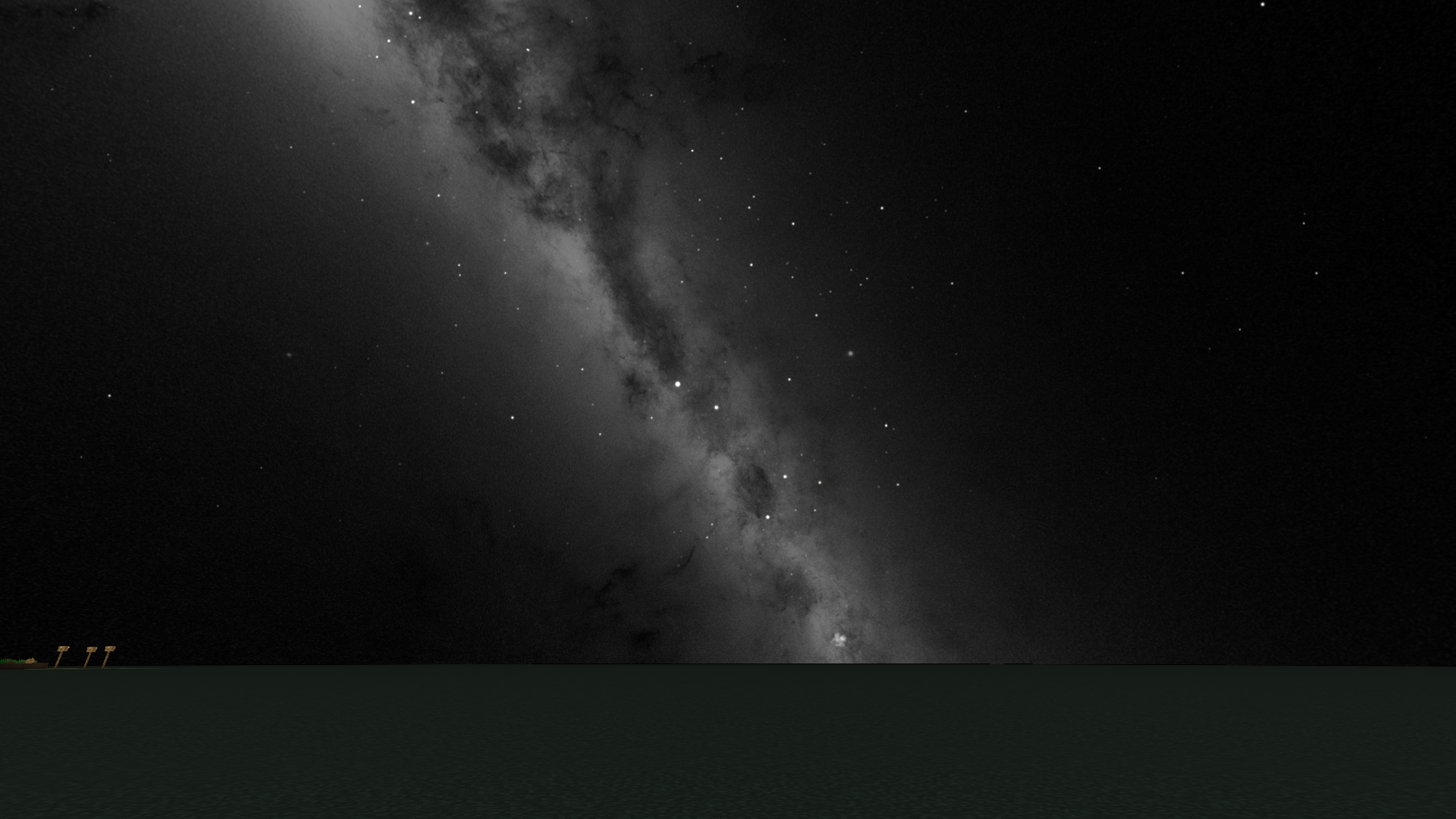
01_milky_way.png
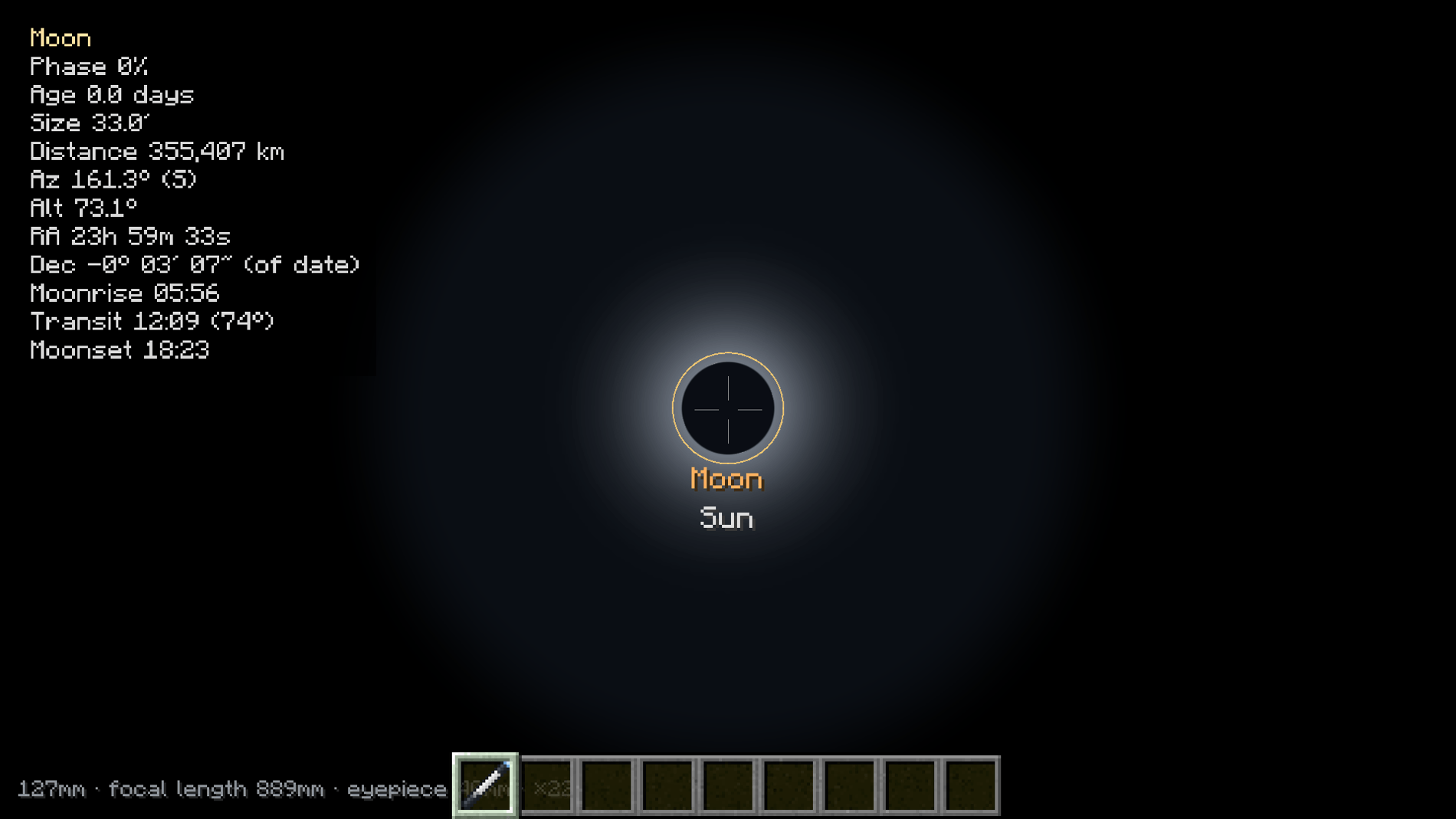
02_total_solar_eclipse.png
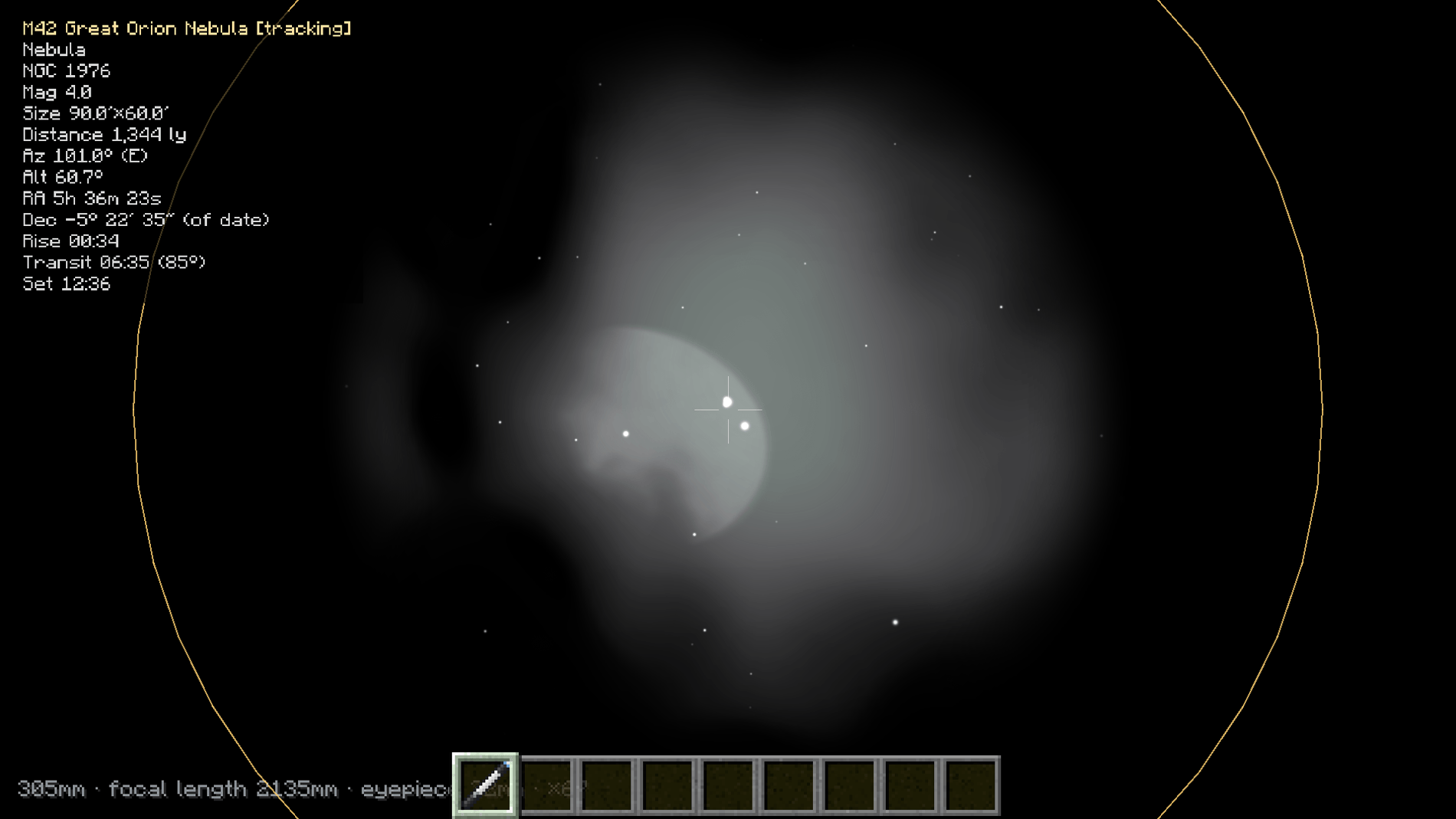
03_M42_305mm.png
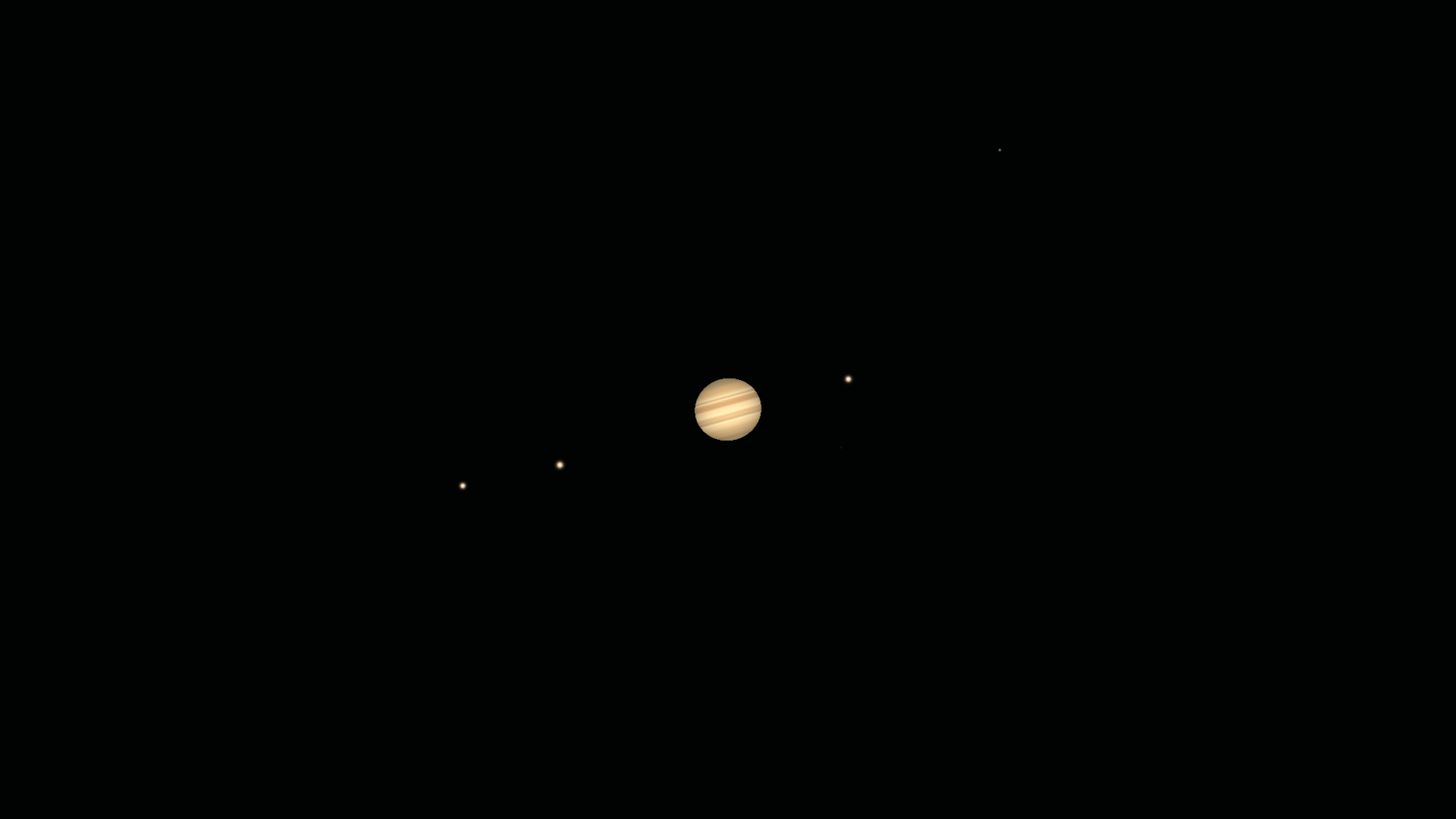
04_jupiter_moons.png
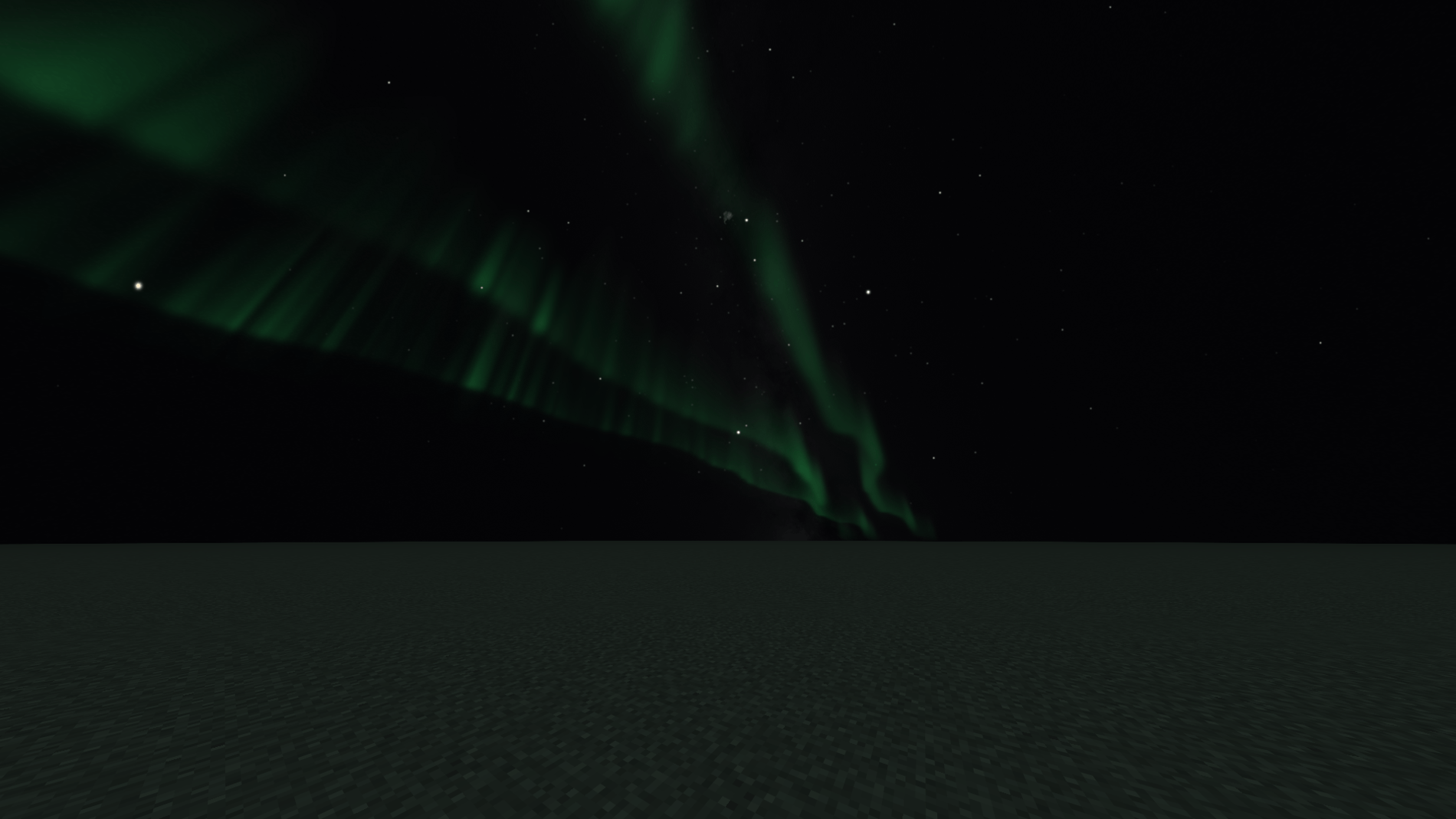
05_aurora.png
Description
Cheonsang replaces the Minecraft overworld sky with the real sky for any date and any place on Earth. Stars, the Sun, the Moon and the planets are where they actually are, and you can look at them through a telescope with real optics.
Features
- Positions of stars, Sun, Moon, planets and planetary moons computed for the observer's date and location. Planets use a truncated VSOP87 theory (1,259 terms); the maximum difference from PyEphem for 1800–2050 is 2.4″ (Neptune) to 12.6″ (Mars).
- Stars: HYG to magnitude 9 and Tycho-2 to magnitude 13. With the optional Cheonsang Extra pack, 32,061,510 Gaia DR3 stars to magnitude 15.2.
- Telescope with real optics: aperture 50–305 mm, eyepieces 40–3 mm, limiting magnitude, diffraction and exit pupil.
- Galaxies, nebulae and globular clusters drawn as they look in an eyepiece, based on Digitized Sky Survey plates.
- Sky brightness model: twilight, moonlight, airglow, light pollution, dark adaptation, extinction and refraction.
- Solar and lunar eclipses for the observer's place, meteor showers, aurora and zodiacal light.
- Western 88 constellations, or the Korean star map Cheonsang Yeolcha Bunyajido (289 asterisms).
/cfindfinds any object,/cwhentells you when and where an object or event is visible, and/cplacesets your own observing location.- Day and night on screen follow the real Sun altitude, including polar day and polar night. Mob spawning and sleeping follow vanilla rules.
- English and Korean.
Requirements
- Minecraft 26.3
- Fabric Loader 0.20.1 or later
- Fabric API
- Fabric Language Kotlin
- Java 25
On a server, install Cheonsang on the server and on every client.
Optional: Cheonsang Extra
A separate project with large data files: Gaia stars to magnitude 15.2, Milky Way at 16K and 32K, and an 8K Moon map (about 434 MB). Cheonsang works without it.
Known limitations
- Not compatible with Iris shaders.
/cwhenvisibility uses altitude, darkness and moonlight only (no light pollution or weather).- Stars use J2000 positions with precession only (no nutation, aberration or proper motion). The difference from Stellarium is about 1′.
- Meteors follow the computer clock, so in multiplayer players see the same meteors only as closely as their clocks agree.
How this mod was made
Planning, data selection, design decisions and in-game testing were done by itsnotfineart. The source code was written with a generative AI assistant (Anthropic Claude). Star, planet and deep-sky data come from real astronomical catalogs and surveys, listed in CREDITS.txt. The icon is hand drawn and all screenshots are taken in game.
Source code and documentation
Source code, user manual and technical documentation: https://github.com/itsnotfineart/cheonsang
License
Source code: MIT. Original textures and icons: CC BY-SA 4.0. Data files keep the licenses of their sources (see CREDITS.txt inside the jar). The deep-sky sketch atlas is derived from the Digitized Sky Surveys and is CC BY-NC-SA 4.0 (non-commercial).
Cheonsang Team