Better /help
- By
Replaces /help with a clearer, interactable, paginated list. Adds descriptions for commands and arguments, plus optional metadata from other mods.
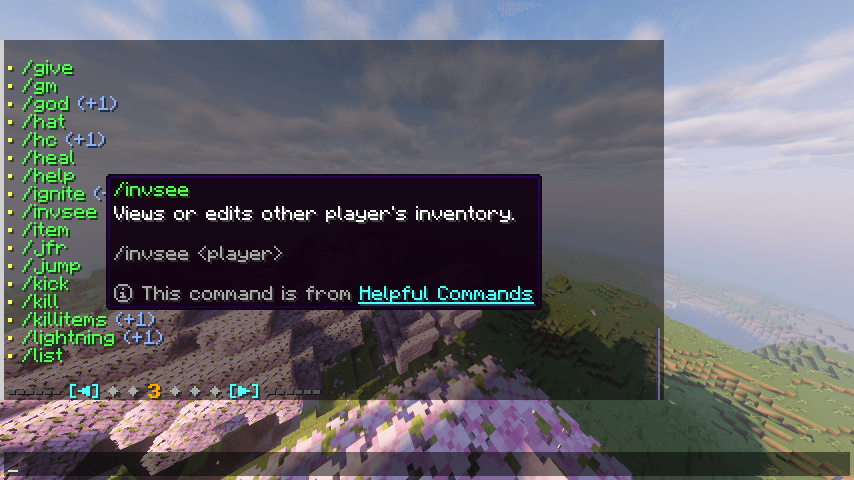
Paginated command list with hover details: description, usage, aliases, and mod attribution.
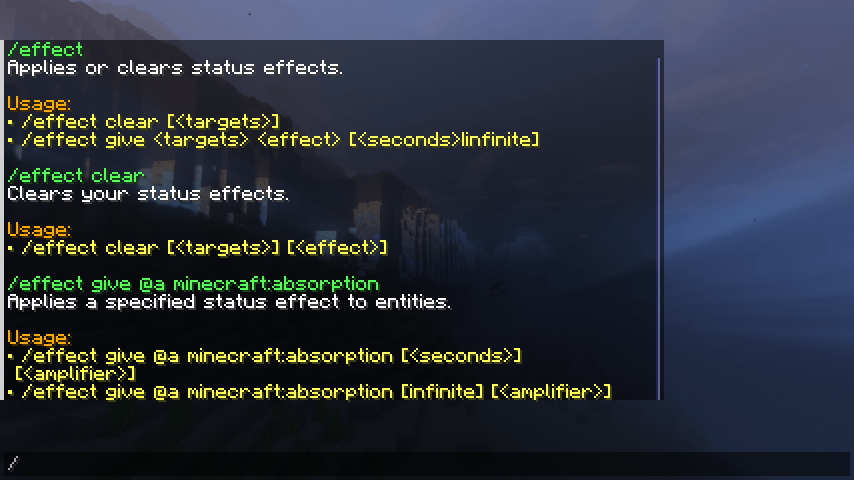
Arguments can have their own descriptions.
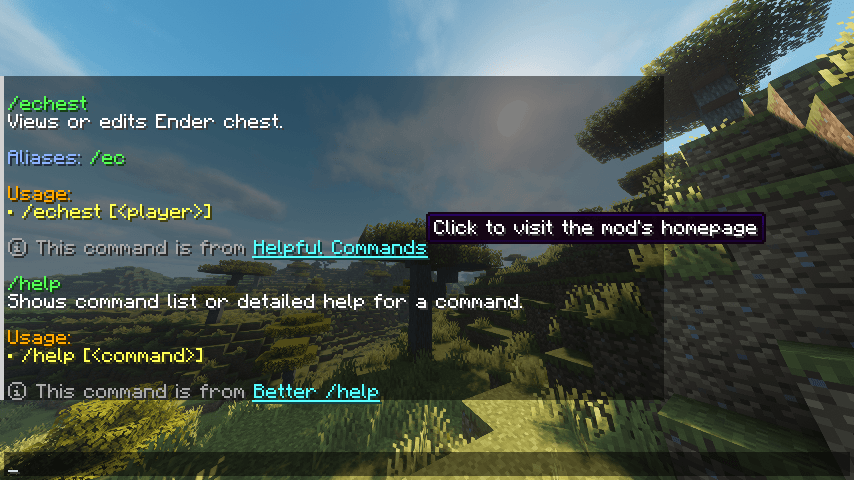
Shows which mod a command is from (when available)
Description

A Minecraft mod that replaces /help with a clearer, interactable, paginated list. Adds descriptions for commands and arguments, plus optional metadata from other mods.


✨ Features
Vanilla /help throws a hard-to-read wall of text at you with almost no useful detail. Better /help replaces it with something players can actually use.
- Clear, paginated command list: browse commands page by page instead of scrolling through a wall of text
- Interactive output: hover for details and click to navigate pages
- Descriptions for commands and arguments: most vanilla commands are covered, and arguments can have their own descriptions too
- Easy to integrate with: other mods can add descriptions and metadata (like homepage links) using only their language files
- Attribution: when a description comes from another mod, players can see which mod the command is from
- Suggestions:
/help <command...>autocompletes like typing the command itself, unlike vanilla/help
⌨️ Usage
| Command | What it does |
|---|---|
/help |
Displays the paginated command list |
/help <command...> |
Shows help for a command or argument |
Examples:
/help
/help gamemode
/help advancement grant @s everything
💻 For mod developers
You can add descriptions and other metadata with language files (for example assets/<mod_id>/lang/en_us.json). Better /help scans installed mods for those keys on server startup. Translations are resolved server-side.
Command or argument descriptions
When you add a command description, Better /help attributes that command to your mod:
{
  "examplemod.commands.examplecommand.description": "Description of your command."
}
Replace examplemod with your mod's id, and examplecommand with your command's name.
You can omit the mod id prefix, but that is not recommended because of translation key conflicts:
{
  "commands.examplecommand.description": "Description of your command."
}
You can also describe nested literals and arguments. Path segments are Brigadier node names (the same strings you pass to Commands.literal("name") and Commands.argument("name", ...), not what the player types):
{
  "examplemod.commands.examplecommand.targets.description": "Who the command applies to."
}
For example, an EntityArgument registered as Commands.argument("targets", EntityArgument.players()) uses targets in the translation key, not @s, @a, or a player name.
Examples from Better /help:
{
  "commands.advancement.grant.description": "Grants player advancements.",
  "commands.advancement.grant.targets.everything.description": "Grants all advancements to players.",
  "commands.advancement.grant.targets.only.description": "Grants one specified advancement to players."
}
Homepage link
When set, the mod name in /help <command...> output can become a clickable link:
{
  "betterhelp.homepage.examplemod": "https://example.com"
}
Replace examplemod with your mod's id.
You can omit the mod id suffix, but that is not recommended because of translation key conflicts:
{
  "betterhelp.homepage": "https://example.com"
}
More details are in the documentation.
❓ FAQ
If Better /help is installed on a server, do players also need to install it?
No. It is a server-side mod. Clients do not need it.
Does it work in singleplayer?
Yes.
Will commands from other mods still show if the developer did not integrate with Better /help?
Yes, but without their descriptions or other metadata. Usage is still shown.
Can I include it in a modpack?
Yes. No need to ask for permission.
The Better /help Team