Galactic Horizons
- By
1000287759.jpg
1000287757.jpg
1000287648.jpg
1000287596.jpg
1000287597.jpg
Description
🌌 Galactic Horizons
Galactic Horizons is a space exploration addon for Minecraft Bedrock that expands the game beyond Earth.
Explore the Moon, Mars, Venus, the Sun, and other extraterrestrial environments, featuring custom terrain generation, new resources, equipment, environmental systems, and various elements designed for space exploration.
Prepare your equipment, travel to new worlds, and discover what lies beyond the horizon.
🚀 Starting Your Space Journey
To begin your space exploration, you will need to prepare your equipment and build your own Level 1 Spaceship.
The spaceship is crafted directly in a Crafting Table:
Glass | Glass | Glass
Trash Can | Diamond Block | Trash Can
Redstone Block | Iron Block | Redstone Block
Materials:
- 3x Glass
- 2x Trash Can
- 1x Diamond Block
- 2x Redstone Block
- 1x Iron Block
🗑️ Trash Can
The Trash Can is required to craft the Level 1 Spaceship.
Recipe:
Iron | Empty | Iron
Iron | Empty | Iron
Iron | Iron | Iron
Total: 7x Iron Ingots.
After crafting the spaceship, place it in the world and use it to begin your journey into space.
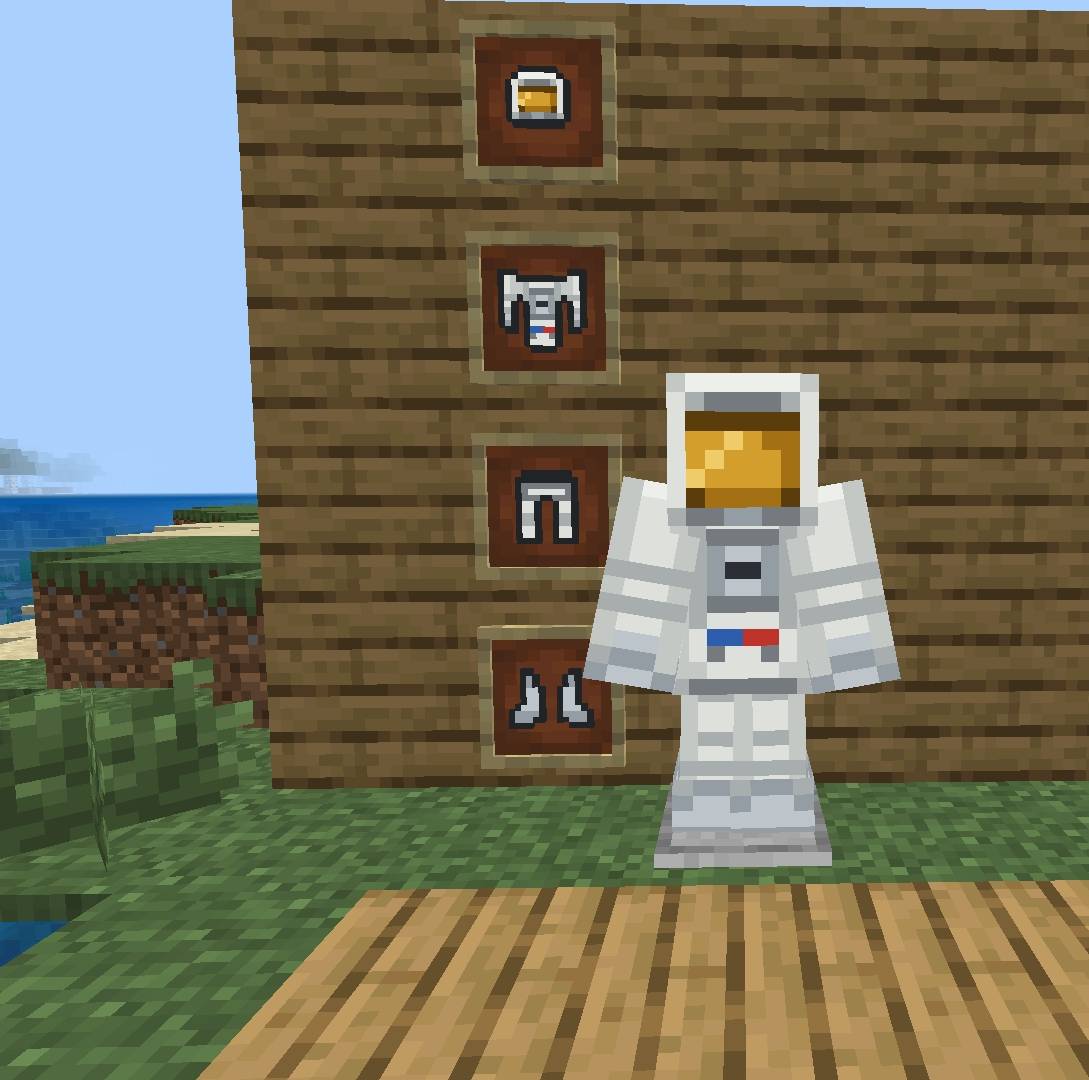
🧑🚀 Basic Spacesuit
Before traveling to other worlds, you will need a suitable spacesuit.
The Basic Spacesuit consists of four pieces and is crafted using materials available on Earth.
The complete set is required to survive the extraterrestrial environments of Galactic Horizons.
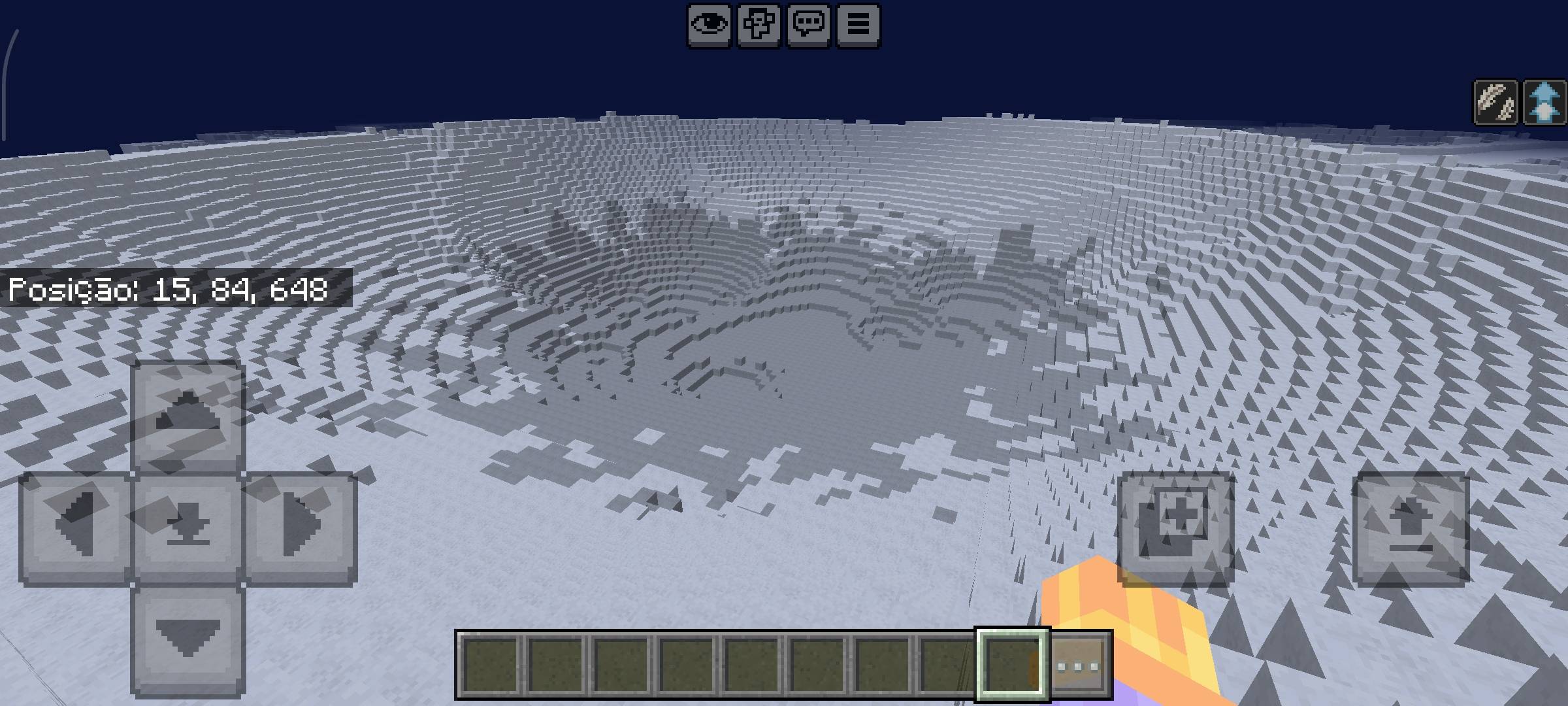
🌕 The Moon
After leaving Earth and reaching space, you can travel to the Moon.
The Moon has its own dimension, with procedural terrain generation created specifically for Galactic Horizons.
Moon Features
- 🌑 Completely dark sky with no atmosphere.
- 🪨 Lunar regolith.
- 🪨 Multiple layers of lunar material.
- 🌋 Basalt seas.
- 🏔️ Highlands.
- 💥 Impact basins and craters.
- 🕳️ Large cave systems and lava tubes.
- ❄️ Ice deposits in permanently shadowed polar regions.
- ⛏️ Ores distributed according to lunar geology.
- 🪐 Approximately 16.5% of Earth's gravity.
The terrain generator uses multiple noise scales to create large-scale regions, detailed terrain, impact craters, and natural surface variations.
⛏️ Lunar Resources
You can find:
- Silicon
- Titanium
- Helium-3
- Redstone
- Iron
- Gold
- Diamond
The ores also have variants for deeper layers of the lunar crust.
🔴 Mars
Mars also has its own dimension and procedural terrain generation system.
The planet features a very thin atmosphere, a reddish sky, and vast regions covered in dust.
Martian Biomes
🏔️ Southern Highlands
Ancient elevated regions featuring rough terrain and large numbers of impact craters.
🌊 Northern Plains
Large relatively low-lying regions representing the geological dichotomy between Mars' northern and southern hemispheres.
🏜️ Dune Fields
Regions covered by large Martian dune formations.
🏔️ Tharsis Plateau
A massive volcanic region.
🕳️ Valles Marineris
A gigantic canyon system crossing the Martian surface.
❄️ Polar Caps
Polar regions covered in ice.
Mars Features
- 🔴 Martian dust and rock.
- 🕳️ Caves and lava tubes.
- 💥 Impact craters.
- 🌋 Giant volcanoes.
- 🏜️ Dunes.
- ❄️ Polar caps.
- 🌪️ Dynamic dust storms.
- ⛏️ Unique ores.
- 🪐 Approximately 38% of Earth's gravity.
⛏️ Martian Resources
On Mars you can find:
- Silicon
- Titanium
- Copper
- Iron
- Gold
- Diamond
Just like on the Moon, the ores also have deeper variants.
Venus
Venus is now a new explorable world with its own procedural terrain generation and environmental systems.
Venus Features
- 🌋 Vast lava plains.
- 🪨 Tessera terrain.
- 🥞 Pancake-dome formations.
- 🕳️ Chasmata.
- 🏔️ Maxwell Montes.
- 🌋 Large volcanic regions.
- 🪨 Venusian rock.
- 🌑 Venusian regolith.
- 🧱 Multiple geological layers.
- ⛏️ Venusian ore distribution.
- 🪐 Approximately 90% of Earth's gravity.
🌡️ Venusian Environment
Venus features one of the most extreme planetary environments in Galactic Horizons.
- Approximately 464°C surface temperature.
- Extremely dense atmosphere.
- Approximately 92 times Earth's atmospheric pressure.
- Extreme heat.
- Acidic hazards.
- Atmospheric movement effects.
🚀 Tier 2 Spaceship
The Venus Update introduces the Tier 2 Spaceship.
The Tier 2 Spaceship is designed to withstand the extreme atmospheric conditions of Venus and expands the technological progression of Galactic Horizons.
A Level 1 Spaceship is not designed for Venusian atmospheric conditions.
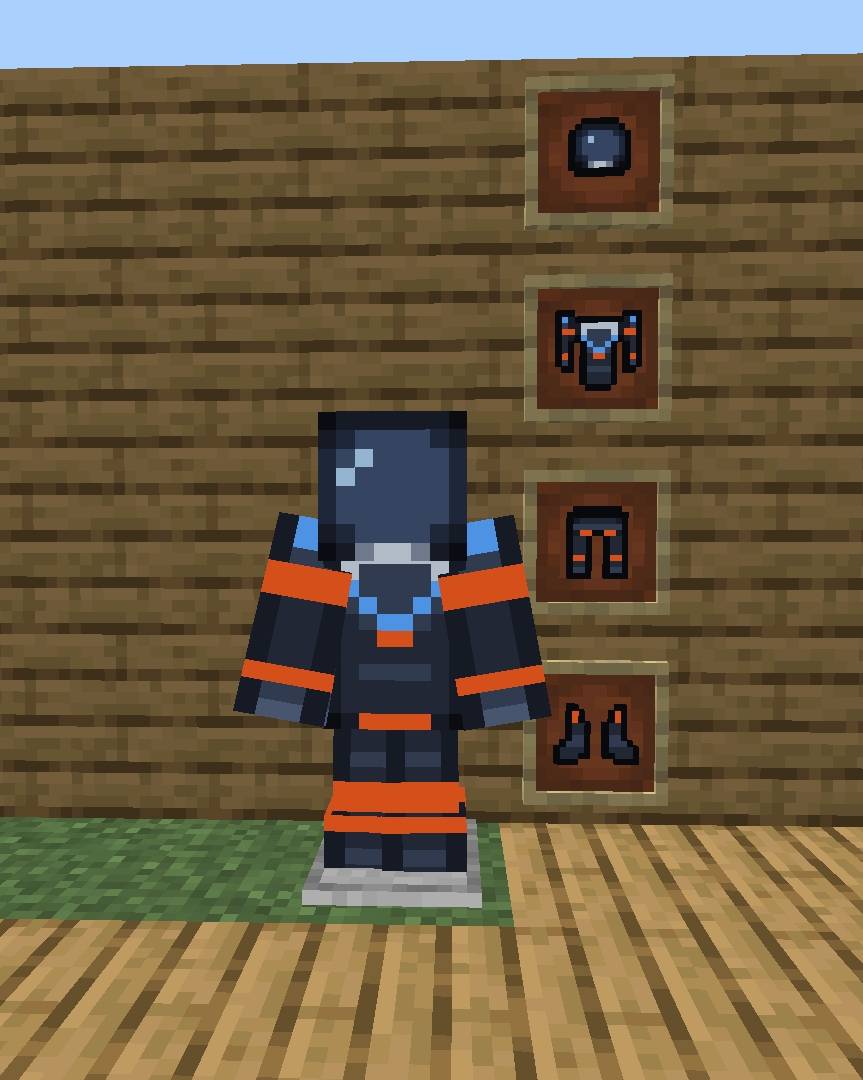
🛡️ Reinforced Spacesuit
After exploring the Moon and Mars, you can use the resources found on these worlds to craft the Reinforced Spacesuit.
The Reinforced Spacesuit provides additional protection against the environmental conditions encountered during space exploration and is especially important when progressing toward more extreme environments such as Venus.
☀️ The Sun
The Sun is also an explorable celestial body.
Unlike the planets, the Sun contains multiple layers:
- 🔥 Corona
- 🟠 Plasma
- ⭐ Solar Core
The Sun has extreme heat, pressure, and its own gravity.
Approaching it without adequate protection can cause severe damage.
The interior of the Sun can also be explored, allowing you to reach its core.
⭐ Star Core
The Sun's core contains the resource required to craft the most advanced armor in the addon.
When a Sun Core is processed in a Crafting Table:
1x Sun Core → 9x Star Core Shards
⭐ Star Core Ingot
Crafting recipe:
4x Star Core Shards + 4x Diamonds
Produces:
1x Star Core Ingot
🧩 Star Upgrade Template
To craft the Star Armor, you first need to obtain the Star Upgrade Template.
The template can be found inside UFO wreckages that appear in the Overworld.
These wreckages are rare events that can appear at a distance from the player.
Their chests contain the Star Upgrade Template, along with possible additional resources.
🌟 Star Armor
The Star Armor is crafted using a Smithing Table.
Each piece requires:
Star Upgrade Template + Netherite armor piece + Star Core Ingot
The Star Armor provides special properties designed for extreme environments.
The complete set includes fire resistance, additional damage resistance, knockback resistance, and the ability to ignite attackers.
🧭 Tracker
The Tracker allows you to check the celestial bodies available in the system.
When used, the Tracker allows you to view registered celestial bodies and their navigation information.
🗺️ Star Charts
Galactic Horizons also features a Star Charts system.
Star Charts act as records of celestial coordinates.
When a Star Chart is used, its corresponding system is registered in the Tracker, allowing its information to be accessed later.
🚀 Space Travel
Outer space has its own dimension:
"gh:outer_space"
From there, you can travel between the available celestial bodies.
The travel system also preserves the spaceship during transitions, allowing players and passengers to travel together.
The addon includes arrival and re-entry systems designed to prevent the player from losing the spaceship during dimensional transitions.
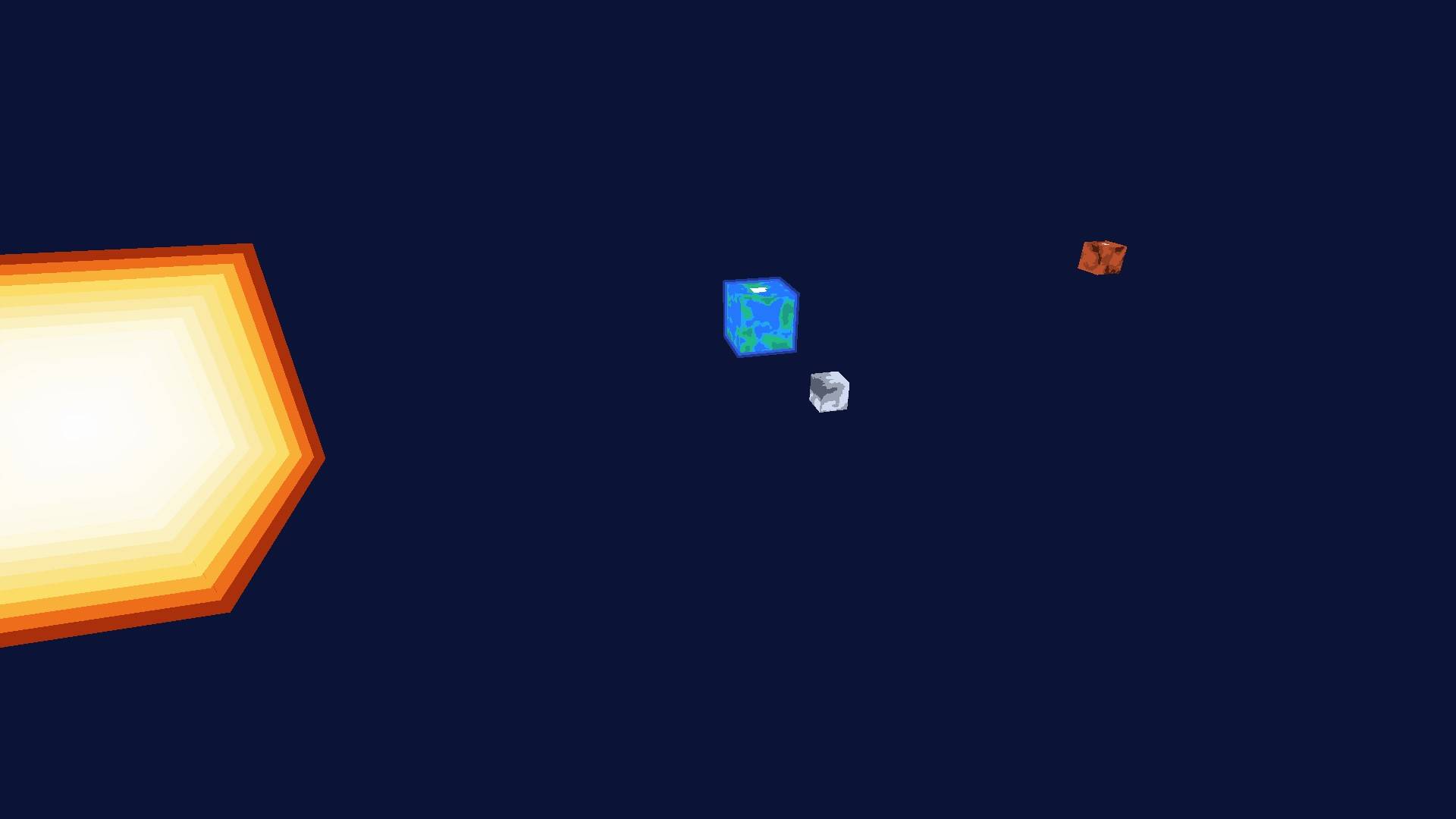
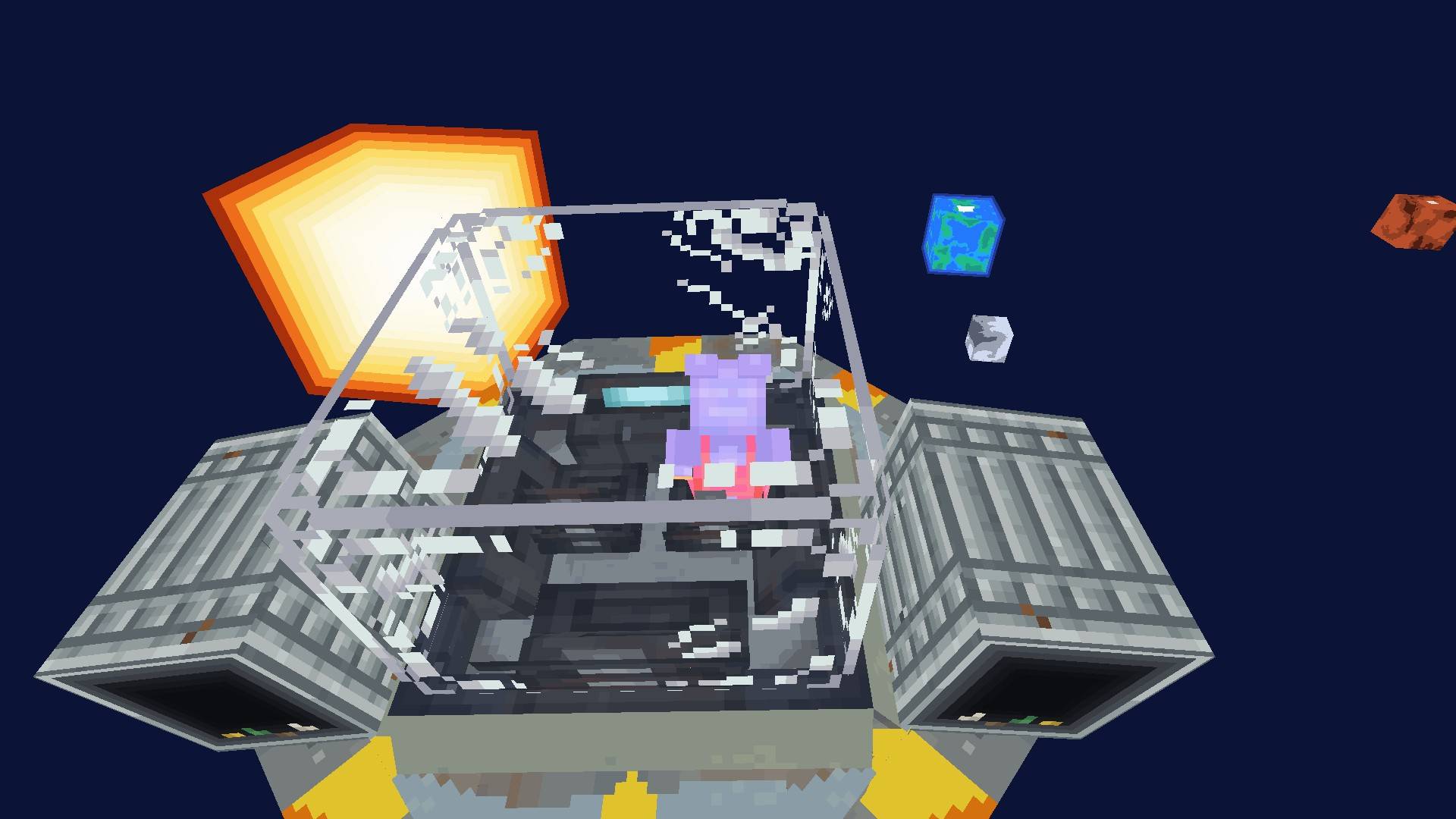
🌌 Outer Space
The space dimension features:
- 🌑 Outer-space vacuum.
- ⭐ Starfield.
- 🌍 Earth.
- 🌕 Moon.
- 🔴 Mars.
- Venus.
- ☀️ Sun.
- 🌌 Space fog.
- 🛰️ Navigation system.
- 🪐 Celestial-body-specific gravity.
- ✨ Particles and environmental effects.
- 🚀 Planetary travel system.
Earth, the Moon, Mars, Venus, and the Sun are represented as celestial bodies in space.
🌪️ Martian Dust Storms
Mars features dynamic dust storms.
Storms can move across the terrain, increasing dust and reducing visibility through the fog.
Storm intensity changes according to location and time, meaning different regions can experience different conditions.
🧊 Extraterrestrial Survival
Exploring other worlds is not simply a matter of traveling to a new dimension.
Galactic Horizons features its own systems for:
- Oxygen
- Temperature
- Gravity
- Heat
- Pressure
- Airless environments
- Dust storms
- Environmental effects
Proper equipment is essential for survival.
The Basic Spacesuit allows you to handle the basic environments of the addon, while the Reinforced Spacesuit provides additional protection for more extreme situations.
The Star Armor is designed to withstand the extreme conditions found inside the Sun.
🪐 Dimensions
Galactic Horizons includes four main dimensions related to space exploration:
🌌 "gh:outer_space"
Outer space, where the celestial bodies are located.
🌕 "gh:moon"
The Moon's surface, featuring its own procedural terrain generation.
🔴 "gh:mars"
Mars' surface, also featuring its own procedural terrain generation.
Venus
Venus' surface, featuring its own procedural terrain generation and extreme atmospheric environment.
📦 Content
Galactic Horizons includes:
- 🚀 Level 1 Spaceship
- 🚀 Tier 2 Spaceship
- 🌌 Outer Space dimension
- ☀️ Explorable Sun
- 🌍 Earth represented in space
- 🌕 Moon with its own dimension
- 🔴 Mars with its own dimension
- Venus with its own dimension
- 🏔️ Lunar, Martian, and Venusian biomes
- 💥 Procedural impact craters
- 🌋 Giant volcanoes
- 🕳️ Cave systems
- 🏜️ Martian dunes
- 🕳️ Valles Marineris
- ❄️ Polar caps
- 🌪️ Dust storms
- 🌋 Venusian lava plains
- 🪨 Venusian tessera terrain
- 🥞 Pancake domes
- 🕳️ Chasmata
- 🏔️ Maxwell Montes
- ⛏️ Silicon
- ⛏️ Titanium
- ⛏️ Helium-3
- ⛏️ Copper
- 🛡️ Basic Spacesuit
- 🛡️ Reinforced Spacesuit
- ⭐ Star Armor
- ⭐ Star Core
- 🧩 Star Upgrade Template
- 🗺️ Star Charts
- 🧭 Tracker
- 🗑️ Trash Can
- 🛸 UFO wreckages
- 🌌 Planetary gravity systems
- 🌡️ Environmental systems
- 🚀 Space travel system
---
🌠 Explore Beyond the Horizon
Prepare your equipment, build your spaceship, leave Earth, and explore a solar system recreated inside Minecraft Bedrock.
The horizon is only the beginning.
The Galactic Horizons Team